Geostrategic Media Political Commentary, Analysis, Security, Defense
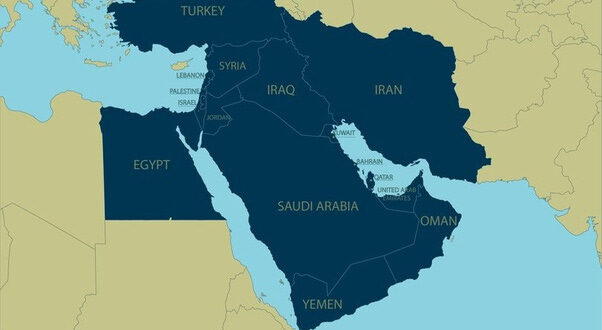

The wars that have engulfed the Middle East since October 2023 were widely portrayed as the birth of a new regional order. Israel fought Hamas in Gaza, confronted Hezbollah in Lebanon, and—together with the United States—launched an unprecedented military campaign directly against Iran. Syria witnessed the collapse of the Assad regime, while Gulf states, once insulated from regional conflicts, suddenly found their airports, energy infrastructure, and commercial hubs under missile attack.
At first glance, these developments appear revolutionary. Yet beneath the headlines lies a more uncomfortable reality: despite immense destruction and dramatic military operations, the Middle East remains trapped in the same strategic logic that has governed it for decades. The actors have changed positions, some governments have weakened or fallen, but the region’s underlying political equations remain remarkably intact.
The Middle East has experienced an extraordinary amount of tactical change—but almost no strategic transformation.
Iran Survived What Was Meant to Break It
The central objective of the American-Israeli campaign against Iran was clear: cripple Tehran’s military capabilities, weaken the Islamic Republic, and perhaps even pave the way for regime change.
Instead, the opposite may have occurred.
Iran suffered devastating losses. Its military infrastructure was heavily damaged. Its Supreme Leader was killed after decades in power. Senior commanders disappeared. Nuclear facilities were struck repeatedly. Yet the Islamic Republic did not collapse.
Instead, the conflict reinforced the Revolutionary Guard’s dominance over Iranian politics while strengthening Tehran’s narrative of resistance against foreign aggression.
Perhaps more importantly, Iran demonstrated something Washington had underestimated: it still possesses the ability to impose enormous costs on the global economy.
Even after suffering military setbacks, Tehran showed it could threaten shipping through the Strait of Hormuz, disrupt Gulf energy production, pressure neighboring states, and maintain influence through regional partners. That leverage alone has ensured that Iran remains an indispensable strategic actor rather than a defeated one.
The war intended to reduce Iran’s regional influence may ultimately have confirmed its geopolitical relevance.
Israel Won Battles Without Solving Its Security Problem
Israel undoubtedly achieved remarkable military successes.
Hamas has been severely degraded.
Hezbollah has suffered unprecedented losses.
The Assad regime collapsed.
Iran’s regional logistics network has been disrupted.
Yet none of these battlefield victories resolved Israel’s fundamental strategic dilemma.
Gaza remains politically unresolved.
The Palestinian question remains unanswered.
Violence in the West Bank continues to escalate.
Southern Lebanon remains unstable.
Syrian territory has become another arena of military competition.
Military superiority has not translated into political stability.
History repeatedly demonstrates that armed force can destroy organizations, but it rarely eliminates the political conditions that created them.
Without a viable political settlement for the Palestinians, today’s tactical victories risk becoming tomorrow’s security crises.
Weak Arab States Remain the Region’s Greatest Vulnerability
The Middle East’s deepest structural problem is not Iran.
Nor is it Israel.
It is the continued weakness of the Arab state system.
Countries such as Iraq, Lebanon, Syria, and Yemen continue to struggle with fragmented institutions, competing armed groups, and limited state authority.
These governance vacuums allow external powers to project influence at relatively low cost.
Iran has mastered this strategy through proxies.
Turkey has increasingly used it through military deployments and local allies.
Israel has exploited neighboring instability to establish security buffer zones.
Even Gulf states increasingly intervene financially and politically in fragile states to shape outcomes.
Until these countries rebuild effective state institutions capable of controlling their own borders and monopolizing the use of force, external intervention will remain the defining feature of Middle Eastern politics.
Weak states cannot produce durable peace.
The Gulf’s Strategic Awakening
Perhaps the most significant political consequence of the recent wars has occurred in the Gulf.
For years, Gulf governments viewed Israel primarily as a potential security partner against Iran while relying on American military protection.
That calculation has become more complicated.
Iranian missile strikes exposed Gulf infrastructure to unprecedented risks.
Israeli military operations increasingly generated regional instability that Gulf leaders neither sought nor controlled.
Meanwhile, Washington’s fluctuating commitment raised uncomfortable questions about American reliability.
None of this means Gulf states will abandon the United States.
They cannot.
American air defense systems, intelligence cooperation, military technology, and regional basing remain indispensable.
China lacks both the willingness and capability to replace Washington as the Gulf’s security guarantor.
Russia remains preoccupied elsewhere.
But Gulf leaders now increasingly pursue strategic diversification rather than exclusive dependence.
Their objective is no longer choosing between Washington and Beijing or between Israel and Iran.
It is avoiding becoming the battlefield on which great-power competition unfolds.
America’s Strategic Dilemma
Washington faces an increasingly familiar paradox.
The United States possesses overwhelming military superiority.
Yet it lacks both the political appetite and the domestic consensus necessary for another major Middle Eastern nation-building project.
The Trump administration has repeatedly emphasized that America will not rebuild states.
That position reflects lessons learned in Iraq and Afghanistan.
Yet stability ultimately depends on functioning states.
Recognizing this contradiction, Washington has quietly supported rebuilding institutions in Syria, strengthened Lebanese state structures, encouraged Iraqi stability, and maintained security cooperation with Gulf partners.
Military deterrence remains essential.
But deterrence alone cannot create regional order.
The Next War Has Already Begun
The most sobering conclusion is that the region’s next conflict is already taking shape.
Iran remains determined to preserve its regional influence.
Israel increasingly accepts a state of permanent military confrontation.
The Palestinian issue remains unresolved.
Proxy networks continue to operate across multiple theaters.
Arab state fragility persists.
Meanwhile, diplomacy continues to lag behind military operations.
Every ceasefire since 2023 has managed violence rather than resolved its underlying causes.
Each agreement has postponed escalation rather than prevented it.
The result is a Middle East trapped in an endless cycle of tactical pauses followed by strategic relapse.
From Noise to Strategy
Military campaigns can destroy infrastructure.
They cannot manufacture political legitimacy.
Bombing campaigns can weaken adversaries.
They cannot build functioning governments.
Regional stability will require stronger sovereign institutions in Arab states, internationally supported diplomacy, credible arrangements to secure strategic waterways such as the Strait of Hormuz, and—above all—a serious political framework that addresses both Israeli security and Palestinian self-determination.
Absent those elements, the last three years will be remembered not as the beginning of a new Middle East, but as another chapter in an old story.
The geography changed.
The maps changed.
The governments changed.
But the strategic logic did not.
And if that logic remains unchanged, today’s ceasefire is merely the countdown to tomorrow’s war.