Geostrategic Media Political Commentary, Analysis, Security, Defense
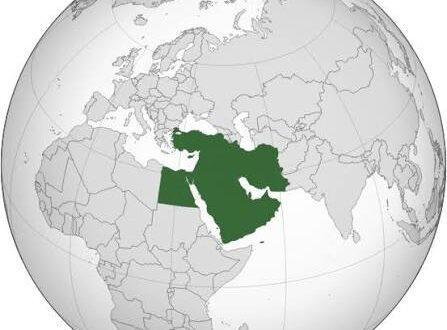

Recent developments have demonstrated that the Middle East cannot simply return to its pre-war arrangements once military operations stop. The consequences of confrontation have spread across Gulf security, international shipping, relations among regional powers, energy markets and economic confidence. Continued tensions around Hormuz and Bab al-Mandab, alongside multiple diplomatic initiatives, show that this is not a bilateral crisis that can be contained through a limited agreement. It is a broader test of what kind of regional order will emerge.
A durable regional order cannot rest on military deterrence alone. Deterrence may prevent an attack at a particular moment, but it cannot resolve mistrust or establish rules governing relations between states. Equally, calls for dialogue will remain ineffective if they do not address security concerns, attacks on infrastructure and threats to maritime routes. The region needs an approach that combines deterrence with diplomacy, protects national sovereignty and establishes practical limits on the use of force beyond the framework of international law.
Regional governments could begin with achievable priorities: protecting civilian infrastructure, safeguarding freedom of navigation, establishing military communication channels to prevent miscalculation, and coordinating responses to humanitarian and economic crises. A broader dialogue could then address regional security, non-interference, missiles and drones, and economic cooperation. This would be difficult, but it is more realistic than waiting for one side to achieve total victory over another. The Middle East does not need another map of influence imposed by force. It needs a regional compact that recognises competing interests while establishing clear boundaries on the use of power.