 Geostrategic Media Political Commentary, Analysis, Security, Defense
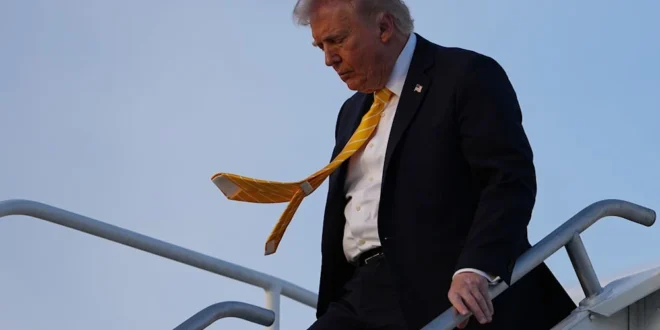

US President Donald Trump announced that Washington will begin a naval operation to escort foreign vessels stranded in the Strait of Hormuz, framing the move as a humanitarian initiative amid ongoing regional tensions.
In a statement posted on Truth Social, Trump alleged that multiple countries had asked the United States for assistance in “freeing” ships that remain unable to transit the strategic waterway.
He said the initiative, dubbed “Project Freedom,” would begin Monday morning West Asia time with US representatives tasked with guiding vessels and their crews safely out of the restricted area.
Focus on neutral vessels
Trump emphasized that many of the affected ships belong to countries not involved in the ongoing war, describing them as “neutral and innocent bystanders” caught in the crisis.
He added that these vessels would not return to the area until navigation is deemed safe, describing the operation as a humanitarian gesture. At the same time, he issued a warning that any interference with the operation would be met with forceful action.
Trump also said US representatives are engaged in what he described as “very positive discussions” with Iran, suggesting the possibility of a broader de-escalation. He claimed that the effort comes on behalf of the US, West Asian countries, and Iran in particular. Tehran has not officially commented on the issue.
Iran unveils new control measures over Strait of Hormuz transit
His post came after senior Iranian lawmakers had unveiled a proposed plan to regulate maritime traffic through the Strait of Hormuz, introducing new restrictions on certain vessels and a licensing system that would require ships to obtain authorization from Tehran.
Ali Nikzad, Deputy Speaker of Iran’s parliament, detailed that the initiative includes a 12-point framework aimed at managing transit through one of the world’s most critical oil shipping routes. Under the proposal, vessels linked to “Israel” would be barred from passing through the Strait at all times, while ships from “hostile countries” would be denied transit unless they pay war reparations.
Nikzad added that all other vessels would be required to operate under a newly established legal framework, obtaining official licenses and authorization from Iranian authorities before entering the waterway. He emphasized that the plan would be implemented “in accordance with international law” and with consideration for the rights of neighboring states, while asserting that Iran would not relinquish what it views as its sovereign rights.
The deputy speaker described the proposed administration of the Strait as comparable in significance to Iran’s historic oil nationalization efforts, signaling the strategic importance Tehran places on the initiative.