 Geostrategic Media Political Commentary, Analysis, Security, Defense

Dr. Shehab Al-Makahleh
For decades, the Middle East operated under a simple—if uneasy—assumption: proximity to the United States meant protection. That assumption has now been shaken. The recent U.S.–Israeli confrontation with Iran did not merely redraw military lines; it exposed a deeper fracture—the erosion of trust between Washington and its regional partners. What many Gulf and Middle Eastern states discovered was not just the cost of war, but the limits of alliance itself.
American military bases across the region were long marketed as pillars of deterrence. In this war, they became something else entirely: magnets for retaliation because Iran made it clear from the outset that U.S. installations would be primary targets. The result was predictable. Missile strikes reached deep into countries that were not decision-makers in the conflict but hosts to its infrastructure. For these states, the presence of American forces no longer guaranteed safety—it increased exposure. This shift carries profound implications. An alliance that invites risk without ensuring protection is not a shield; it is a vulnerability.
The war itself suffered from a flaw: unclear objectives. Without a defined political end-state, military escalation became an end in itself. What followed was not decisive victory, but expanding confrontation—and mounting consequences. Those consequences fell disproportionately on U.S. allies.
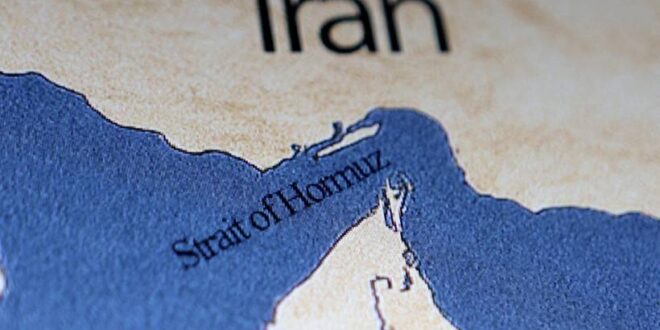
Energy infrastructure across the Gulf Cooperation Council (GCC) states was hit. Trade routes were disrupted. The Strait of Hormuz—one of the world’s most critical arteries — became a chokepoint not just in theory, but in practice. Oil production slowed, exports faltered, and global markets trembled. The economic shock rippled quickly. Tourism collapsed. Investment stalled. In some sectors, prices plunged by as much as 70 percent. For economies built on stability and predictability, the damage was immediate and severe.
Albeit the most consequential revelation was the limits of modern air defense. Systems such as THAAD missile defense system, long presented as technological guarantees, proved effective only under constrained conditions. Faced with sustained barrages, their limitations became evident. Critical infrastructure—including high-value installations—was damaged or destroyed. The message was unmistakable: these systems were designed for deterrence scenarios, not for enduring saturation warfare. This gap between promise and performance has strategic consequences. Gulf states have invested billions in security partnerships with Washington—paying not only for equipment, but for reassurance. That reassurance is now in question.
Complicating matters further is the divergence in U.S. and Israeli objectives. Israel’s strategic logic appears rooted in degrading Iran’s capabilities—even at the cost of broader regional disruption. Washington, by contrast, has a more complex calculus: containing Iran while preserving global energy stability and avoiding systemic collapse. These are not identical goals. The tension is visible in responses to strikes on energy infrastructure. While Israel targets nodes of Iranian economic power, the United States remains wary of triggering global market shocks. This misalignment creates uncertainty—not only for adversaries, but for allies attempting to navigate the fallout.
If Middle Eastern allies were unsettled, European ones were unconvinced. Key states signaled early that this was not their war. Across the European Union, skepticism hardened into distance. Concerns were not abstract: rising energy prices, potential refugee flows, and economic instability all weighed heavily on European decision-making. Even as Washington expressed frustration at allied “inaction,” European capitals asked a different question: what exactly were they being asked to support—and at what cost? The result is a widening transatlantic gap at a moment when cohesion would typically be expected.
Perhaps the most important consequence of this war is not what has happened—but what may follow. If confidence in U.S. security guarantees continues to erode, regional actors will adapt. Strategic diversification is no longer theoretical. Powers such as China are increasingly positioned as alternative partners—less prescriptive, more transactional, and, crucially, perceived as less likely to draw the region into direct confrontation. This does not mean a sudden realignment. This signals the beginning of a shift: from dependency to hedging. The United States now faces a narrowing set of choices: Escalate and risk a wider war, negotiate and accept compromise or withdraw and risk appearing ineffective
None of these options restores the credibility that has been lost. With domestic political pressures mounting—particularly in an election cycle—the temptation for a quick resolution is strong. But expediency rarely produces durable strategy. The most enduring impact of this conflict may be psychological rather than material. For Middle Eastern states, the lesson is stark: alignment with a global power does not guarantee security, and may, under certain conditions, invite danger. The old model—security in exchange for strategic alignment—is being reassessed in real time. The United States and Israel did not set out to produce this outcome. Yet it may prove to be the most significant legacy of the war. The question now is not whether the region will change—but how far it is willing to go in redefining the alliances that have shaped it for decades.