 Geostrategic Media Political Commentary, Analysis, Security, Defense
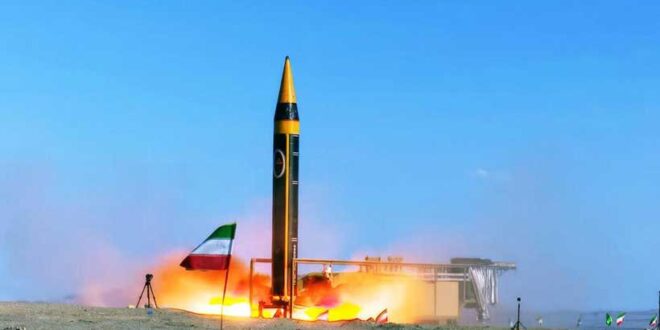

While the world’s eyes are fixed on the Strait of Hormuz and the simmering U.S.-Israeli-Iran standoff, a subtler, far-reaching geopolitical play is unfolding: China is quietly treating Iran as a testing ground for the next generation of multi-platform warfare. The Chinese “Missile Saturation Theory,” long theorized in Beijing’s military circles, is now being operationalized in cooperation with Tehran. Its premise is simple but devastating: quantity over quality. Launch enough missiles and drones at once, from multiple directions, and even the most advanced Western defenses—Iron Dome, David’s Sling, Patriot—cannot keep up.
The brilliance of this approach lies not in precision but in attrition. Cheap drones overload radar systems, forcing interceptor missiles to deplete against low-cost threats. Simultaneous strikes from land, sea, and submarines create chaos, opening corridors for larger, more capable missiles to strike. Economically, the tactic is devastating: each multi-million-dollar interceptor expended against a thousand-dollar drone imposes an asymmetric cost on the West while preserving Iranian—and by extension, Chinese—capabilities.
China’s hand is indirect but unmistakable. Satellite intelligence, advanced targeting data, and dual-use components flow to Tehran, enhancing Iran’s drone swarms and missile strikes without Beijing ever putting a soldier in harm’s way. Chinese technology exposes U.S. and Israeli troop movements, neutralizing stealth advantages and converting Western buildup from deterrence into intelligence gains for Iran. Even navigation systems have shifted—Beidou satellites replacing American GPS—reducing the effectiveness of potential U.S. jamming.
This is not mere support for a proxy war. From Beijing’s perspective, Iran serves as a laboratory for “real-world experimentation”. Field data on radar performance, thermal signatures, and missile saturation informs Chinese planning for a potential future conflict in the Pacific—against Taiwan or in the South China Sea. Every Iranian strike, every American interceptor expended, is a data point in Beijing’s growing playbook of asymmetric warfare.
China’s strategy is deliberate and patient. It seeks to prolong conflict, deplete American and Israeli resources, and test new operational concepts, all while avoiding direct confrontation. By enabling Iran to execute synchronized, multi-platform strikes, China achieves strategic objectives without paying the political or military price of overt action. For Washington, this indirect competition is as dangerous as a traditional battlefield: a war that simultaneously bleeds resources, tests technology, and teaches adversaries lessons that could one day be applied closer to home.
The lesson for the West is clear: technological superiority alone is not sufficient. Numerical strategies, asymmetric costs, and indirect support can neutralize even the most advanced weapons systems. And as China hones these tactics in the Gulf, the United States must recognize that tomorrow’s conflicts in the Pacific may be informed by today’s battles in the Persian Gulf. Watching Iran is no longer just about Middle East security—it’s about preparing for a future where the theater is global, and every proxy engagement is a rehearsal for a much larger stage.