 Geostrategic Media Political Commentary, Analysis, Security, Defense

For decades, Europe’s overseas territories have been treated as quaint historical curiosities—leftovers of defunct empires, tropical islands for holidaymakers, or icy outposts for climate scientists. But in an era defined by predatory revisionism, shrinking rules-based order, and the return of great-power competition, these territories have become something far more consequential: geopolitical frontlines.
Together, five European states control thirty Overseas Countries and Territories (OCTs), spanning the globe from the Arctic to the Antarctic across the Atlantic, Indian, and Pacific Oceans and the Mediterranean Sea. They are not homogenous. Some are barren rocks, others are sprawling landmasses. Yet what unites them is their strategic relevance in a world where the old certainties of international law are being systematically dismantled.
The Quiet Assault on European Sovereignty
Consider the evidence. The United States, under President Donald Trump, has openly threatened to “own” or “take” Greenland—an OCT of Denmark. The rhetoric is not subtle: “Countries have to have ownership and you defend ownership, you don’t defend leases. And we’ll have to defend Greenland.” This is not a diplomatic nuance; it is a public threat to the territorial integrity of a NATO ally and an EU member state.
The same American administration has challenged the UK’s agreement to return the Chagos Islands to Mauritius, despite having initially supported the deal. The operational status of the Diego Garcia base was never in question, but Washington’s intervention has suspended the British parliamentary approval process—a textbook example of unilateral interference.
Meanwhile, China’s footprints are visible across the Pacific and Indian Oceans. Its investments in strategic ports, its growing military presence in the Arabian Sea during the 2026 U.S.-Israeli war on Iran, and its aggressive economic diplomacy reflect a pattern of behavior that, while less overt than Russia’s annexation of Crimea, is no less destabilizing. The creation of artificial islands in the South China Sea is not merely a territorial claim; it is a statement that the old rules no longer apply.
Russia, too, has played its part, though its theatre remains primarily in Europe’s frozen North and the Arctic. The militarization of the region and the growing interest in year-round shipping lanes have turned territories like Svalbard and Jan Mayen into new arenas of competition.
The Strategic Bastions: Beyond the Tourist Brochures
Not all OCTs are equal. Seven stand out as strategic bastions that demand urgent European attention:
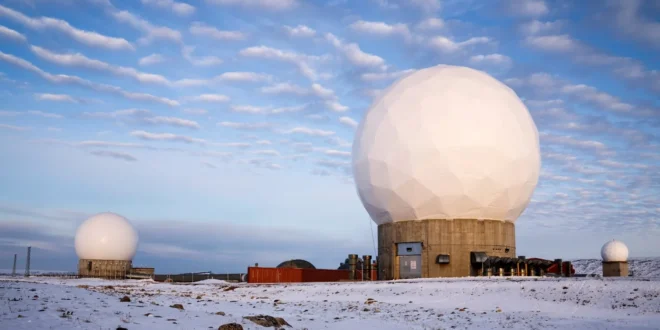
Greenland is the most visible flashpoint. The world’s largest island—80 percent covered by ice—holds vast deposits of rare-earth elements, graphite, and lithium. Of the thirty-four minerals classified as “critical” by the European Commission, twenty-five are found beneath Greenland’s ice sheet. Add to this the Pituffik military base, established by a Danish-American agreement in 1951, and the island’s role in climate research, and you have a territory that is at the centre of a perfect storm. The EU’s mutual-assistance clause may or may not apply to Greenland, but the legal uncertainty is itself a vulnerability that predatory powers will exploit.
The British Indian Ocean Territory (Diego Garcia) is another pressure point. Its air and naval base has been indispensable in recent Middle East conflicts. But the UK-Mauritius return agreement, intended to resolve decades of legal ambiguity, has been thrown into chaos by U.S. objections and a bizarre Iranian missile test that reached the archipelago in late March 2026. The suspended parliamentary approval process leaves the territory in legal limbo.
Akrotiri and Dhekelia in Cyprus host a vital Royal Air Force base. In early 2026, a drone hit Akrotiri during U.S.-Israeli operations against Iran. The base survived, but the incident exposed the vulnerability of these overseas assets to regional spillover.
New Caledonia possesses the world’s third-largest proven nickel deposit after Indonesia and the Philippines. Its legal status has been modernised, but China’s growing presence in the Pacific makes this territory a chess piece in a much larger game. Similarly, French Polynesia and Wallis and Futuna command vast exclusive economic zones (EEZs), granting France sovereign rights over enormous stretches of ocean—with all the attendant responsibilities and costs.
Gibraltar, at the natural entry point to the Mediterranean, hosts a Royal Navy station and now benefits from a January 2026 EU agreement that removed physical barriers with Spain while safeguarding the Schengen area and the Single Market. This is a rare success story, but its position remains sensitive.
The Institutional Deficit
The fundamental challenge Europe faces is institutional. Western European powers operate within a democratic architecture built on the rule of law, national constitutions, successive EU treaties, and the conventions of the Council of Europe. They cannot, and should not, respond to external threats in the same manner as Russia, China, or the United States.
But the asymmetry is glaring. When the U.S. threatens to take Greenland, Denmark and the EU issue statements about “territorial integrity” and “international law.” When China deepens its presence in the Pacific, France and the UK monitor it carefully but respond slowly. When Iran tests an intercontinental missile near Diego Garcia, London and Washington argue while the territory’s legal status remains unresolved.
The October 2025 U.S. National Security Strategy, which formalised an openly hostile posture toward its European allies, removed any remaining illusions. The “rules-based order” that Europe has championed since 1945 is no longer a shared American priority. It is, increasingly, a European obsession that Washington views as an obstacle to its own interests.
A Diplomatic Fait Accompli vs. Democratic Architecture
China, Russia, and the United States share a common tactic: the creation of diplomatic fait accompli. By combining financial power, military force, propaganda, and sheer defiance of established norms, they push their preferred policies through the community of nations—friends and foes alike.
Europe does not—and cannot—operate this way. Its strength lies in its institutions, its legal frameworks, and its commitment to dialogue. But these strengths become vulnerabilities when adversaries refuse to play by the same rules.
The thirty OCTs are not abstractions. They are inhabited lands, many with their own populations, cultures, and aspirations. In the case of Greenland, the territory’s own government has expressed alarm at Trump’s claims. In New Caledonia, the independence debate remains a live issue. In the British Indian Ocean Territory, the Chagossian people have been displaced for decades. Any European policy toward these territories must respect their inhabitants’ rights.
The Way Forward
Europe must do three things.
First, it must treat its OCTs as strategic assets, not administrative burdens. This means investing in their defence, their infrastructure, and their economic resilience. The EU’s 2021–2027 financial program for the OCTs allocates 45 percent to Greenland alone, but this is a starting point, not a final destination.
Second, it must develop a coherent legal and diplomatic doctrine for responding to external interference. This doctrine should be based on the principle that any threat to an OCT is a threat to the parent state and, where relevant, to the EU as a whole. The legal ambiguity surrounding Greenland’s EU status must be resolved urgently.
Third, it must communicate the importance of these territories to its own citizens. Europeans are largely unaware of the existence of these far-flung lands, let alone their strategic significance. Without public understanding, there will be no political will to defend them.
The Stakes
This is not a debate about nostalgia for empire. It is about the survival of a rules-based order that has protected Europe and the world from the worst excesses of great-power competition for seven decades. If Europe cannot defend the thirty OCTs under its jurisdiction, it cannot credibly defend its own sovereignty anywhere else.
The disruptive actions against Greenland, Diego Garcia, and other territories are not isolated incidents. They are tests of Europe’s resolve. Each successful challenge emboldens the next predator.
No cajoling of or pandering to disruptive foreign forces will ever protect European democracy. Only a systematic and firm pushback—grounded in the rule of law, but backed by credible capabilities—will do.
The thirty OCTs are not relics of a bygone age. They are the forgotten frontline of the twenty-first century. It is time Europe started treating them as such.