 Geostrategic Media Political Commentary, Analysis, Security, Defense

Dr. Shehab Al-Makahleh
The latest U.S.–Iran war has done more than expose the volatility of the Middle East. It has exposed the exhaustion of the region’s post-Cold War security model. For decades, Middle Eastern states relied on an implicit strategic bargain: the United States would remain the principal guarantor of regional stability, deter major interstate conflict, secure maritime trade routes, and provide the military umbrella under which regional economies could prosper. That assumption no longer reflects geopolitical reality.
The confrontation between Washington and Tehran demonstrated that even the world’s strongest military alliance structure cannot fully shield the region from cascading strategic shocks. Despite extensive American military deployments, sophisticated missile-defense systems, and decades of bilateral defense agreements, Gulf energy infrastructure was threatened, maritime commerce faced renewed disruption, investor confidence weakened, insurance costs surged, and regional economies were forced once again to absorb the price of geopolitical confrontation.
The lesson is neither that American power has disappeared nor that the United States is abandoning the Middle East. Rather, the war revealed a more fundamental truth: external security guarantees, regardless of how capable they are militarily, cannot substitute for an indigenous regional security architecture.
For nearly half a century, much of the Middle East has functioned according to what strategic studies describe as an external security guarantee model. Gulf Cooperation Council (GCC) states largely became security consumers, while the United States assumed the role of security provider through military bases, naval deployments, intelligence cooperation, integrated air-defense systems, and strategic deterrence. This framework succeeded in deterring many conventional threats, but it also created structural dependency. Today, that dependency is increasingly misaligned with Washington’s evolving grand strategy.
American strategic priorities have shifted toward long-term competition with China, technological rivalry, Indo-Pacific security, and domestic economic challenges. The Middle East remains important because of energy markets, Israel’s security, and maritime navigation, but it is no longer the uncontested center of U.S. foreign policy. This evolution reflects a broader transition from comprehensive regional engagement toward selective strategic involvement and offshore balancing.
The implications for the Gulf are profound. Saudi Arabia, the United Arab Emirates, Qatar, Kuwait, Bahrain, and Oman have all invested heavily in advanced military capabilities, often in close partnership with the United States. Yet the recent conflict demonstrated that military superiority alone cannot guarantee comprehensive security. Missile interception systems may protect cities, but they cannot fully safeguard global supply chains, investor confidence, aviation networks, tourism sectors, or energy exports from the strategic uncertainty generated by prolonged confrontation.
Security in the twenty-first century extends beyond territorial defense. It encompasses economic resilience, cyber infrastructure, critical supply chains, maritime commerce, digital networks, and political stability. Comprehensive security therefore requires institutions capable not only of deterring military aggression but also of managing crises before they escalate into regional conflict.
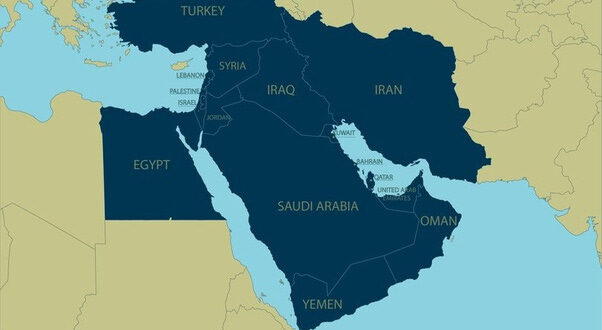
Jordan illustrates this changing reality perhaps better than any other regional actor. Situated at the intersection of Iraq, Syria, Saudi Arabia, and Israel, the Hashemite Kingdom has become a strategic buffer state whose stability directly influences the wider Levant. Missile overflights, refugee movements, cross-border smuggling networks, drone incursions, and economic disruptions have transformed Jordan into one of the principal shock absorbers of regional instability. Its value lies not only in territorial geography but also in its role as a stabilizing political actor capable of supporting regional dialogue and crisis management.
Iraq occupies an equally pivotal position. For years, Iraq was viewed primarily as an arena of competition among external powers. Increasingly, however, it is becoming the geopolitical hinge upon which the future regional order may turn. The intersection of Iranian influence, Gulf investment, Turkish security interests, American military presence, and ambitious infrastructure initiatives such as the Development Road Project positions Iraq as either the connective bridge linking competing regional systems or the battlefield upon which those systems continue to collide. Whether Baghdad consolidates sovereign institutions capable of balancing these competing pressures will shape the strategic trajectory of the wider Middle East.
Turkey has simultaneously expanded its strategic reach well beyond its traditional NATO role. Ankara increasingly combines military modernization, indigenous defense industries, drone diplomacy, economic statecraft, mediation initiatives, and expeditionary capabilities across Syria, Iraq, Libya, Qatar, the Eastern Mediterranean, and the Horn of Africa. Rather than acting solely as a Western ally, Turkey increasingly seeks to position itself as an autonomous regional security broker capable of balancing multiple power centers simultaneously.
Egypt’s strategic importance has likewise grown. The security of the Suez Canal, the Red Sea, the Eastern Mediterranean, and the approaches to the Arabian Gulf are inseparable from Egyptian national security. Cairo’s diplomatic experience, military capabilities, and geographic position enable it to function as a cornerstone of any future regional security framework. At a time when maritime trade routes are increasingly vulnerable, Egypt’s role extends beyond national defense to encompass the stability of global commerce itself.
No discussion of regional security is complete without recognizing Yemen’s transformation from a domestic civil war into a strategic maritime theater. The Bab al-Mandab Strait now represents one of the world’s most consequential geopolitical chokepoints, linking the Red Sea to the Gulf of Aden and the Indian Ocean. Disruptions originating from Yemen reverberate far beyond the Arabian Peninsula, affecting global shipping costs, insurance premiums, energy markets, and supply chains. Maritime security in the Red Sea can no longer be separated from the broader architecture of Middle Eastern stability.
Similarly, the Horn of Africa and Sudan have become integral components of the Middle East’s expanding strategic perimeter. Competition over ports, naval access, logistics corridors, food security, and critical maritime infrastructure has drawn regional and global powers into an increasingly interconnected theater stretching from the Arabian Gulf to the western Indian Ocean. Gulf investment, Turkish military engagement, Chinese commercial expansion, Russian strategic interests, and African political transformations now intersect across a single geopolitical space. Security in the Middle East no longer ends at the Red Sea; it extends across the Horn of Africa.
Iran remains central to this emerging landscape. Regardless of political disagreements or ideological divisions, Iran is too geographically significant, demographically substantial, economically capable, and militarily influential to be permanently excluded from any durable regional order. Attempts to isolate Tehran entirely have repeatedly generated cycles of escalation without producing sustainable stability. Equally, Iran’s continued reliance on proxy networks, asymmetric deterrence, and coercive regional influence has deepened distrust among its neighbors. A future regional order will therefore require a framework of competitive coexistence—one combining credible deterrence with sustained diplomatic engagement, confidence-building measures, and clearly defined rules governing interstate behavior.
This also requires difficult conversations with Israel. Military superiority alone cannot produce lasting regional legitimacy or strategic equilibrium. Sustainable peace ultimately depends upon political settlements that address the underlying drivers of conflict, including the unresolved Palestinian question. Durable regional security cannot be built while one of the region’s most enduring sources of instability remains unresolved.
The central challenge, therefore, is not replacing one external patron with another. It is constructing an indigenous system of collective security in which regional states assume primary responsibility for preserving stability while maintaining diversified partnerships with global powers. Such a framework would neither weaken existing alliances nor diminish the importance of American engagement. Instead, it would redefine those partnerships within a more balanced regional architecture.
The foundations of such a framework already exist. A Middle East Security Dialogue could bring together the GCC states, Egypt, Jordan, Iraq, Turkey, and Iran around practical mechanisms designed to reduce strategic miscalculation rather than eliminate political disagreements. Confidence-building measures could include military hotlines, maritime coordination centers, missile-launch notification mechanisms, counter-drone cooperation, intelligence-sharing arrangements targeting transnational threats, and common protocols for protecting critical infrastructure and international navigation.
Equally important is transforming Arab states from security consumers into security producers. This means expanding regional defense industries, integrating intelligence capabilities, coordinating cyber defense, enhancing joint military planning, investing in indigenous technological innovation, and building institutional mechanisms capable of preventing crises before they escalate into open conflict. Strategic autonomy should not be confused with strategic isolation. The objective is not disengagement from the United States, Europe, or Asia, but diversification combined with greater regional ownership of security decisions.
History offers valuable lessons. Europe’s post-Second World War transformation did not emerge because historical rivalries disappeared. It emerged because governments gradually created institutions capable of managing competition peacefully. The Middle East’s political, historical, and cultural conditions are fundamentally different, making direct institutional replication impossible. Yet the underlying principle remains universally applicable: lasting security depends upon rules, institutions, communication, and mutual restraint rather than perpetual military confrontation.
The U.S.–Iran war should therefore be understood as more than another episode in a decades-long rivalry. It represents a strategic warning that the security paradigm governing the Middle East since the late twentieth century has reached its practical limits. No external power—however capable—can indefinitely guarantee regional stability while local actors remain divided, regional institutions remain underdeveloped, and interstate disputes continue to be managed primarily through deterrence and coercion.
The future of the Middle East will ultimately be determined not by the next military campaign, the next carrier strike group, or the next sanctions package, but by whether regional states possess the political imagination to construct a new strategic compact. Such an order must integrate the Gulf, Iraq, Jordan, Egypt, Turkey, Yemen, Sudan, and the Horn of Africa into a coherent security framework that balances deterrence with diplomacy, sovereignty with cooperation, and national interests with collective responsibility.
If the recent war teaches one enduring lesson, it is this: security cannot be permanently outsourced. The next Middle Eastern order must be built by the region itself. Only then can the cycle of recurring wars give way to a more resilient equilibrium capable of delivering what the peoples of the Middle East have sought for generations—stability, prosperity, and peace.