October 24, 2026
Americas, Analysis, Briefs, Europe, Geopolitics, Middle East, Military & Security, NEWS, Op-ed, OPINION, Society
By Roya Bagher A proposal to forgive student debt in exchange for enlistment in a potential US ground force against Iran raises a fundamental question about the relationship between military power and public willingness to fight. If such a proposal gains traction, it would suggest that the challenge …
Read More »
October 2, 2026
Americas, Analysis, Asia Pacific, Briefs, Economics, Europe, Geopolitics, Middle East, Military & Security, NEWS, Op-ed, OPINION, Photo, Russia-CIS, Society
Dr. Shehab Al-Makahleh George Orwell’s 1984 is often read as a warning about dictatorship. It is also a study of something subtler: how institutions and ordinary people can gradually adapt themselves to a political system they once regarded as unacceptable. The machinery of Orwell’s Oceania does not depend …
Read More »
October 2, 2026
Americas, Analysis, Asia Pacific, Briefs, Economics, Europe, Geopolitics, Middle East, Military & Security, NEWS, Op-ed, OPINION, Society
In just five months, Syria’s Banyas port has been transformed into a new outlet for Iraqi energy. In April 2026, Baghdad began moving fuel oil through Syria for export from the Mediterranean. By September, it was using the same route in reverse — importing gasoline through Baniyas and …
Read More »
October 2, 2026
Analysis, Asia Pacific, Briefs, Economics, Europe, Geopolitics, Middle East, Military & Security, NEWS, Op-ed, OPINION, Society
Dr. Sanaa Al-Husseini Foreign policy is not usually the main factor determining how Americans vote in midterm elections. But the 2026 cycle looks different, with the fallout of foreign crises now intersecting with domestic concerns. The issues raised by candidates in both parties, the results of the primaries, …
Read More »
September 29, 2026
Americas, Analysis, Asia Pacific, Briefs, Economics, Europe, Geopolitics, Middle East, Military & Security, NEWS, Op-ed, OPINION, Society
By Dan Steinbock Following October 7, 2023, the Hamas-led offensive has been portrayed as “Israel’s 9/11,” which came out of the blue. That’s not supported by facts. The Netanyahu cabinet knew about the attack, in advance. In his fiery speech to the UN General Assembly, Israeli Prime Minister …
Read More »
September 29, 2026
Americas, Analysis, Briefs, Economics, Europe, Geopolitics, Middle East, Military & Security, NEWS, Op-ed, OPINION, Society
Neither courting Washington, diversifying security partnerships nor maintaining discreet channels with Tehran can fully shield the Gulf from the consequences of war. As the conflict with Iran continues, the six Gulf Cooperation Council states—Bahrain, Kuwait, Oman, Qatar, Saudi Arabia and the United Arab Emirates—find themselves facing an increasingly …
Read More »
September 29, 2026
Americas, Analysis, Briefs, Economics, Europe, Geopolitics, Middle East, Military & Security, NEWS, Op-ed, OPINION, Society
At first glance, Israel’s current political scene may look like the familiar turbulence that precedes a Knesset election. As voting day approaches on October 27, political rhetoric intensifies, parties sharpen their attacks, and campaigns increasingly appeal to some of the most sensitive instincts among voters. Fear, security, national …
Read More »
September 29, 2026
Americas, Analysis, Briefs, Economics, Europe, Geopolitics, Middle East, Military & Security, NEWS, Op-ed, OPINION, Society, Terrorism & Extremism
Dr. Shehab Al-Makahleh The U.S.–Iran confrontation has entered a phase in which military power alone is no longer sufficient to determine the course—or the end—of the war. After months of strikes, economic pressure, and disruption to shipping in the Gulf, the conflict is increasingly revolving around a different …
Read More »
September 29, 2026
Analysis, Asia Pacific, Briefs, Economics, Europe, Geopolitics, Middle East, Military & Security, NEWS, Op-ed, OPINION, Society, Terrorism & Extremism
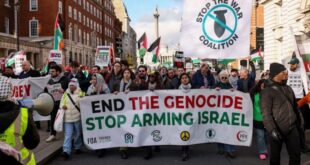
James Lee Palestine is no longer a distant foreign-policy issue in Britain, confined to diplomatic statements or parliamentary debates about the Middle East. Over the past several years—and especially since the outbreak of the Gaza war in October 2023—the Palestinian question has moved into Britain’s streets, universities, trade …
Read More »


 Geostrategic Media Political Commentary, Analysis, Security, Defense