Geostrategic Media Political Commentary, Analysis, Security, Defense

With just five days remaining before Israel’s October 27 election, speculation is mounting over whether Prime Minister Benjamin Netanyahu could launch another military confrontation with Iran. Amid stalled negotiations, heightened military activity and competing political pressures in Washington and Jerusalem, the region faces a familiar but dangerous question: is the growing show of force intended to deter war, or prepare for it?
The available signals offer no definitive answer. Yet the timing makes the stakes especially high, as both Netanyahu and US President Donald Trump must weigh military calculations against the potential political and economic consequences of another escalation.
Military Preparations and Diplomatic Uncertainty
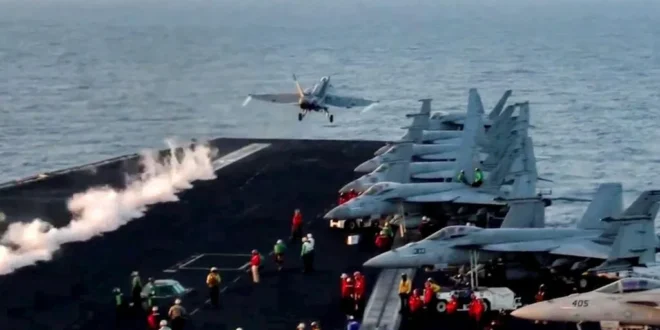
Recent reports have described heightened US military readiness, adjustments to American deployments across the region and preparations involving Israeli long-range aircraft and aerial refueling capabilities. Some accounts have also suggested that Washington and Jerusalem have discussed possible renewed operations against Iranian nuclear facilities, missile arsenals and drone infrastructure.
Both governments have publicly signaled reluctance to initiate another conflict before their respective elections. Trump has indicated that he does not intend to attack Iran before the November 3 US midterms, while Netanyahu has denied seeking a pre-election strike.
However, public assurances have done little to eliminate uncertainty. Negotiations between Washington and Tehran remain troubled, with disagreements over the conditions for a settlement and the future of Iran’s strategic capabilities.
Military deployments can serve several purposes, including deterrence, contingency planning and preparation for an actual operation. Their presence alone does not establish that a strike has been authorized. Nevertheless, the combination of diplomatic deadlock and heightened readiness leaves room for miscalculation, particularly if either side interprets the other’s movements as evidence of imminent attack.
Could War Rescue Netanyahu Politically?
Iran has become a significant issue in Israel’s election campaign. Netanyahu’s government has presented previous military operations as evidence of its determination to confront Tehran, while critics have questioned the government’s strategic judgment and the costs of prolonged regional conflict.
Against this background, speculation has grown that Netanyahu might view a new confrontation as an opportunity to reshape the electoral debate. A military crisis can temporarily redirect public attention toward national security and leadership, potentially benefiting an incumbent government.
But this is far from guaranteed.
An Iranian response involving missiles or drones could force Israelis back into shelters, disrupt civilian life and cause casualties and economic damage. Rather than rallying voters behind Netanyahu, such consequences could intensify criticism of his government’s handling of national security.
Nor could the prime minister simply postpone the election at will. Any postponement would require a legal and parliamentary process, making it an uncertain instrument of political survival.
A new war could therefore offer Netanyahu an opportunity to demonstrate military resolve while simultaneously exposing his government to serious political risks.
Trump Faces His Own Electoral Dilemma
Washington has equally compelling reasons to avoid an uncontrolled escalation before the November 3 midterm elections.
A prolonged confrontation could raise fuel prices, unsettle financial markets and increase the risk of American casualties. These consequences would place additional pressure on an administration already facing domestic political scrutiny.
Public opinion is another consideration. The polling figures cited in recent reporting suggest substantial concern among Americans about the handling of the Iran conflict, particularly its potential economic and human costs.
For Trump, a limited military operation might appear more manageable than a sustained campaign. Yet even a narrowly targeted strike could provoke retaliation against American bases, regional partners or critical infrastructure, creating pressure for further military action.
The distinction between a limited operation and a wider war may prove difficult to maintain once hostilities begin.
The Region Cannot Afford Another Miscalculation
Any renewed US-Israeli attack on Iran would carry consequences far beyond the immediate battlefield. Tehran could respond against Israeli targets and American military installations across the region, while disruptions to shipping and energy infrastructure could affect global markets.
Regional governments would face difficult decisions about protecting their territory, supporting security partnerships and preventing the conflict from spreading. Even countries seeking to remain outside the confrontation could suffer its economic and security consequences.
Ultimately, the question is not simply whether Netanyahu will risk a strike before election day. It is whether political deadlines will influence decisions with potentially far-reaching regional consequences.
The military movements may be intended to strengthen deterrence, prepare for contingencies or signal resolve during negotiations. They do not prove that war is inevitable. But as diplomacy falters and electoral pressures intensify, the margin for miscalculation becomes increasingly consequential.
For Netanyahu and Trump alike, a new confrontation could promise short-term strategic or political gains. It could also produce consequences neither leader can easily control. The critical test in the coming days will be whether military readiness remains a tool of pressure—or becomes the prelude to another war whose costs extend well beyond the ballot box.