 Geostrategic Media Political Commentary, Analysis, Security, Defense

Dr. Shehab Al-Makahleh
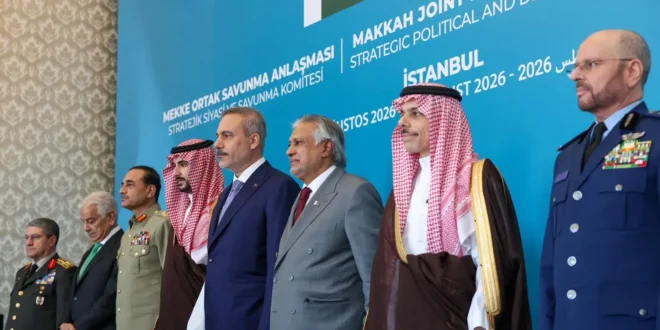
The emerging Mecca Defense Alliance is beginning to raise a question that may prove more consequential than its original formation: where does it go from here, and who gets to come inside? Statements by Turkish Foreign Minister Hakan Fidan following the first ministerial meeting of the alliance in Istanbul on August 30 have suggested that Ankara, Riyadh and Islamabad are already thinking beyond the alliance’s original trilateral configuration. Fidan’s reference to a roadmap that could pave the way for additional countries to join the mutual-defense agreement signals that the initiative may be moving from an experiment in strategic coordination toward something considerably more ambitious—a regional security architecture capable of bringing together countries whose interests overlap but whose foreign-policy priorities do not always coincide. The significance of that possibility should not be underestimated. For decades, the Middle East has depended on overlapping bilateral security arrangements, American military guarantees, temporary coalitions and institutions whose political ambitions have rarely matched their operational capabilities. A genuinely regional defense framework would therefore represent a major departure. But expansion could also become the alliance’s greatest vulnerability. Every new member would bring military capabilities, geographic depth and political legitimacy, but also a different threat perception, a different relationship with Iran, different ties to Washington, and different ideas about what collective defense should actually mean.
The alliance’s existing three pillars are themselves revealing. Saudi Arabia brings the economic and political weight of the Gulf and the Arab world; Turkey contributes one of the region’s most advanced defense industries, a large military and growing strategic autonomy; and Pakistan provides demographic, geographic and military depth, together with decades of strategic experience and a nuclear deterrent. Together, the three countries create an unusual combination of Arab Gulf power, Turkish military-industrial capacity and South Asian strategic depth. That combination is precisely what makes expansion attractive. Yet it also raises a fundamental question: is the Mecca Alliance intended to become a flexible framework for defense cooperation, or is it gradually evolving into a collective-security organization with binding obligations? The distinction is crucial. A loose network can accommodate countries with competing interests. A formal defense alliance cannot do so indefinitely without developing mechanisms for resolving disputes over threats, military commitments and strategic priorities.
Egypt: The Most Obvious Candidate—and Perhaps the Most Difficult
Egypt appears to be the most obvious potential addition to the Mecca Alliance. Cairo was reportedly involved in consultations during the alliance’s formative discussions, alongside Saudi Arabia, Turkey and Pakistan, and at various stages was regarded as a possible fourth participant before the final arrangement settled on three founding members. Egypt brings precisely the kind of strategic weight that could transform the alliance from a Gulf–South Asian initiative into something approaching a broader Arab-Islamic security framework. Its military remains among the largest in the Arab world; its geographical position connects the Mediterranean, Red Sea and Middle East; and its control of the Suez Canal gives it an importance extending far beyond its military capabilities. Egypt also possesses something that few other prospective members can replicate: an extensive diplomatic network. Cairo maintains relationships with Washington, Moscow, Beijing, Riyadh, Ankara, Tehran and Tel Aviv, allowing it to communicate across political divides that often separate the region’s major powers.
Egypt’s addition would therefore be more than a matter of adding troops or military platforms. It would provide the alliance with political legitimacy in the Arab world, strategic access to two major maritime theaters and a diplomatic channel to countries that may remain outside the alliance. Yet Cairo’s strategic culture may ultimately be the obstacle. Egyptian foreign policy has historically resisted excessive dependence on rigid military blocs, preferring diversified partnerships and preserving maximum room for diplomatic maneuver. Joining a formal collective-defense arrangement could impose obligations that Cairo would not necessarily want, particularly if those obligations were interpreted as requiring Egypt to participate in conflicts that do not directly affect its national security.
This is why Egypt may simultaneously be the alliance’s most natural member and one of its most complicated. The question is not whether Egypt has enough military power to contribute. It clearly does. The question is whether the architecture of the alliance is sufficiently compatible with Egypt’s traditional preference for strategic autonomy. If the Mecca Alliance remains flexible, Cairo may find participation attractive. If it evolves into a rigid military pact, Egypt may prefer to remain a strategic partner rather than a full member.
Kuwait: The Gulf Dimension
Kuwait presents a different calculation. Its strategic value comes less from military scale than from geography, diplomatic positioning and its place within the Gulf security system. As a member of the Gulf Cooperation Council, Kuwait already operates within a regional framework closely connected to Saudi Arabia. It also maintains deep defense ties with the United States and has long relied on international security partnerships. Its location at the northern end of the Gulf gives it particular importance in any discussion of maritime security, energy infrastructure and the protection of critical facilities.
The strategic argument for Kuwaiti membership is therefore straightforward. Kuwait could give the Mecca Alliance a stronger Gulf footprint while connecting it more directly to the existing GCC security architecture. Its political reputation for caution and mediation could also provide the alliance with a diplomatic asset. Kuwait has traditionally maintained communication channels with a wide range of regional actors, including Iran, and this could prove useful if the alliance seeks to present itself not simply as an anti-Iran coalition but as part of a broader regional security system.
Yet precisely because of that diplomatic tradition, Kuwait may hesitate before joining a rigid defense bloc. Kuwait’s foreign policy has generally favored balance, de-escalation and dialogue, particularly in a Gulf environment where geographic proximity makes permanent confrontation extremely costly. A formal alliance that could be perceived as creating a sharper regional divide might therefore conflict with Kuwait’s instinct to preserve diplomatic flexibility.
Kuwait’s decision will consequently depend on what the Mecca Alliance becomes. If it is primarily a mechanism for intelligence-sharing, joint exercises, military interoperability and protection of critical infrastructure, Kuwaiti participation would be relatively easy to imagine. If membership entails automatic military commitments against a designated adversary, the calculation becomes much more complicated.
Bahrain: Small in Size, Strategic in Position
Bahrain offers perhaps the clearest example of how geographical and political significance can outweigh military size. The kingdom maintains exceptionally close security relations with Saudi Arabia and the United States and hosts the headquarters of the U.S. Navy’s Fifth Fleet, placing it at the center of the maritime security architecture of the Gulf. Its security outlook is also particularly sensitive to Iranian power and regional competition.
Bahrain could therefore strengthen the alliance’s Gulf and maritime dimensions while reinforcing its political alignment with Riyadh. Its experience in multinational military cooperation would also make integration comparatively straightforward. Unlike some prospective members, Bahrain already operates within a dense network of security relationships and would not have to make a dramatic strategic adjustment to cooperate with Saudi Arabia, Turkey and Pakistan.
Its limitations, however, are equally obvious. Bahrain’s contribution would be more significant politically, geographically and symbolically than in terms of raw military capacity. That does not make membership unimportant. In fact, the addition of a small Gulf state could help demonstrate that the alliance is not simply a Saudi-Turkish-Pakistani project but an emerging regional framework. The question would be whether Bahrain’s strategic value justifies the additional complexity of expanding the alliance’s decision-making structure.
Iraq: The Most Complicated Candidate
If Egypt is the most obvious candidate, Iraq may be the most strategically complicated. Baghdad occupies one of the most important geographical positions in the Middle East, linking the Gulf to the Levant and Turkey while sharing a long border with Iran. It is therefore impossible to design a comprehensive regional security architecture without taking Iraq seriously.
Iraq also brings demographic weight, military manpower, energy resources and geographical depth. Its position makes it particularly relevant to any effort to connect the Gulf security environment with the eastern Mediterranean and Anatolian strategic spaces. Baghdad could potentially become a bridge between the alliance and countries that are unlikely to join directly. Its relations with Saudi Arabia, Turkey, Iran and the United States give it an unusual diplomatic reach.
But those same relationships are what make Iraqi membership so difficult. Iran maintains substantial political and security influence inside Iraq, while Baghdad must simultaneously manage its strategic relationships with Washington, Ankara and the Gulf monarchies. Iraqi governments have repeatedly attempted to avoid becoming an arena for regional power competition. Joining a new defense alliance could therefore expose Baghdad to precisely the kind of strategic pressure it has sought to escape.
The internal dimension is equally important. Iraq’s political system contains competing centers of power, and the security establishment includes institutions and actors with differing strategic loyalties. A decision to enter a formal regional defense pact would consequently require more than a government-level agreement. It would need a broader domestic political consensus.
For the Mecca Alliance, Iraq would offer enormous strategic depth. For Iraq, however, membership could carry enormous strategic risk.
The Asian Muslim Dimension
Expansion need not stop at the Arab world. Bangladesh, Azerbaijan, Malaysia and Indonesia could each theoretically contribute something different to the alliance’s emerging identity. Bangladesh offers demographic scale, a sizable armed force and extensive experience in international peacekeeping, as well as longstanding defense relationships with Saudi Arabia. Its participation could strengthen the alliance’s South Asian dimension while expanding its reach beyond the Gulf and Turkey.
Azerbaijan represents a different proposition. Its close strategic relationship with Turkey, military experience and position at the intersection of the Caucasus, Central Asia and the Middle East would provide the alliance with geographical reach far beyond its current footprint. Yet Azerbaijan’s primary security concerns remain concentrated in the Caucasus, meaning that its strategic priorities would not necessarily coincide with those of Saudi Arabia or Pakistan.
Malaysia and Indonesia would bring perhaps the greatest political value. Their populations, economic weight and standing in the Muslim world could give the alliance a legitimacy extending well beyond traditional Middle Eastern security structures. Yet both countries have historically favored strategic autonomy and balanced diplomacy. They are unlikely to embrace a military organization whose identity becomes explicitly tied to confrontation with another regional power.
That distinction matters. The alliance can expand numerically much more easily than it can expand strategically. Recruiting countries that share cultural or religious affinities is one thing. Building a coherent military organization among states with fundamentally different threat perceptions is another.
And Then There Is Iran
Iran is the most difficult question of all.
At first glance, Iranian membership in the Mecca Alliance appears almost impossible. The alliance brings together Saudi Arabia, Turkey and Pakistan—three countries with very different relationships with Tehran—and Iran has longstanding strategic disagreements with several of them. Yet if the objective is eventually to create a genuine regional security architecture rather than another regional bloc, excluding Iran indefinitely presents an equally difficult strategic problem.
Iran occupies the northern shore of the Gulf and commands the approaches to the Strait of Hormuz, one of the world’s most important energy chokepoints. It possesses substantial missile capabilities, a large population, significant military experience and deep knowledge of the region’s security environment. Any regional security system that excludes Iran will inevitably have to design its strategy around the possibility of Iranian opposition.
There is therefore a paradox at the heart of the Mecca project. The more successful the alliance becomes as a regional security institution, the more difficult it will be to ignore the region’s largest non-Arab Gulf power. But including Iran would fundamentally alter the alliance itself. Tehran would move from being a potential source of regional insecurity to becoming a participant in the system responsible for managing that insecurity.
The Saudi-Iranian rapprochement has demonstrated that relations once considered irreconcilable can change. But normalization is not the same as strategic trust. Disagreements over the Gulf, Yemen, maritime security, regional influence and the future balance of power remain substantial. Turkish-Iranian relations are similarly characterized by a mixture of cooperation and competition, particularly over Syria, Iraq, energy and regional influence.
Iranian membership, therefore, is less a question of adding another country than of deciding what the Mecca Alliance is actually intended to become. If its purpose is deterrence against particular threats, Iranian participation makes little sense. If its purpose is eventually to create an inclusive regional security mechanism, Iran cannot be permanently excluded.
The Question Washington Cannot Ignore
There is also a third party whose position may ultimately matter almost as much as that of the prospective members: the United States.
Washington has spent decades constructing the security architecture of the Gulf through bilateral defense relationships, forward military deployments, intelligence cooperation and arms sales. A stronger regional alliance could serve American interests if it enables regional partners to assume greater responsibility for their own security and reduces the burden on U.S. forces. But it could also become problematic if the organization develops into an autonomous strategic bloc capable of making security decisions independently of Washington.
The United States will therefore have to decide whether the Mecca Alliance represents burden-sharing or strategic competition. If Washington sees it as an opportunity for regional partners to coordinate more effectively, American support may be substantial. If it believes the alliance could eventually become a vehicle for reducing U.S. influence, the relationship will become more complicated.
This is particularly important because Turkey, Saudi Arabia and Pakistan each maintain relationships with Washington that are simultaneously cooperative and increasingly autonomous. The Mecca Alliance could therefore become one of the first major regional institutions in which the United States is neither the architect nor the indispensable security guarantor.
The Alliance’s Real Test Is Not Expansion—It Is Coherence
Ultimately, the question facing the Mecca Alliance is not simply which country should join next. It is whether the founding members can agree on what they are building.
If the objective is a flexible network for military cooperation, intelligence-sharing, defense-industrial partnerships, maritime security and joint exercises, then Egypt, Kuwait, Bahrain and perhaps other states could gradually be brought into an expanding framework without forcing them to abandon their existing diplomatic relationships.
If, however, the alliance is moving toward something resembling an Islamic collective-defense organization, then expansion becomes considerably more difficult. The larger the membership, the greater the differences in threat perception. Egypt does not see every regional threat in the same way as Saudi Arabia. Kuwait has different priorities from Turkey. Iraq cannot treat Iran in the same way as Bahrain. Indonesia and Malaysia have little interest in being drawn into a Gulf-centered confrontation. And Iran, if ever considered for membership, would fundamentally challenge the alliance’s original strategic logic.
The most sustainable path may therefore be gradualism. Rather than immediately transforming the Mecca Alliance into a large military bloc, its founders could build layers of cooperation: intelligence-sharing, joint exercises, maritime security, defense-industrial cooperation, cyber defense, air and missile defense, protection of critical infrastructure and coordinated responses to emerging threats. Countries could participate at different levels without immediately assuming identical military obligations.
That approach would also allow the alliance to develop something the Middle East has historically lacked: institutional trust.
The significance of the Mecca Alliance will ultimately depend less on how many flags stand behind its founding declaration than on whether its members can reconcile their competing strategic interests. Egypt may provide Arab military weight and diplomatic reach. Kuwait could deepen its Gulf legitimacy. Bahrain could reinforce its maritime dimension. Iraq could provide geographical depth linking the Gulf to the Levant. Asian partners could expand its demographic and political reach. Even Iran, under radically different circumstances, could eventually become part of a broader regional security equation.
But every new member also changes the alliance’s strategic DNA.
That is why the most important decision facing Riyadh, Ankara and Islamabad may not be whom to invite, but what kind of organization they want to build. The Mecca Alliance can become another regional coalition defined by a common threat, or it can attempt something far more difficult: the construction of a regional security architecture in which competition does not automatically produce confrontation.
The difference between the two models will determine whether Mecca becomes merely another name on the long list of Middle Eastern alliances—or the beginning of a genuinely new regional order.