 Geostrategic Media Political Commentary, Analysis, Security, Defense

US President Donald Trump is facing competing pressure from key regional partners as his administration struggles to find either a military path to victory or a diplomatic exit from the war on Iran.
According to CNN, Saudi Arabia is privately urging Washington to de-escalate, while Israeli Prime Minister Benjamin Netanyahu is pushing for intensified military and economic pressure on Tehran. The divergence reflects tactical differences: Riyadh fears the war could spread to its territory, while Netanyahu appears to favor continued escalation for strategic and domestic political reasons.
The standoff also highlights how Iran’s capacity to retaliate, its leverage over the Strait of Hormuz, and the resilience of regional Resistance groups have complicated US objectives and prevented a quick resolution.
Saudi Arabia urges restraint as Netanyahu pushes escalation
Saudi Defense Minister Khalid bin Salman conveyed Riyadh’s position during an unannounced visit to Washington, meeting Trump and Vice President JD Vance on behalf of Crown Prince Mohammed bin Salman. He reportedly warned that prolonging the war could destabilize the region and stressed Saudi support for de-escalation.
However, Saudi Arabia has also taken part in US-backed operations against Iraqi groups it deems aligned with Iran, complicating its claim to neutrality. Analysts say Riyadh’s concern is less opposition to pressure on Iran than fear of spillover effects on its own infrastructure and oil facilities.
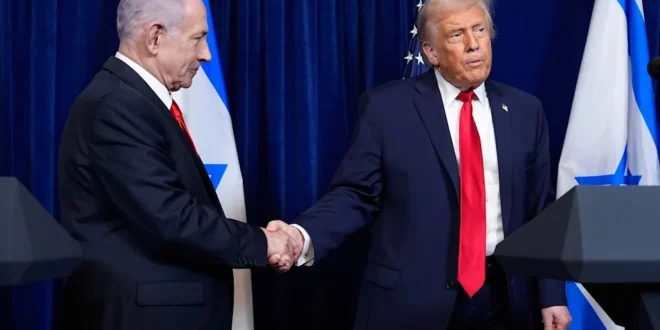
Khalid’s visit followed Netanyahu’s White House meeting with Trump, where the Israeli leader questioned whether diplomacy with Tehran could succeed. Israeli officials cited by CNN said discussions included expanding strikes and economic pressure, and even the possibility of broader war.
A source familiar with Saudi discussions said, “The minister’s underlying message … is that it’s Netanyahu who is pushing for this escalation, whereas the Kingdom wants to de-escalate.”
Despite this framing, Washington continues extensive military and diplomatic support for “Israel”, limiting any clear US separation from Israeli escalation.
Diplomatic track remains stalled
US-Iran negotiations have not resumed, despite mediation efforts by Qatar and Pakistan. A senior US official said direct talks are unlikely in the near term.
Trump has expressed frustration with Tehran’s refusal to accept US demands. Asked how diplomacy could be revived, he said, “I think we just want to win.” He added, “They’ll get weaker… and then they’ll peter out.”
Iranian officials and Resistance-aligned analysts argue Washington is now seeking a limited settlement after failing to achieve core goals such as dismantling Iran’s missile program or severing its regional alliances. From this view, Trump’s search for an exit reflects US constraints rather than Iranian desperation.
The war is also creating domestic pressure in the US. A CNN poll found that only 28% approve of Trump’s handling of the conflict, while Republicans worry that instability in the Strait of Hormuz could raise energy prices ahead of midterm elections.
Limited Hormuz deal under discussion
US and regional officials are reportedly exploring a limited interim agreement to reopen the Strait of Hormuz, aiming to stabilize energy markets and give Trump a political win without resolving the broader conflict.
Iran, however, views its leverage over the strait as a key deterrent and warns against separating it from the wider war and ongoing US-backed Israeli strikes.
White House Press Secretary Karoline Leavitt said, “Iran will continue to pay until they come to the table in… a meaningful way,” framing negotiations as requiring Iranian compliance while omitting US and Israeli military roles in escalation.
Pentagon considers expanded strikes
Trump has reviewed plans from US Central Command for one to two weeks of intensive bombing targeting Iran’s missile capabilities, with additional US forces deployed to the region.
He said, “We’re going big. We’ve already gone big,” though he has not approved the plan. Military officials warn of limited air-defense interceptor stocks and the limits of air power alone. Gen. Dan Caine told Congress, “Air power has its limits.”
Iran’s continued missile launches and pressure on US defenses have turned the conflict into a prolonged war of attrition, challenging US assumptions of rapid dominance. Officials have also raised concerns about civilian casualties from potential strikes on infrastructure, though Trump said he is reluctant to target such sites.
Netanyahu pushes harder line
Netanyahu reportedly argued that diplomacy with Iran is unlikely to succeed, urging a more aggressive approach. US envoys Steve Witkoff and Jared Kushner still see a possible deal, but Netanyahu assured Trump that final decisions would remain with the US president.
An Israeli official said, “We’re talking about what to do – you don’t have a textbook solution.”
Trump has also suggested internal Iranian divisions may be responsible for attacks on US forces, though CNN cited no evidence for such claims. Iranian officials reject this framing, arguing their actions are coordinated responses to US and Israeli strikes.
Saudi Arabia seeks protection from escalation
Saudi officials say their actions against Iraqi groups are defensive, aimed at protecting infrastructure, without providing any evidence supporting its claims of attack on its territoy from Iraq. However, targeted groups view Saudi involvement as part of the US-led campaign.
Riyadh’s push for restraint reflects concern that its oil and military infrastructure could be exposed in a wider war, while it seeks to maintain its US security partnership without bearing the costs of escalation.
Trump continues to oscillate between threats and calls for a deal, saying, “We’re going to hit them very hard,” while also predicting eventual agreement.
The result is a widening contradiction: Trump seeks a deal he can claim as victory, Netanyahu pushes escalation, Saudi Arabia seeks protection from spillover, and Iran insists it will not give up leverage without guarantees that US and Israeli attacks will end and the MoU is respected.