Geostrategic Media Political Commentary, Analysis, Security, Defense

By Hadi Elis
History often creates illusions. At times, events appear to repeat themselves, giving the impression that societies are trapped in endless cycles of conflict, revolution, and repression. Yet history rarely repeats itself in an identical manner. Instead, it evolves through changing circumstances, new actors, and altered balances of power. Those who treat history as a teacher recognize that every crisis contains lessons from the past, while those who ignore history remain trapped by the same mistakes.
The German philosopher Georg Wilhelm Friedrich Hegel attempted to explain this process through his philosophy of history, arguing that history moves through a dialectical process in which contradictions generate transformation and societies advance through successive stages. Although interpretations of Hegel’s ideas have been debated for generations, one important insight remains relevant: history is not static. It is shaped by the interaction between human choices, political forces, social movements, and changing conditions. Individuals and societies create history, but history also shapes the identity, aspirations, and political consciousness of those who live through it.
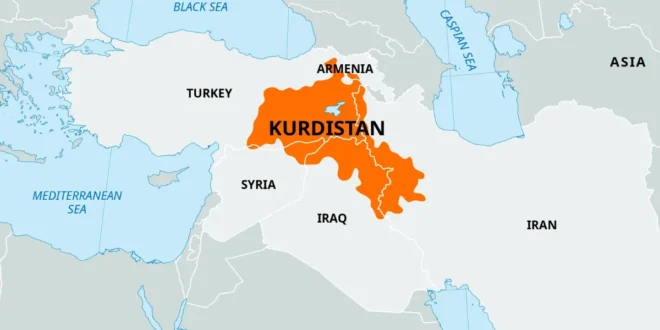
This understanding is essential when examining the Kurdish question, one of the longest unresolved national and political issues in the modern Middle East. For decades, some political leaders in the region have assumed that Kurdish demands could be permanently contained through military force, security policies, or attempts at cultural assimilation. The repeated belief that the power of the nation-state would inevitably overcome Kurdish aspirations has proven historically inaccurate. Across generations, Kurdish movements have continued to emerge because the underlying political, cultural, and constitutional questions have remained unresolved.
The current transformation of the Middle East, particularly amid the ongoing confrontation between the United States and Iran, demonstrates that old political arrangements are increasingly being challenged. Regional power structures are shifting, alliances are being reconsidered, and communities that were previously marginalized are seeking a greater role in shaping their own futures. The Kurdish issue is once again positioned within a broader geopolitical environment involving regional governments, European actors, the United States, and other international stakeholders whose interests increasingly intersect with Kurdish regions.
What distinguishes the current period from previous decades is not simply the continuation of Kurdish resistance movements, but the changing regional and international environment surrounding them. The Kurdish question today exists within a far more complex geopolitical landscape than it did during previous uprisings. The involvement of multiple actors, the emergence of Kurdish autonomous institutions, the experience of Kurdish governance in Iraq and Syria, and the growing international attention to minority rights have created realities that cannot easily be reversed.
A comparison between previous Kurdish uprisings and the current phase of Kurdish political struggle reveals important differences. Historical movements must be examined not only through the lens of military confrontation but also through broader factors: leadership structures, organizational capacity, social support, political legitimacy, regional dynamics, and international involvement. By these measures, the current stage represents a qualitatively different moment in Kurdish history. The Kurdish movement today operates in a world where identity, governance, security, and international diplomacy are increasingly interconnected.
The historical trajectory suggests that the Kurdish question is approaching a point where permanent solutions can no longer be avoided. The issue is no longer simply whether Kurdish demands exist; they clearly do. The more important question is how regional states will respond: through continued confrontation, or through political frameworks that recognize Kurdish identity while preserving regional stability.
One of the most significant developments of recent years has been the gradual erosion of policies based on denial. For much of the twentieth century, several states in the region attempted to minimize or suppress Kurdish identity through restrictions on language, political organization, and cultural expression. However, decades of such policies did not eliminate Kurdish identity. Instead, they often strengthened Kurdish political consciousness and deepened demands for recognition.
Turkey represents one of the most important examples of this historical challenge. For decades, the Kurdish issue was largely approached through a security lens, with Ankara viewing Kurdish armed movements primarily as threats to territorial integrity. The conflict between the Turkish state and the Kurdistan Workers’ Party (PKK) produced decades of violence, displacement, and political polarization.
Yet the continuation of conflict has demonstrated the limits of military solutions. Despite Turkey’s significant military capabilities, extensive security operations, and the deployment of large numbers of armed personnel over many years, the Kurdish question has remained unresolved. Previous negotiation attempts, including the peace process between 2013 and 2015, demonstrated that dialogue was possible, even if political circumstances prevented a lasting agreement.
The current debate is therefore not simply about security. It is about whether a political solution can emerge from decades of confrontation. When Kurdish groups declare ceasefires and express willingness to engage in dialogue, the central question becomes whether states are prepared to move beyond military approaches and address the political roots of the conflict.
The contradiction in regional politics remains clear: governments often describe Kurds as equal citizens while simultaneously resisting collective recognition of Kurdish identity. Genuine reconciliation requires moving beyond symbolic statements and creating political frameworks where cultural rights, local governance, and equal citizenship can coexist.
The broader Middle East transformation makes this issue even more urgent. The region is experiencing overlapping crises: competition between major powers, conflicts involving Iran and Israel, instability in Syria and Iraq, and changing relationships between regional actors. In such an environment, unresolved ethnic and national questions can become sources of continued instability.
The Kurdish issue is not the only challenge facing the Middle East, but it is undoubtedly one of its major unresolved questions. Just as the Israeli-Palestinian conflict has shaped regional politics for decades, the Kurdish question in Turkey, Syria, Iraq, and Iran remains a central factor influencing security calculations across the region.
The future of the Middle East cannot be built on ignoring identity-based conflicts. Many of the region’s crises emerged because states attempted to impose political models that did not adequately accommodate ethnic, cultural, or regional diversity. Sustainable stability requires political systems capable of managing diversity rather than suppressing it.
The future of Kurdish rights does not necessarily require the dissolution of existing states. A more realistic discussion today focuses increasingly on models of autonomy, federalism, decentralization, and democratic governance that allow different communities to preserve their identity while remaining part of broader political structures.
The experience of the Kurdistan Region of Iraq, as well as Kurdish-led governance structures in parts of Syria, has demonstrated that alternative models of political organization are possible, although each case faces its own challenges and limitations. The central lesson is that political recognition and institutional inclusion are more sustainable than permanent confrontation.
The changing relationship between Turkey and Israel, as well as wider regional competition involving Iran, has also placed Kurdish issues within a larger strategic context. Kurdish regions have increasingly become part of broader geopolitical calculations, whether through security partnerships, energy considerations, or regional influence struggles. This reality makes ignoring the Kurdish question even more difficult for regional powers.
As the confrontation between the United States and Iran reshapes regional dynamics, Kurdish communities may once again find themselves affected by decisions made by larger powers. History has repeatedly shown that unresolved political questions eventually return to the center of international attention.
The Kurdish struggle has continued for more than a century, beginning with the unresolved promises and disappointments following World War I and continuing through the political transformations after World War II. Attempts to permanently deny Kurdish political aspirations have repeatedly failed because they did not address the underlying causes of Kurdish demands.
The lesson of history is not that every national movement must result in independence. Rather, the lesson is that lasting peace requires political recognition, institutional guarantees, and a framework where communities believe their future can be protected.
The Middle East is entering a new era. The region’s future will not be determined only by military strength or alliances among states, but by the ability of governments to address unresolved historical questions.
The Kurdish question is one of those questions.
The choice facing regional leaders is therefore clear: continue repeating the conflicts of the past, or recognize that a new Middle East requires new political thinking based on inclusion, justice, and realistic solutions.
History is once again creating an opportunity.
Whether leaders recognize it before the next crisis arrives may determine the future stability of the entire region.