Geostrategic Media Political Commentary, Analysis, Security, Defense
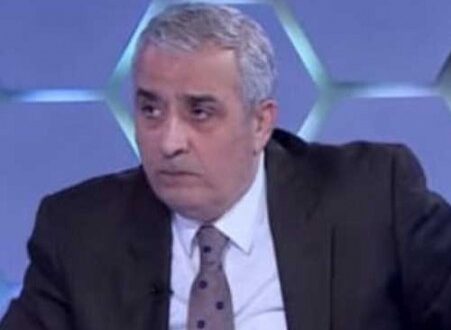

Eng. Saleem Al-Batayneh
No one writes from outside of their place. Even Edward Said, the author of Out of Place, wrote from the very heart of his.
Is it not our right to be anxious? We are retreating backward, even if the headlines tell us the opposite. I do not know if I am alone in this feeling, or if there are others who share it.
What has changed is the function of place itself. In a time long past, it was impossible to imagine a political landscape in the region of this magnitude where Amman was not a station, a mediator, or the regional waiting room. Thus, approaching the scene even slightly is no longer merely a reading of politics or economics. It has become a confrontation with a question about the nature of the next phase and the lens through which we must read our levels of anxiety.
It appears that vision is absent, or at the very least, narrow. The state finds itself in the position of a silent witness. In the past, Jordanian anxiety was often born of ignorance; the space of the unknown was vast. Today, the equation has changed profoundly. The level of challenges no longer permits us to take a single step forward with the same mentality and the same names that we used in the past. The absence of a strategic vision has caused us to oscillate between axes that do not like one another.
We can no longer tolerate misjudgment. We can no longer rely on a policy of waiting. Standing and watching in helplessness is no longer enough. When the questions become bigger than the answers, fear becomes a justified and acquired right. The events unfolding, whether with our knowledge or without it, are not far from a new reality taking shape—a reality that strikes at the core of our political and security capabilities.
Knowledge is not innocent, and ignorance is not accidental. Our political discourse is often unclear and has not provided us with clarity to understand what is happening. The fear is that what is happening is like the tip of an iceberg, hiding many surprises beneath the surface.
There are many things we continue to circle around but refuse to articulate clearly. Take, for example, the phrase “any piece of land west of the river.”
Our problem in Jordan is that we tend toward oversimplification when discussing Israeli plans and maps that consider Jordan a Jewish land—a trust from the Balfour Declaration and the Sykes-Picot Agreement, extending from the Yarmouk River in the north to the Wadi Mujib in the south. Our justification for this is the mantra repeated in our analyses and political discourse: we are a close ally of the United States, and therefore, we have nothing to fear.
This only confirms that what happens from time to time is merely an announcement of a small part of what we do not know.
In Washington, there is a president who thinks in terms of deals and measures relationships by the size of the gains. Political deals are no longer managed above the table, but below it. We must recognize this and guard ourselves against the betrayal of archival erasure and the theft of history. If we do not, we will learn it in a painful way.
What I write is not bullying. It is a form of “tough love” for Jordan—the same concept taught in Western educational institutions. The Jordanian debate should not be managed by excluding the dissenting voice, but rather by subjecting it to the scales of reason and evidence.
Jordan does not need to become a part of others’ conflicts.
I do not believe, even now, that anyone can predict where things are headed in the region. The region is seething with transformations, and what lies ahead requires a greater depth in strengthening the duality of security and development and transitioning to preventive diplomacy. This requires the formulation of a new strategy that makes Jordan a pioneering state in shaping the region’s security—an element of balance and stability in its equations, just as it used to be. Recent history reminds us that states that do not reposition themselves during major moments of transition will find themselves paying the cost of misguided choices. At that point, the losses will be immense.
Author’s Bio:
Al-Batayneh is a former Jordanian deputy.