 Geostrategic Media Political Commentary, Analysis, Security, Defense
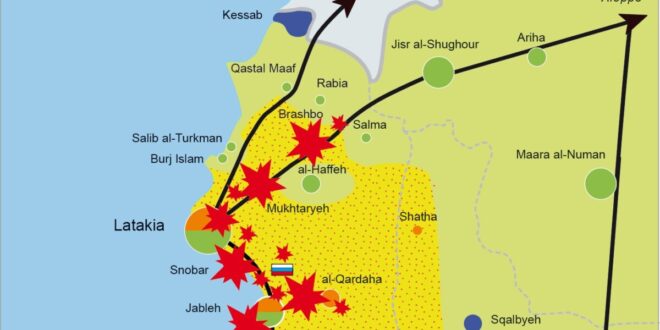

In moments of political upheaval, questions of identity often become tools of power. Communities are not only governed—they are redefined, recast, and, at times, quietly erased. Today, the Alawite community of Syria finds itself once again at the center of such an effort.
For centuries, Alawites have lived with the burden of being described by others—sometimes misunderstood, often misrepresented, and periodically cast outside the fold of Islam altogether. These judgments have rarely been neutral. More often, they have reflected the priorities of political authorities, religious establishments, or ideological movements seeking to impose coherence where diversity has long existed.
What is new is not the scrutiny itself, but its form. In recent months, there has been a renewed push—subtle in language, but significant in implication—to “integrate” Alawites into a more standardized conception of Sunni Islam. Framed as reform or reconciliation, these initiatives carry an unmistakable undertone: that Alawite Islam is somehow incomplete, in need of correction or validation.
This premise is deeply flawed.
Islam, from its earliest centuries, has never been a single, uniform tradition. It has been a constellation of interpretations, practices, and spiritual paths, bound together by shared foundations but enriched by diversity. The attempt to impose a singular religious identity on any Muslim community is not a return to authenticity; it is a departure from it.
Alawites, like many other Muslim communities, have developed their own ways of expressing faith—rooted in reverence for the Prophet Muhammad and a deep attachment to his family. Their religious life has evolved in conversation with history, geography, and social experience. It cannot be reduced to a checklist of doctrinal conformity, nor should it be subjected to external certification.
To suggest that Alawites must be “brought into” Islam is not only historically inaccurate—it is conceptually incoherent. By what authority does one group of Muslims claim the power to authenticate another? And to what end?
The answers are not purely theological. They are political.
Efforts to redefine religious identity often coincide with broader attempts to consolidate power, reshape social hierarchies, or align communities with particular centers of influence. In this context, the language of religious reform can become a vehicle for something else: the gradual erosion of autonomy.
For the Alawites, this pressure carries particular weight. As a community deeply embedded in Syria’s social and historical fabric, their identity is not an abstract theological position—it is a lived reality. To dilute that identity in the name of uniformity is to risk unraveling a delicate social balance.
None of this is to argue against dialogue or mutual understanding. On the contrary, the richness of Islamic civilization has always depended on exchange across its many traditions. But dialogue requires recognition, not erasure. It presumes that each community speaks from a position of legitimacy, not deficiency.
There is a difference between engagement and assimilation.
The Alawites do not need to be taught how to be Muslim. They do not require external validation of their beliefs, nor do they benefit from projects that seek to reshape them in the image of others. Like all communities, they have the right to define themselves—to draw from their own history, to maintain their own traditions, and to articulate their own understanding of faith.
In a region already strained by conflict and fragmentation, the imposition of religious uniformity is not a path to stability. It is an invitation to further division.
If there is a lesson to be drawn from the history of Islam, it is not that diversity must be overcome, but that it must be accommodated. The strength of the tradition has always lain in its ability to hold difference without dissolving into it.
The Alawites are part of that tradition. They do not stand outside it. And they do not need to be brought in.
They are already there.