 Geostrategic Media Political Commentary, Analysis, Security, Defense

Dr. Shehab Al-Makahleh
The ceasefire between the United States and Iran remains dangerously fragile, liable to collapse at any moment. A temporary halt to military hostilities does not equate to a resolution of their underlying causes. Nor are the ongoing negotiations over Iran’s nuclear programme, sanctions relief, and regional security arrangements close to producing stable, actionable understandings. As long as the spectre of renewed direct or proxy confrontation looms, the Arab Gulf states remain the most exposed — not only geographically, but also because of their deeply intertwined interests with both Washington and Tehran, and their decades‑long reliance on the American defence umbrella as the ultimate guarantor of their security.
Recent regional developments, however, suggest that this reliance is no longer sufficient — and perhaps no longer viable in the form that prevailed since the end of the Cold War. The United States itself is recalibrating its strategic priorities, progressively reducing its direct military footprint in the Middle East to concentrate on great‑power competition with China in Asia and countering Russia in Europe. Even when Washington does intervene militarily, as it did in the latest exchanges with Iran, its actions primarily serve its own strategic calculations, not necessarily the Gulf’s security requirements or regional stability.
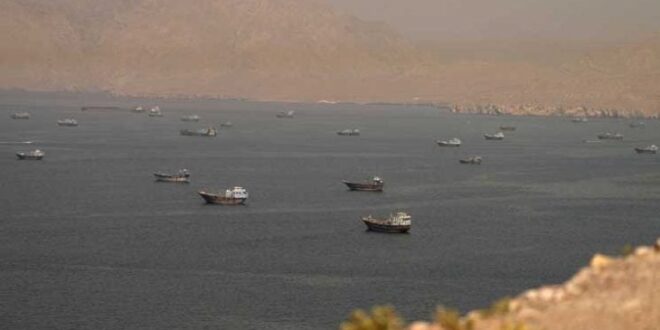
Consequently, the continuation — or even the persistent risk of renewal — of US‑Iranian military friction threatens to derail political negotiations, reduce the ceasefire to a mere interlude, and confront the Gulf states with an exceedingly dangerous reality. Each new round of escalation raises the likelihood of strikes on oil facilities, disruptions to navigation in the Arabian Gulf and the Strait of Hormuz, energy price spikes, waning investment, and serious setbacks to the ambitious economic development agendas of Saudi Arabia, the UAE, Qatar, and their neighbours.
The past few years have proven that Gulf security cannot remain hostage to the vicissitudes of US‑Iranian relations. When Washington leans toward negotiation, deterrence takes a back seat; when talks collapse, the language of force and escalation returns. Caught between these two poles, the Gulf states bear the cost of instability, even though they are not the ones dictating the trajectory of the bilateral American‑Iranian dynamic.
Conversely, it would be equally unwise for the Gulf states to place all their bets on confidence‑building with Iran as the sole avenue to regional security. Four decades of experience show that Iranian‑Gulf relations have been consistently marked by tension and uncertainty, even during periods of diplomatic dialogue or restored political ties. While the resumption of Saudi‑Iranian relations was a welcome step toward de‑escalation, and while direct talks are always preferable to estrangement, this does not alter the fact that Iran’s regional policies — its missile and drone programmes, its support for non‑state armed groups, and its continued use of regional influence as a strategic tool — remain a perennial source of concern for Gulf capitals.
Yet the impossibility of building full‑fledged trust with Iran does not rule out dialogue. Rather, it demands a clear separation between political engagement and national security arrangements. States do not build their security on good intentions, but on a judicious mix of deterrence, indigenous capabilities, balanced alliances, and regional institutions capable of managing crises and preventing their escalation into full‑scale wars.
What the Gulf states urgently need today is not to swap one external umbrella for another, but to transition gradually toward a fundamentally different security paradigm — one anchored in enhanced self‑defence capacities, the development of domestic defence industries, the integration of air and missile defence systems across the Gulf Cooperation Council, unified early‑warning architectures, institutionalised intelligence‑sharing, and higher readiness of joint forces against both conventional and asymmetric threats.
Furthermore, Gulf security cooperation must transcend its traditional boundaries to encompass cybersecurity, energy‑infrastructure protection, supply‑chain security, and countermeasures against drone and cyberattacks — arenas that now represent the most pressing challenges in the new security environment.
Simultaneously, the Gulf states need to diversify their defence and strategic partnerships, so that their security no longer rests on a single external actor. Cooperation with European powers, outreach to rising Asian partners, and deeper defence ties with multiple allies all offer greater strategic autonomy, without implying abandonment of the longstanding partnership with the United States.
But the most critical pillar remains the construction of a new Arab and regional security framework, spearheaded by the region’s major Arab powers, built on institutionalised dialogue, crisis management, and de‑escalation mechanisms, while retaining sufficient deterrent capabilities. The Middle East still lacks a collective security system comparable to what Europe painstakingly developed through decades of confidence‑building and shared institutions. Despite the vast differences between the European and Middle Eastern contexts, the imperative for an Arab‑led regional security process has never been more acute.
Perhaps the most important lesson from the US‑Iranian confrontations is that external powers, no matter how formidable their military might, cannot provide permanent security for the region. They intervene according to their interests, withdraw when their priorities shift, negotiate when they see advantage in talks, and resort to force when they deem it useful. The region’s states, meanwhile, are invariably left to bear the costs of war, economic devastation, market turbulence, and stunted developmental prospects.
This is why Gulf security must no longer be contingent on decisions made in Washington or Tehran. It must become the product of an independent Gulf and Arab strategy, grounded in a clear recognition that deterrence does not render diplomacy obsolete, nor does dialogue replace the imperative of building strength; and that when trust remains elusive, it should be substituted with clear, enforceable rules for managing competition and preventing a slide toward war.
Preserving the US‑Iran ceasefire remains a direct interest for the Gulf states, because the alternative — a return to the escalatory spiral — has proven to produce no clear victors, only deeper instability. Yet sustaining that truce depends not only on the will of Washington and Tehran, but also on the Gulf states’ ability to shift from being passive recipients of the conflict’s fallout to proactive architects of a new security order. That order must be built on self‑reliance, reinforced joint Gulf and Arab action, diversified international partnerships, and continued dialogue with Iran — free of any illusion that dialogue alone can serve as a sufficient guarantee of lasting security and stability.