 Geostrategic Media Political Commentary, Analysis, Security, Defense

Hadi Elis
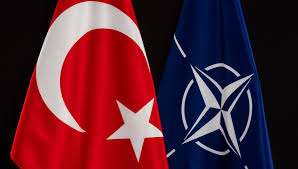
NATO is getting ready for its 2026 summit. And somehow, the alliance decided to hold it in Turkey.
That’s interesting timing. Right after Turkey and Britain cooperated to make Syria’s Al Qaeda offshoot, HTS, the de facto post-Baath Party government in Damascus. On paper, it’s an interim arrangement. In reality, it’s already acting permanent.
This reminds me of another summit held in Turkey. On June 28, 2004, NATO committed to a new policy on Afghanistan. The declaration was titled “Our Security in a New Era.” It read: “Today, we have approved a major expansion of NATO’s role in Afghanistan… We will commit the resources needed to make this mission a success.”
We all know how that ended.
The United States left Afghanistan on August 30, 2021, abandoning $5 billion worth of weapons. Then Washington signed a peace deal with the Islamic Emirate of Afghanistan – mistakenly called “Taliban” (which simply means “students” in Arabic, a name given to protesters during the 1979 revolution, many of whom later became mujahideen).
So here’s the uncomfortable question: Will NATO commit the same fate to HTS jihadists in Syria?
Let’s rewind further. From 2001 to 2011, US troops in Afghanistan were actively fighting Turkish mujahideen. WikiLeaks later reported this as “US battling militants from Turkey, its NATO ally.” Those same groups later fought against Kurdish PKK guerrillas inside Turkey. Then they infiltrated every major jihadi group in Syria – ISIS and Al Nusra specifically.
Why hold another summit in Turkey now?
Back in 2004, NATO also agreed to assist Iraq’s “interim” government and set up a training mission for Iraqi security forces. They launched the Istanbul Cooperation Initiative – meant to build security ties with countries from Qatar to Pakistan, many of them non-member NATO allies.
Fast forward to October 13, 2023. President Erdoğan stood at the Turkey-Africa Business and Economic Forum in Istanbul and declared that US military presence in Syria was – his words – “an extraordinary threat to Turkey’s national security.” Why? Because the US partnered with Kurdish forces to fight ISIS.
Then came the Israel-Iran war in June 2025. A few days later, the US joined Israel. That conflict lasted 12 days. Turkey condemned Washington immediately. On June 22, 2025, the Turkish Foreign Ministry published an official statement: “We call on all relevant parties to act responsibly, to cease attacks immediately, and to refrain from actions that could lead to further loss of life and destruction.”
Since then, the Ayatollahs’ regime has killed over 50,000 people. No one talks about the loss of life anymore.
On February 28, 2026, the US unilaterally attacked Iran again. This time the war lasted longer. A ceasefire was announced on April 7–8, but the conflict is still active – passing 100 days on June 6, 2026.
Around March 20, 2026, President Trump called on NATO members to support the US against Iran. Many refused. Including Turkey.
Trump was furious. On April 1, 2026, he called NATO members “cowards” and said the US could unilaterally exit the alliance. He described NATO as a “paper tiger.” Withdrawing, he said, was now “beyond consideration.” Never mind that NATO’s own charter – Article 13 – requires a formal one-year notice for any country leaving.
Just three weeks later, NATO Secretary General Mark Rutte made an official visit to Turkey. April 21–22. His mission: prepare for the upcoming Ankara summit.
Sound familiar? It’s the same playbook Turkey used during NATO’s enlargement negotiations with Sweden, Norway, and Finland. Ankara blackmailed them – turn against your Kurdish diasporas, or no support from us.
Now, with the US potentially stepping back, some whispers suggest Turkey could be offered a leadership seat in NATO. An empty chair left by America.
But here’s the hard truth: Turkey is neither big enough nor experienced enough to lead NATO with its current capacity. Its ultranationalist policies in Central Asian republics – where NATO’s anti-Russia agenda briefly intersected with Ankara’s ambitions – are built on an illusion. Pan-Turkism. The dream of “Turan,” the land of all Turkic peoples. At the same time, Turkey wants to lead the Muslim world as a restored Turkish Caliphate.
You can’t serve two masters. And NATO cannot offer membership to Central Asian republics anyway. Even if it could, the strategy of “liberating” them from Russia might have made sense right after the USSR collapsed. Not today.
In both theaters, Turkey remains fundamentally anti-NATO.
And Turkey is now moving toward becoming an Islamic republic. A dictatorship. Anti-NATO by its very nature. By any standard, that no longer qualifies as an ally. But NATO’s collective mind seems confused – unable to think straight about strategy or national security, distracted by the waves of Islamization sweeping Western capitals.
Under Turkey’s current constitution, Erdoğan cannot be nominated for a third term in the 2028 presidential election. Political operations are already underway against the main opposition party, CHP – known for its secular stance. The Turco-Islamist camp wants the CHP eliminated.
Let me be blunt: NATO and Turkey represent two different worlds. Different understandings of national security. Different strategic interests. Different commitments to democratic governance, the rule of law, and parliamentary proceedings.
NATO is destined to diminish. Then dissolve. It will likely transform into a purely European alliance. Turkey still won’t fit into that, either.
Ankara is already engaged with Pakistan, Qatar, and Saudi Arabia on an alternative defense pact. That process continues.
A serious global realignment is happening right now. The coming days will make the Turkey-versus-NATO divide much, much clearer.
Hadi Elis is a geopolitical analyst focusing on NATO, Middle East security, and Turkish foreign policy.