Geostrategic Media Political Commentary, Analysis, Security, Defense
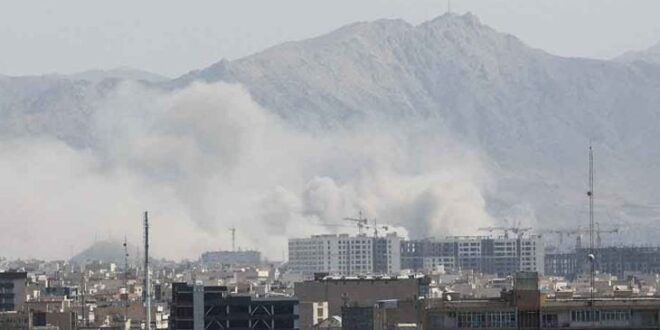

As the war between Iran and the U.S.–Israeli alliance intensifies, Tehran finds itself increasingly isolated on the global stage. The killing of Iran’s Supreme Leader, Ali Khamenei, and a sustained bombing campaign by the United States and Israel have placed Iran under immense military pressure.
In response, Tehran has widened the battlefield beyond the Middle East. Iranian missiles and drones have struck targets across a broad geographic arc, reaching states including Cyprus, Turkey, Azerbaijan and several Gulf countries hosting American military bases. The escalation has rattled regional security and triggered major disruptions in global energy markets.
A key flashpoint remains the Strait of Hormuz, through which roughly one-fifth of the world’s oil supply normally passes. With shipping severely disrupted and oil infrastructure targeted, the conflict has pushed energy prices sharply higher and exposed the global economy’s vulnerability to instability in the Gulf.
Russia and China Step Back
Despite years of strategic alignment with Iran, both Russia and China have responded cautiously to the crisis. Instead of providing military assistance, Moscow and Beijing have largely confined themselves to diplomatic criticism of the U.S. and Israeli strikes.
Analysts argue that this restraint reflects pragmatic calculations rather than a breakdown in partnerships. Direct intervention on Iran’s behalf would risk confrontation with the United States and potentially destabilize relationships with Gulf states an outcome neither power appears willing to accept.
For Russia, the priority remains the war in Ukraine. President Vladimir Putin has limited military and diplomatic bandwidth, making a new confrontation with Washington strategically risky.
China’s position is similarly cautious. As the world’s largest energy importer and a major trading power, Beijing maintains extensive economic ties with both Iran and its Gulf rivals. Any direct involvement in the conflict could jeopardize those relationships and threaten its access to vital energy supplies.
The Strategic Paradox
The crisis exposes a paradox at the heart of Iran’s geopolitical partnerships. Both Russia and China have invested years in building closer ties with Tehran, often portraying Iran as a pillar of a broader anti-Western alignment.
Yet when Iran faces its most severe military challenge in decades, that alignment has clear limits. While Moscow and Beijing have previously helped Iran develop missiles, air-defense systems and other military technologies, their support stops short of direct intervention.
This reflects the asymmetrical nature of their partnerships. Iran provides strategic value by challenging U.S. influence in the Middle East, but it is not central enough to the core national interests of either Russia or China to justify military confrontation with the United States.
China’s Calculated Distance
China’s restrained approach also reflects its broader foreign policy strategy. Unlike the United States, whose alliances are often built around formal security commitments, Beijing typically cultivates partnerships centered on trade, investment and arms cooperation.
This model allows China to maintain influence without being drawn into costly conflicts far from its primary security concerns. For Beijing, those concerns remain concentrated in East Asia, particularly around Taiwan and the South China Sea.
From this perspective, the Iran conflict may even offer strategic advantages. As U.S. forces devote resources and attention to the Middle East, China can observe American military operations and capabilities in real time insights that could prove valuable in a future crisis involving Taiwan.
China’s main vulnerability lies in its dependence on Gulf energy. Roughly 45% of its oil imports pass through the Strait of Hormuz. However, Beijing has partially mitigated that risk by building strategic reserves and accumulating large volumes of Iranian crude already stored or in transit.
Russia’s Opportunistic Position
For Russia, the conflict also presents potential economic benefits. Rising oil prices strengthen Moscow’s energy revenues and provide additional resources for its war economy amid the ongoing conflict in Ukraine.
At the same time, Moscow appears unwilling to tie its long-term strategy too closely to Iran’s survival. Analysts note that Russia has historically prioritized preserving influence over maintaining loyalty to specific regimes.
This pragmatic approach was visible in Syria, where Moscow maintained its strategic foothold even after the fall of longtime ally Bashar al‑Assad by quickly establishing ties with the new leadership under Ahmed al‑Sharaa.
The same logic may guide Russia’s calculations regarding Iran: preserve leverage regardless of who ultimately governs in Tehran.
Analysis: The Limits of Anti-Western Alignment
The current crisis highlights the limits of the emerging geopolitical bloc often framed as an anti-Western axis. While Iran, Russia and China share an interest in countering U.S. influence, their strategic priorities diverge sharply when direct military confrontation becomes a possibility.
Iran now finds itself confronting a coalition of powerful adversaries largely on its own. Moscow and Beijing remain supportive rhetorically, but their actions suggest a clear unwillingness to risk escalation with Washington.
This dynamic underscores the transactional nature of many contemporary geopolitical partnerships. Strategic alignment does not necessarily translate into military solidarity, particularly when the costs of intervention outweigh the benefits.
For Iran, the result is growing isolation at a moment of extreme vulnerability. For Russia and China, the war offers opportunities to strengthen their geopolitical positions while avoiding the dangers of direct involvement.