

 Geostrategic Media Political Commentary, Analysis, Security, Defense
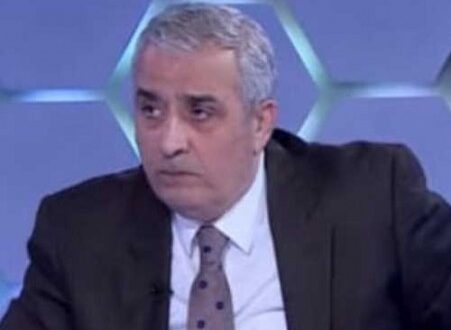

Eng. Saleem Al Batayneh
The power of states is not confined to traditional indicators such as geography, landmass, or population. It also lies in the mindset of governance. Few expressions cast a longer shadow over political reason than sound judgment and political wisdom—terms that belong to a rare vocabulary.
Arab monarchies are not all ideal in the eyes of some. Yet, in fairness, they have offered an enlightened model of relative stability in a fragile region and a fluid environment. They have pursued long-breathing diplomacy to understand shifting variables, avoided rushing into closed, confrontational alliances, and instead chosen a realistic balance that earns broad respect. Time and again, their presence has asserted itself when the voice of reason has faded.
What must be read carefully in today’s landscape is that Saudi Arabia can no longer be assessed by yesterday’s standards.
A report by the global Gallup Poll indicates that—from Beijing to Washington, across the Shanghai Cooperation Organization and BRICS, and through the India and Mexico axes—Saudi Arabia is viewed as a conscious balancing power in the rebalancing of the Middle East. It is seen as among the most influential regional actors in its handling of political change, free from dependency, and as a steady strategic and economic partner seeking the foundations of economic and geopolitical stability.
Saudi Arabia is consolidating its role as a balanced actor in the region, with a real opportunity to alter the dynamics of the broader neighborhood. It has led a historic transformation that combines boldness with wisdom, unlocking the energies of Saudi society. It has become a geography with a voice—a location with its own climate in strategic calculations, maps, and security and political files. In doing so, it has anchored its standing as a 21st-century power in the art of governance and diplomacy, positioning itself to play pivotal roles in reshaping the political, security, and economic map of the region.
Undeniably, the Arab region has changed profoundly—not merely as a geographic space, but as a zone of conflict and volatility where the calibration of power has slipped. Conflict maps have grown more complex as proxy wars have morphed into direct, on-the-ground confrontations.
Influence maps are shifting fast. Traditional alliances no longer hold, as most Arab states redraw their national security concepts according to their own interests and definitions. At this stage, what matters is not only who possesses power or wealth, but who possesses vision and foresight—especially in a world where the strong decide who deserves to live and who must die.
The Arab East, in all its dimensions, is heading toward change for which no one appears fully prepared—changes in borders, in systems, and in roles.
Saudi Arabia is emerging as a quiet player, pursuing an independent and carefully calculated path in its foreign relations, away from collision zones and zero-sum power balances. It understands that ideology has hollowed religion of its essence; that Islam, throughout its history, was not antagonistic to Judaism or Christianity; and that external manipulation of religion has turned it into a tool for outside powers. It recognizes that Israel has drawn strength from Arab paralysis, and that confronting Israeli exceptionalism requires a shift from fragmented security to integrated security—one that does not exclude Turkey or Pakistan.
It also recognizes that influence is no longer measured by the number of oil barrels, but by the number of algorithms. This was evident during the Saudi Crown Prince’s recent visit to the White House on November 8, 2025, in the context of a partnership that places artificial intelligence at the heart of Saudi Arabia’s strategic equation.
In the end, we may disagree on many details. But we surely agree on this: the Arab homeland is fragmenting and eroding, and the Arab citizen—powerless and voiceless—has been betrayed by politics and divided by geography.
Eng. Al Batayenh was a member of the jordanian Parliament.


