 Geostrategic Media Political Commentary, Analysis, Security, Defense

Dr. Shehab Al-Makahleh
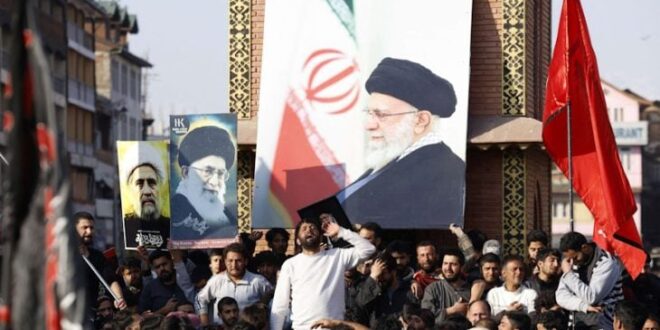
Power abhors ambiguity, but it feeds on vacuum. The moment the rumor mill dares to imagine a Middle East without Ali Khamenei, the calculus of force shifts from deterrence to temptation. Whether dead, dying, or diminished, the symbol matters more than the body. Crowns are heavier than skulls; regimes fall not when leaders perish, but when fear is redistributed.
Enter Donald Trump, a man whose strategic instinct is not subtlety but spectacle. In Machiavelli’s terms, he prefers to be feared loudly rather than loved quietly—and he wagers that fear, once televised, compounds. Yet Machiavelli warned that cruelty must be swift, singular, and final. Cruelty repeated becomes policy failure; violence without closure becomes inflationary—cheapening authority the way excess liquidity cheapens money.
The financial markets understand this before diplomats do. War without an endgame is a tax on certainty. Risk premiums swell, insurance markets choke, shipping lanes tremble, and capital—cowardly by nature—seeks safer shores. The mere suggestion of prolonged confrontation around the Strait of Hormuz is enough to inject volatility into oil futures and to remind investors that geopolitics is the ultimate black swan generator. Guns, after all, are funded by credit; and credit despises indeterminacy.
Sun Tzu would call this a failure of shi—the alignment of conditions. “To subdue the enemy without fighting,” he wrote, “is the acme of skill.” What we witness instead is the inverse: fighting without subduing. Decapitation strikes satisfy the appetite for drama but often miss the anatomy of power. Iran is not a monarchy of flesh; it is a lattice of institutions, rents, militias, and ideology—an ecosystem whose predators adapt quickly. The Islamic Revolutionary Guard Corps is not a praetorian guard awaiting orders; it is a political economy unto itself, with balance sheets, patronage networks, and a theology of resistance that monetizes martyrdom.
Machiavelli cautioned princes against mistaking enemies for mirrors. To project one’s own psychology onto an adversary is to fight a ghost. Tehran’s rulers do not read Wall Street, but they understand leverage. Sanctions harden elites; bombs consolidate them. External pressure, when maximal and unaccompanied by credible exits, forges unity from fracture. The result is paradoxical: the more kinetic the pressure, the more resilient the regime’s internal glue.
And yet, there is unfinished business—because power that strikes must also rule. The op-ed’s central indictment is not of force, but of force without governance. If the objective is regime change, say it and price it. If the objective is behavioral change, define the behavior and the incentives. Ambiguity is not strategy; it is procrastination dressed as menace.
Literature has long warned us about rulers who mistake motion for meaning. In Shakespeare, kings who multiply battles often lose the plot—and then the throne. In economics, the analogy is simpler: when policy tools are misused, they generate perverse incentives. Prolonged conflict subsidizes extremism, corrodes alliances, and converts security into a recurring expense rather than a public good.
Sun Tzu ends where Machiavelli begins: victory belongs to the ruler who understands both the terrain and himself. Without a political settlement, military success is merely tactical debt—owed with interest to history. And history, unlike markets, does not forgive defaults.
The crown without a head is not an opportunity; it is a warning. Those who rush to seize it often discover that power, once unmoored from prudence, devours its claimants first.