Geostrategic Media Political Commentary, Analysis, Security, Defense

Geostrategic Media Desk Team
Key Points
- Regional governments are increasingly seeking diplomatic solutions that reflect their own security and economic priorities.
- The emerging coordination among Türkiye, Egypt, Pakistan and Saudi Arabia signals a stronger regional diplomatic role.
- The Palestinian question remains central to the legitimacy of any sustainable regional settlement.
- Maritime security, Iran and the future of Gaza are interconnected challenges requiring sustained diplomacy.
The Middle East’s New Diplomatic Equation: Regional Powers, Strategic Autonomy and the Search for Stability
The Middle East is entering a period in which regional diplomacy is becoming more consequential, even as military confrontation continues to threaten its stability. For decades, the region’s security architecture was heavily influenced by external powers, particularly the United States and, at different moments, Russia and European governments. That influence remains substantial, but regional capitals are increasingly seeking to coordinate their own responses to crises. The growing diplomatic engagement among Türkiye, Egypt, Pakistan and Saudi Arabia reflects an effort to develop regional mechanisms capable of addressing conflicts, protecting economic interests and reducing the risk of wider escalation.
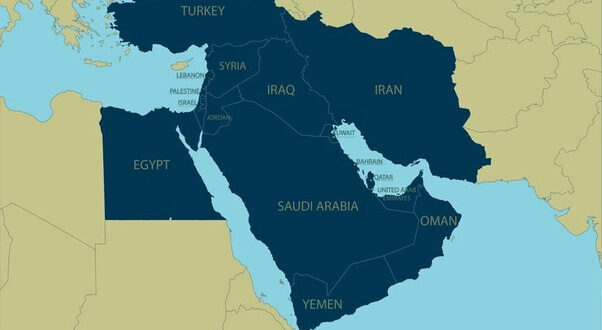
The ministerial meeting of the four countries in Istanbul on 23 October 2026 highlighted this emerging approach. Their discussions addressed Palestine, Yemen, Iran, maritime security and the Strait of Hormuz. The participants reiterated support for Palestinian self-determination and a two-state solution based on the relevant United Nations resolutions. They also called for humanitarian assistance and reconstruction in Gaza, while stressing the importance of diplomacy in addressing the confrontation involving Iran and the United States and Israel. The significance of this coordination lies not in the assumption that the participating states share identical interests, but in their recognition that regional crises increasingly require sustained consultation.
The Palestinian issue remains a central test of regional diplomacy. The postponement of Palestinian elections, the humanitarian situation in Gaza, settlement expansion and tensions in the West Bank have weakened confidence in the prospects for a political settlement. Regional governments face pressure to translate their diplomatic statements into practical initiatives that can support Palestinian institutions, reconstruction and a credible political process. Without a viable political horizon, temporary arrangements are unlikely to produce lasting stability.
The security of the Gulf and its maritime approaches is another defining concern. The Strait of Hormuz and the Red Sea are vital to global energy markets and commercial shipping. Any prolonged disruption would affect not only regional producers but also consumers across Asia, Europe and beyond. The challenge is to prevent maritime security from becoming an arena for escalating military confrontation. Regional states have an interest in preserving freedom of navigation, protecting civilian infrastructure and ensuring that disputes do not spread into a wider conflict.
Türkiye, Saudi Arabia, Egypt and Pakistan bring different diplomatic, military and economic assets to this equation. Türkiye has geographical reach and established diplomatic channels; Saudi Arabia possesses economic influence and relationships with major global powers; Egypt remains central to Arab diplomacy and the security of the Eastern Mediterranean; and Pakistan offers strategic relationships extending into South Asia and the Gulf. Their cooperation could strengthen regional diplomacy, provided that it is supported by clear objectives and practical mechanisms rather than temporary political alignment.
The future of the Middle East will depend on whether regional governments can move beyond crisis management towards a more coherent diplomatic framework. Strategic autonomy does not mean excluding external powers; it means ensuring that regional priorities are represented in decisions affecting the region. A durable settlement will require political inclusion, respect for sovereignty, credible security arrangements and sustained economic reconstruction. The Middle East’s stability cannot be imposed from outside or secured through military power alone. It must be built through regional responsibility and diplomacy.