Geostrategic Media Political Commentary, Analysis, Security, Defense
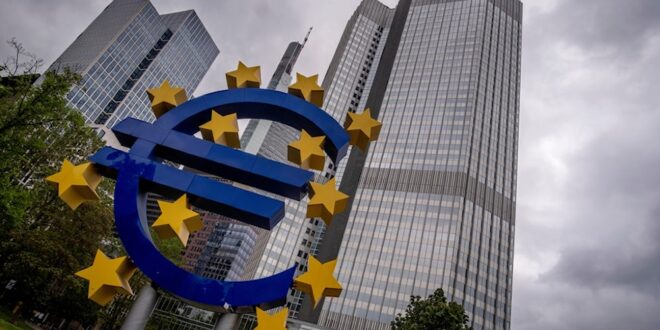

A flash estimate from the statistical office of the European Union, Eurostat, states that the Euro area annual inflation is expected to be 2.9% in July 2026, up .01% from 2.8% in June.
Eurostat notes that energy is expected to have the highest annual rate in July, up to 10.0% compared with 8.5% in June, followed by services, up to 3.3% from June’s 3.2%, followed by food, alcohol & tobacco products, down to 1.2% compared with 1.5% last month, and then non-energy industrial goods, 0.9% compared with 0.7% in June.
Core inflation, which strips out volatile food and energy prices, also increased to 2.5%, from 2.4%.
The eurozone consumer price growth increased due to the renewed US aggression on Iran, which drove energy prices higher as a result of the closure of the Strait of Hormuz; especially after the Iranian Maritime Navigation Authority in the Gulf stated on Friday that navigation through the Strait of Hormuz is currently impossible due to ongoing US military hostilities.
Eurozone inflation hotbeds
Lithuania recorded the eurozone’s highest inflation rate in July at 5.6%, followed by Bulgaria (4.1%), Cyprus (4.0%), Spain (3.8%), and Croatia (3.6%).
Estonia, on the other hand, recorded the eurozone’s lowest annual inflation rate at 2.0%, ahead of Malta (2.1%), France (2.4%), Latvia (2.5%), Austria (2.6%), and Finland (2.6%).
The eurozone’s largest economy, Germany, saw inflation climb rapidly to 2.8% while Italy matched the bloc’s average at 2.9%.
“We think headline inflation will remain sticky at just above 2.5% for the Eurozone,” Pantheon Economics’ economist Claus Vistesen commented on the data, according to Euronews.
Pantheon Economics expects the European Central Bank to deliver an additional 25-basis-point rate hike before pausing.
From Ukraine to Hormuz: Europe’s inflation vulnerability deepens
The latest rise in eurozone inflation comes after the energy shock triggered by the Russia-Ukraine war, which exposed Europe’s dependence on external energy supplies and contributed to higher costs for households and industries.
The reduction of Russian energy flows and Europe’s shift toward more expensive alternatives fueled inflationary pressures, particularly in manufacturing-heavy economies.
The closure of the Strait of Hormuz has now introduced a new energy shock, threatening one of the world’s most important oil transit routes and pushing prices higher.
Together, the Ukraine war and the war on Iran continue to shape the bloc’s economic stability and inflation outlook.