 Geostrategic Media Political Commentary, Analysis, Security, Defense

Dr. Ju Hyung Kim
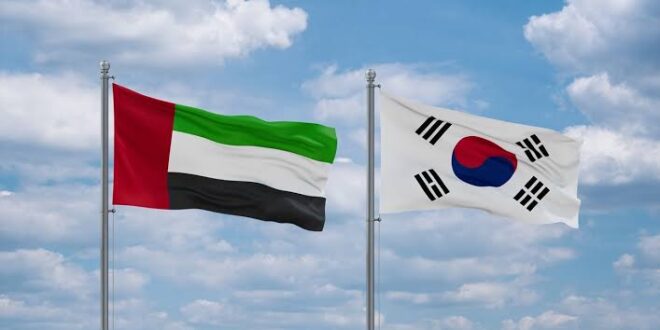
The United Arab Emirates’ move to revive the acquisition and local production of South Korea’s K9 self-propelled howitzer is more than a conventional arms deal. This reflects a broader shift in Gulf security thinking amid the ongoing Iranian war. For years, military modernization in the Gulf area has primarily focused on air defense, jet fighters, missile interception, drones, and maritime security. These priorities remain essential. Nonetheless, the K9 deal suggests that Abu Dhabi is also preparing for a longer era of sustainable firepower, localized defense production, and strategic autonomy.
According to news reports, the agreement between Emirati firm Generation 5 Holding and Hanwha Aerospace includes the localized production of K9 howitzers in the Middle East and Africa, lifecycle support, and regional marketing. This matters since the UAE’s prior effort to acquire the K9 around 2020 was reportedly blocked by an export authorization issue related to German powerpack components. Hence, the revived deal contains an important lesson: supply chain sovereignty in modern arms exports is equally important as battlefield performance.
For the UAE, the operational logic is clear. Abu Dhabi still operates the old M109A3 and G6 artillery systems. Replacing these with the K9 would strengthen its ability to deliver mobile, sustained, responsive land firepower. To be sure, the K9 would not intercept missiles or drones. The value lies elsewhere. It could support mobile units, neutralize hostile launch sites, respond to proxy threats, and provide firepower in a protracted crisis.
The 2026 Iran war reinforced the necessity of such capabilities. Iran’s missile and drone attacks have revealed the vulnerabilities of bases, ports, energy infrastructure, and maritime routes across the Gulf region. In this environment, Gulf states cannot rely on air defense and aircraft alone. They also need magazine depth, repair capacity, resilient land forces, and locally available sustainment.
This is why the localized production element is crucial. Abu Dhabi does not wish to simply remain a customer of foreign arms. Rather, it wants to become a hub of regional weapons production and repair. If the K9 project includes meaningful technology transfer, workforce training, depot-level maintenance, ammunition support, and component-level sustainment, it could strengthen the UAE’s wartime resilience. However, if this is confined to symbolic assembly, its strategic value could be much smaller.
For South Korea, the UAE deal could become a gateway toward a wider Middle Eastern and African market. The K9 is already Seoul’s most successful arms export item, and a partnership with the UAE could transform South Korea from a platform supplier to a long-term defense industrial partner. That would support South Korean arms exports not only in artillery, but also in the fields of ammunition, counter-drone systems, air defense, armored vehicles, and maintenance services.
Nonetheless, there are a number of risks. First, this deal could be interpreted by Iran as part of a wider anti-Iranian military aggrandizement. Therefore, the UAE should frame the K9 as a defensive modernization program rather than an aggressive signal. Second, the regional sales model requires strict end-user control. Abu Dhabi and Seoul should create a joint review mechanism for transferring arms to third countries, especially conflict-sensitive areas including the Middle East and Africa. Third, South Korea should lessen its dependence on core components that are controlled by foreign countries. The aforementioned German powerpack problem illustrates that export credibility depends on more than production capability.
The key policy task for the UAE is to ensure that the K9 becomes part of a broader “survivable firepower” concept, rather than a standalone artillery purchase. This necessitates counter-battery radar, tactical drones, safer command and control, hardened ammunition storage, dispersed firing positions, and depot-level maintenance inside the UAE. Artillery becomes most effective when it is linked with sensors, logistics, and a resilient command network.
For South Korea, the priority should be to turn the UAE deal into a reliable maintenance model for the wider Middle East. In that context, Seoul should provide spare parts, exercises, ammunition support, maintenance capacity, and wartime surge production planning. Artillery export is not a mere sale of a vehicle platform: it is a long-term commitment to keep that system operational under strain.
Hence, the UAE’s K9 decision is decisive not because the artillery itself could tilt the military balance of power in the Gulf. It matters since the deal points to the emerging requirement in regional security: the ability to generate military power, repair, supply, and maintain within the region. The definitive question in a security environment that is largely created by Iran’s missiles, drones, proxy network, and uncertainty about external guarantees is who could continue to fight when the supply chain is disrupted, bases are being threatened, and conflicts last longer than expected.
This creates both opportunity and responsibility for South Korea. If Seoul could provide magazine depth, repair capacity, export reliability, and disciplined end-user control—alongside the K9 platform itself—it could be elevated into a serious defense industrial partner for the Gulf. Yet if Seoul treats the UAE deal as another one-off export success, its strategic value would be limited. Therefore, the K9’s value lies in the model it represents: localized firepower, industrial resilience, and a new form of Gulf defense autonomy.
About the Author:
Dr. Ju Hyung Kim currently serves as a President at the Security Management Institute, a defense think tank affiliated with the South Korean National Assembly. He has been involved in numerous defense projects and has provided consultation to several key organizations, including the Republic of Korea Joint Chiefs of Staff, the Defense Acquisition Program Administration, the Ministry of National Defense, the Korea Institute for Defense Analysis, the Agency for Defense Development, and the Korea Research Institute for Defense Technology Planning and Advancement. He holds a doctoral degree in international relations from the National Graduate Institute for Policy Studies (GRIPS) in Japan, a master’s degree in conflict management from the Johns Hopkins University School of Advanced International Studies (SAIS), and a degree in public policy from Seoul National University’s Graduate School of Public Administration (GSPA).
Dr. Kim has written extensively on international security, diplomacy, and alliance management. His work has appeared in a wide range of respected outlets, including the Lowy Institute, The Strategist, CIMSEC, Britain’s World, The Diplomat, War on the Rocks, 38 North, Breaking Defense, Modern War Institute, Small Wars Journal, Geopolitical Monitor, Geostrategic Media, The Geopolitics, Global Defense Insight, Global Taiwan Institute, RealClearDefense, Asia Times, Modern Diplomacy, Global Security Review, Central European Institute of Asian Studies, Visegrad Insight, Defense Opinion, SOF News, Irregular Warfare Initiative, WavellRoom, East Asia Forum, Pearls and Irritations, Institute for Security & Development Policy, Center for Maritime Strategy, Defense Daily, Fulcrum, The Washington Institute for Near East Policy, The Maritime Executive, International Policy Digest, NK News, Korea Pro, E International Relations, Euromaidan Press, Institute for Diplomacy and Economy, the Australian Centre for International Studies, the Times of Israel, the Australian Naval Institute, Parley Policy Initiative, and the Institute for Peace & Diplomacy.