 Geostrategic Media Political Commentary, Analysis, Security, Defense
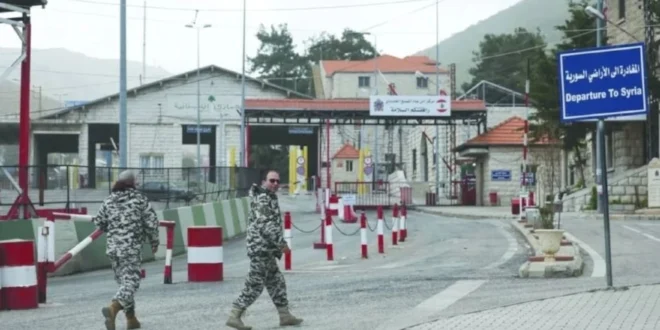

Israeli Prime Minister Benjamin Netanyahu has called for a closed security meeting on Syria and Lebanon following remarks by US President Donald Trump suggesting that Syrian forces could enter Lebanon to confront Hezbollah.
According to Yedioth Ahronoth, Israel strongly opposes any Syrian military deployment on Lebanese territory but “fears Syria may already be pursuing despite Damascus’ denials.” The newspaper said the meeting is part of preparations for such a scenario, without specifying when it will take place.
During the G7 summit, Trump suggested that “if Israel can’t do the job without killing everyone else, Syria should do the job.” In an interview with Fox News, he said Israel had prolonged the conflict with Hezbollah more than necessary and that “too many people are being killed.”
Speaking separately on the sidelines of the summit, Trump described the Lebanese front as a “minor war” compared with Iran. He praised Syrian transitional President Ahmad al-Sharaa’s stance toward Hezbollah, saying the Syrian leader does not like the group and could potentially act if Israel failed to complete the mission without devastating consequences.
Al-Sharaa quickly rejected suggestions that Syria intended to intervene militarily in Lebanon, saying Damascus could instead help find a “peaceful and safe solution to the crisis”. He also expressed readiness for dialogue with Hezbollah.
Israeli reactions to Trump’s comments have followed two main lines. The first, rooted in security concerns, viewed the proposal as “a recipe for new regional chaos” that could trigger a wider Sunni-Shiite confrontation or allow Türkiye, through its influence over al-Sharaa, to establish a “foothold along Israel’s northern border”.
The second saw the proposal as evidence of Israel’s “failure to shape its northern environment,” a sign of Trump’s “impatience with prolonged wars”, or a misunderstanding of the realities in Lebanon and Syria. In both cases, Israeli analysts focused on the possibility of growing Turkish influence and the expansion of networks linked to the former Hayat Tahrir al-Sham (HTS) into Lebanon.
Washington is seeking to stabilize the new Syrian government and reintegrate it internationally while encouraging it to undertake a risky military operation that could undermine those achievements.
Israel Hayom quoted an Israeli source as saying the main concern is that such a conflict could spill into occupied Israeli territory, making it necessary to contain any Syrian intervention before it materializes.
Writing in Haaretz, analyst Zvi Bar’el argued that the debate reflects widening differences between Trump and Israel over Lebanon and a US attempt to use Syria’s new leadership as a tool for regional restructuring. However, he noted that al-Sharaa understands that such a role would threaten his government’s main objective of rebuilding the Syrian state.
On Israeli Channel 12, analyst Carmit Valensi argued that Trump’s calls for Syria to act against Hezbollah reveal contradictions in US policy. Washington is seeking to stabilize the new Syrian government and reintegrate it internationally while encouraging it to undertake a risky military operation that could undermine those achievements.
Valensi noted that “similar ideas had surfaced in March, when reports emerged about the possible deployment of Syrian forces in eastern Lebanon before Damascus quickly backed away amid fears of becoming trapped in a wider regional conflict.”
She said Israeli assessments are divided between those who see the idea as an “opportunity against Hezbollah” and those who view it as a risk. The key question, she argued, is whether Washington truly wants a Syrian intervention. If implemented, Trump’s proposal could jeopardize one of Washington’s “relative success stories” in the region and threaten the survival of the Damascus government.
Israeli Channel 12 correspondent Dana Weiss reported that the idea had previously surfaced in discussions with Netanyahu. The Israeli security establishment views it as the “worst-case scenario.” An Israeli source warned that the danger lies in Israel finding itself “facing al-Qaeda and Erdogan on its northern border”.
Weiss argued that the best way to prevent such a scenario is not to publicly challenge Trump, but to “accelerate Israeli-Lebanese understandings” and establish a framework agreement that would redeploy the Lebanese Army and allow residents to return to southern Lebanon.
Taken together, the debate suggests four conclusions. Washington no longer automatically views Israel’s war in Lebanon as aligned with US interests; Damascus remains reluctant to intervene directly; Israeli concerns have shifted from defeating Hezbollah to preventing others from reshaping its northern front; and the Syrian option appears more a political pressure tactic than an imminent operational plan.