Geostrategic Media Political Commentary, Analysis, Security, Defense

Mugdha Joshi
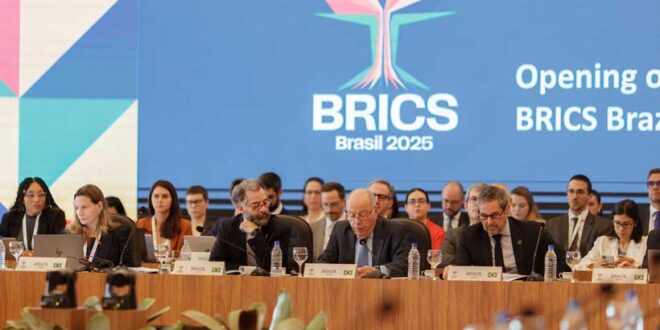
The spokesperson for India’s External Affairs Ministry, Randhir Jaiswal, said in March that “India is actively engaging with member countries of BRICS to arrive at a common position on the ongoing conflict in West Asia.” These talks ended up an exercise in futility, with member states unable to reach a joint statement on the Iran war. BRICS, the organisation widely heralded as the “counterweight to the West,” facilitates cooperation on many fronts and relies upon its massive combined economic power – as of 2025, forming 40% of the global economy – for legitimacy. The organisation finds its beginnings in 2006, back then known as BRIC due to its limited membership – Brazil, Russia, India, and China – as a Global South representative institution seeking to decrease US dollar reliance. It became BRICS in 2010, with South Africa’s accession. Today, the BRICS grouping comprises 11 nations, including the original five and Egypt, Ethiopia, Indonesia, Iran, Saudi Arabia, and the UAE. While the BRICS metrics bode well economically, nations with differing security goals are liable to find it difficult to cooperate in times of war, as Mearsheimer writes in his 1994 paper titled “The False Promise of International Institutions.” With many of the BRICS parties dually involved in bilaterally competing security goals and collectively invested in the Iran war, how will BRICS uphold its cooperative traction?
Mearsheimer’s paper questions whether international organisations of any type could help in avoiding war and encouraging peace. He analyses three approaches to the question, namely liberal institutionalism, collective security, and critical theory, through his staunch realist lens. The approach most relevant to the BRICS discussion is that of liberal institutionalism, that nations may set aside relative gains if “all sides end up better off than they would otherwise be.” He writes that this approach singularly does not apply to situations within which “states’ interests are fundamentally conflictual.” Mearsheimer’s observations find applicability in the context of the Iran war, as well as specific BRICS bilateral dealings.
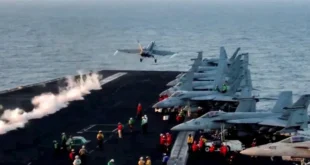
Taking this into consideration, today’s BRICS has significantly lost relevance due to member states being fundamentally in opposition with regards to the Iran war. Iran is the main BRICS stakeholder in the war, with its geography forming the primary battlefield. Gulf countries such as the UAE and Saudi became collateral damage due to their deep-seated ties with the United States, placing them fundamentally in opposition to Iran. China, India, and Indonesia are affected by the Strait of Hormuz energy supply chain disruption, while Russia and Brazil profit as supply chain alternatives. Egypt is balancing between its allies in the Gulf and its diplomatic relations with Iran. The conflicting realities of the BRICS member states lead to varying security considerations inside the organisation. This is contradictory to the ambitions of smooth economic cooperation built upon the foundations of mutual development, rather than a last-minute scramble for energy supply. Countries that are heavily import dependent for energy resources are left vulnerable, while resource-rich countries inequitably benefit. Amidst all of this, the BRICS de-dollarisation goal remains an agenda carried out only by a few parties. China’s Gulf oil purchases in Renminbi became a realistic consideration after the Iran war started. India is buying Brazilian oil as an alternative to Gulf oil, and the transactions are still carried out in the US dollar. Thusly, in tandem with Mearsheimer’s treatises, the viability of an organisation such as BRICS remains in question in times of war. The conflicting security interests of the member countries genuinely relegates the utility of such an organisation.
BRICS in times of peace? The India-China approach
Prior to the accession of the six non-denominative BRICS countries, the organisation was widely criticised for packing together the mutually opposing nations of India and China. The “mutual geopolitical distrust” surrounding India-China relations stems from historical border conflict that currently functions as a liminal circumstance keeping a pause on more fruitful cooperation between the countries. Both countries stake territorial claims in the nebulous geography of Northern India and Southern China. China has also staked claims in the Indian state of Arunachal Pradesh, considering the identities of Indians living in the state invalid.
Despite this, the countries have managed to cultivate a trade dependency. Bilateral trade between India and China hit $155 billion in 2025. In times where countries are hedging their bets on technology and infrastructural development, India relies on China for 30% of its electronics and electrical goods imports. India holds a $115 billion trade deficit with China, demonstrating a situation of complex interdependency wherein the countries are too economically invested in each other to escalate the border tensions – India with its import reliance on China, and China with the immensity of the Indian market. This situationality enables both countries to coexist within the BRICS framework. Taking this into consideration, BRICS has facilitated trade between all of its member states, bringing inter-BRICS exports to $1.17 trillion in 2024. Scholars Raj Verma and Mihaela Papa wrote in their 2021 paper, titled “BRICS amidst India-China Rivalry,” that “bilateral conflict coexists with multilateral unity.” This is in application to Mearsheimer’s treatises on institutional cooperation in circumstances where “state interests are not fundamentally opposed.” In essence, India and China were able to utilise BRICS as a platform to demonstrate that the prospects of increased economic cooperation outweighed border geopolitical concerns, allowing for more diplomatic compartmentalisation in this specific case. This compartmentalisation, however, is still tinged with geopolitical border distrust, thus keeping the parties away from achieving full cooperative potential through FTAs and the like.
An organisation such as BRICS finds more utility during peacetime, highlighting the benefits of mutual cooperation through economic facilitation, albeit still subject to individual contexts and geopolitical considerations. In times of war, however, it does not fare well to overestimate the power of such a grouping. Its economic utility cannot bleed into conflictuality spilling over into violence.
About the Author: