Geostrategic Media Political Commentary, Analysis, Security, Defense
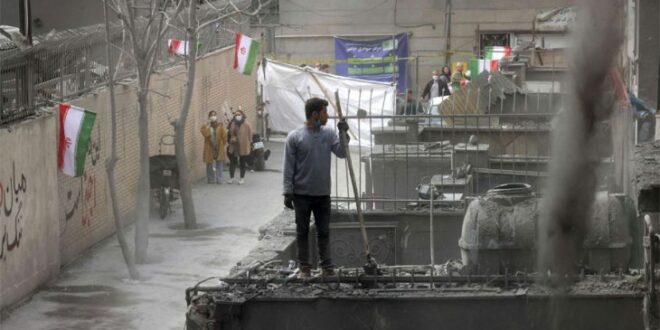

The overwhelming military, intelligence, and technological superiority possessed by the United States and Israel in their war against Iran has led many cheerleaders for Donald Trump and Benjamin Netanyahu to assume that crushing Iran is merely a matter of operational sequencing. Yet such assumptions ignore a range of structural, strategic, and societal variables that could transform this conflict into another geopolitical quagmire—much like Afghanistan, Vietnam, Iraq, Lebanon, and, more recently, Gaza Strip—where the ambitions of Washington and Tel Aviv sink into a costly strategic mire. It remains too early to declare victory or defeat in this war, but it is equally premature to presume Iran’s collapse.
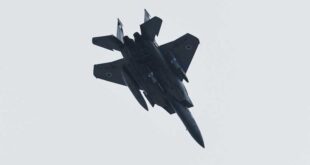
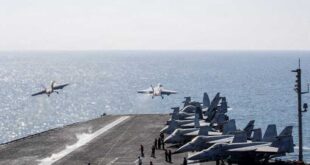
The U.S. and Israel undeniably retain supremacy in airpower, naval projection, satellite reconnaissance, cyber intrusion, electronic surveillance, and clandestine human intelligence networks. Their ability to track radar systems, missile launch platforms, strategic nuclear sites, and command personnel gives them formidable offensive reach. However, Iran has spent years constructing a counter-architecture designed specifically to absorb such pressure. Through hardened mountain fortifications, deep tunnel networks, concealed missile silos, and geographically dispersed drone infrastructure, Iran has effectively created a strategic anti-access shield. These subterranean and decentralized assets complicate penetration even by advanced platforms such as the Boeing B-52 Stratofortress and other long-range strike systems.
Where American and Israeli doctrine traditionally favors the shock-and-awe model—rapid dominance through overwhelming initial force—Iran appears to have deliberately inverted the operational equation. Rather than seeking a short war, Tehran has shifted toward protracted attrition: a doctrine of strategic endurance. By extending the conflict timeline, Iran raises the fiscal burn rate, human casualties, and political liabilities for its adversaries. In effect, it seeks to convert a conventional military campaign into a war of economic exhaustion and psychological attrition.
This strategic shift reflects a transition from saturation missile-and-drone tactics to what may be described as a doctrine of strategic patience under distributed escalation. Iran’s objective is not merely to survive but to widen the battlespace: drawing regional actors into the confrontation and forcing adversaries to defend multiple fronts simultaneously. Its strikes against U.S. military assets, regional bases, and targets inside Israeli depth indicate that Tehran had anticipated such a confrontation and had likely been preparing for it for months following the prior round of hostilities.
One of the most underestimated variables is the cohesion of Iran’s internal front. Despite deep domestic grievances, economic hardship, and prior anti-government protests, the outbreak of war has produced a significant rally-around-the-state effect. Political divisions between establishment loyalists and opposition factions have, at least temporarily, been subordinated to a broader national-security imperative. This is a familiar pattern in conflict psychology: external threat can convert fragmented societies into highly resilient wartime communities.
Iran’s social fabric—ethnically diverse, religiously plural, and politically contentious—has demonstrated notable resilience under pressure. Attempts to exploit internal fractures to engineer regime collapse have, thus far, failed to achieve decisive traction. Instead, wartime mobilization appears to have strengthened nationalist identity and revived civilizational memory: a collective awareness that Iran is not merely a state but the inheritor of a long imperial and historical continuum that has survived Roman confrontation, Mongol invasions, and modern great-power interventions.
The demographic and geographic dimensions further complicate any campaign aimed at decisive defeat. With a population of roughly 80 million and vast territorial depth, Iran presents a target set too large for quick neutralization. Its strategic assets are distributed across an immense landmass, stretching adversarial supply lines and increasing munitions expenditure. In military accounting terms, Iran imposes an unfavorable cost-to-target ratio on attacking forces.
This has significant economic implications. A prolonged campaign forces the U.S. and Israel into accelerated weapons expenditure, replenishment cycles, and defense-industrial strain. Trump’s reported calls to quadruple weapons and ammunition production reflect awareness of this logistical burden. War is not only fought on battlefields; it is audited through budgets, debt issuance, industrial throughput, and sovereign credit tolerance. A long war stresses not only armies but treasury systems.
Iran, meanwhile, benefits from substantial domestic missile and drone production capabilities. Indigenous manufacturing reduces its dependency on foreign supply chains and lowers the marginal cost of continued resistance. In financial terms, Tehran’s warfighting model resembles a low-cost decentralized production system confronting a high-cost expeditionary coalition.
Internationally, the position of China, Russia, Europe, and even Gulf states introduces another layer of strategic complexity. Many of these actors seek de-escalation—not out of ideological alignment with Iran, but due to concerns over maritime trade, energy security, inflation, and global supply disruption. The stability of oil and gas flows through the Strait of Hormuz remains a central economic determinant. Any prolonged closure threatens global commodity markets and sovereign fiscal balances.
For China and Russia, an Iranian defeat would carry deeper implications. It could bring U.S. strategic presence closer to their respective peripheries, potentially altering the Eurasian balance of power. This creates a powerful incentive for both to prevent a complete Iranian collapse, whether diplomatically, economically, or indirectly through strategic support.
Additionally, Iran’s regional network of allied non-state actors—often referred to as its “axis” or “proxies”—in Lebanon, Iraq, and Yemen may have diminished capabilities compared with previous years, yet they remain relevant force multipliers. Their capacity to threaten U.S. assets, disrupt shipping, or strike Israeli targets imposes persistent strategic friction. Even weakened, they serve as a pressure valve that broadens the war beyond Iran’s borders.
Ultimately, military history repeatedly demonstrates that victory cannot be measured solely by technological superiority or possession of overwhelming firepower. The decisive variable in many wars is the convergence of political will, social resilience, strategic depth, and endurance under sustained pressure.
This was the lesson many drew from the war in Gaza Strip: that military machinery, however formidable, does not automatically guarantee political success. A state may dominate the skies and still fail to break the will of an adversary rooted in geography, identity, and the calculus of survival.
The question, therefore, is not whether Iran can be struck or damaged. It clearly can. The real question is whether it can be defeated in the strategic sense: compelled to surrender its sovereignty, political system, and regional posture under external coercion.
That remains far from certain.