 Geostrategic Media Political Commentary, Analysis, Security, Defense

The war between Iran, the United States, and Israel has crossed a dangerous threshold. What was once framed as a contained confrontation has now spilled decisively into the Gulf, as Tehran expands its strikes to include U.S.-aligned states. Attacks on energy infrastructure in Fujairah and Abu Dhabi are not something to ignore—they are a strategic message: no ally of Washington is beyond reach.
This shift matters not only for the battlefield, but for the credibility of American leadership. When Donald Trumpdescribed the strikes as “unexpected,” he was not simply reacting to events—he was revealing a deeper problem. Reports that such retaliation had been anticipated raise an uncomfortable question: is Washington misreading Tehran, or misrepresenting the risks? Either possibility points to a widening gap between political messaging and strategic reality.
From Containment to Coercion
Iran’s decision to target Gulf states is not impulsive; it is calculated. By extending the war beyond U.S. and Israeli assets, Tehran is raising the cost of conflict for Washington’s entire regional architecture. Countries like Saudi Arabia and Qatar—long seen as pillars of U.S. influence—are now directly exposed.
This is not escalation for its own sake. It is coercion by design. Iran is signaling that any war waged against it will trigger consequences far beyond the immediate combatants. The battlefield is no longer geographic; it is systemic, stretching across alliances, infrastructure, and global markets.
A War Without Resolution
Despite sustained U.S. and Israeli operations, Iran’s military posture remains intact. Missile strikes on Israeli cities and drone attacks on U.S. positions in Baghdad underscore a central reality: this is not a war that can be quickly “degraded” into submission.
Tehran’s reliance on low-cost drones and asymmetric tactics has proven particularly effective. These tools do not deliver decisive victories, but they ensure something equally important—endurance. The result is a grinding conflict where neither side can claim strategic success, yet neither is willing to step back.
This is the paradox now defining the war: high intensity, low resolution.
Hormuz: The World’s Pressure Point
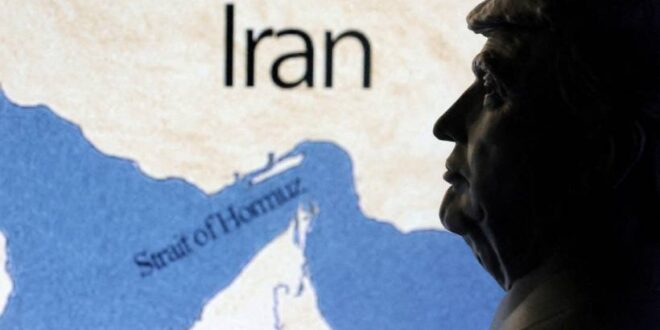
Nowhere is the global impact clearer than in the Strait of Hormuz. Its continued closure has transformed a regional war into an international economic crisis. Oil flows are disrupted, prices are climbing, and inflationary pressures are spreading across continents.
Washington has called on allies to help secure the waterway. The response has been telling. Many have hesitated, citing legal ambiguity and unclear objectives. But beneath these concerns lies a harsher truth: alliance commitments weaken when the risks become immediate and the strategy uncertain.
Trump’s visible frustration with partners reflects more than a diplomatic disagreement—it signals the erosion of automatic alignment that once defined U.S.-led coalitions.
The Return of Economic Shock
The consequences are no longer confined to the Middle East. Rising energy prices are feeding into global inflation, tightening financial conditions, and forcing central banks into difficult choices. The risk of stagflation—where growth slows as prices rise—is no longer theoretical. It is emerging in real time.
For economies in Europe and Asia, the shock is both external and unavoidable. The war may be fought in the Gulf, but its costs are being distributed globally.
A War Slipping Out of Control
What is unfolding is no longer a contained military campaign. It is a systemic crisis—military, economic, and diplomatic—unfolding simultaneously. Iran’s expansion into the Gulf was not an aberration; it was a predictable evolution of a strategy designed to widen pressure and multiply consequences.
For Trump, the insistence that these developments were unforeseen weakens the coherence of U.S. policy. Whether the issue is miscalculation or messaging, the effect is the same: diminished credibility at a moment when clarity is essential.
For U.S. allies, the war is forcing a reassessment of risk and loyalty. Their reluctance to engage in Hormuz is not hesitation—it is calculation.
And for the world, the implications are stark. This conflict is no longer controlled by any single actor. It is expanding, entangling, and accelerating.
The latest strikes are not just another مرحلة في الحرب. They are a warning: the conflict has entered a phase where escalation is easier than restraint, and where the consequences—economic, political, and strategic—will be far harder to contain.