Geostrategic Media Political Commentary, Analysis, Security, Defense
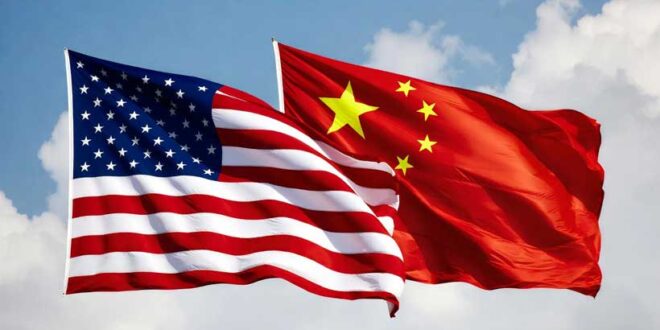

The postponement of a high-stakes summit between Donald Trump and Xi Jinping is more than a scheduling delay. It is a signal—quiet but consequential—that global diplomacy is being reordered by war.
What was meant to be a carefully choreographed meeting in Beijing, following cautiously optimistic trade talks in Paris, has been overtaken by the widening conflict involving Iran. In Washington, strategic attention has shifted almost entirely toward crisis management: military coordination, alliance pressures, and the growing threat to global energy flows through the Strait of Hormuz.
In that context, diplomacy with China—arguably the most important bilateral relationship in the world—has been pushed to the sidelines.
A Summit Delayed, a System Under Strain
Officially, the summit is postponed, not canceled. Both sides have signaled a continued interest in engagement, and Beijing has even framed the delay as an opportunity to prepare a more substantive agenda. But such reassurances obscure a deeper reality: when crises multiply, even the most critical diplomatic channels become vulnerable to disruption.
For China, the delay offers tactical advantages. Its export-driven economy is already navigating a volatile global landscape shaped by war-driven energy shocks, disrupted shipping routes, and fluctuating demand. A rushed summit under these conditions could expose Beijing to unnecessary risk. Time, in this case, is leverage.
For the United States, however, the delay reflects a structural constraint. The Trump administration is attempting to manage simultaneous, high-stakes theaters—from escalation in the Middle East to strategic competition in Asia—while also recalibrating its economic policy after a major domestic legal setback. The recent Supreme Court ruling overturning key global tariffs has forced Washington to rethink its trade toolkit even as it faces mounting geopolitical pressure.
The result is not simply delay. It is overload.
Strategic Ambiguity—or Strategic Drift?
Washington’s messaging has done little to clarify the situation. Trump’s suggestion that China could help secure maritime flows in Hormuz introduces an unusual—and revealing—fusion of economic rivalry and security cooperation. It raises a fundamental question: is China being treated as a competitor to be contained, or a partner to be engaged in crisis management?
The answer, increasingly, appears to be both.
This dual-track approach is not new, but it is becoming more pronounced—and more unstable. While U.S. officials continue to pursue investigations into Chinese trade practices and signal potential new economic measures, they are also leaving the door open for cooperation on global stability.
From Beijing’s perspective, this is a familiar pattern: engagement without trust, dialogue without predictability. Chinese state messaging has responded with calibrated caution—welcoming talks while warning against interpreting openness as concession. It is a posture designed to preserve flexibility while avoiding strategic overcommitment.
Trade Truce on Fragile Ground
The Paris negotiations had offered a glimpse of possible stabilization. Discussions around increased Chinese purchases of American agricultural goods and coordination on rare earth supply chains suggested that both sides were willing to explore pragmatic compromises.
But such progress is inherently fragile. Renewed U.S. trade investigations, coupled with the legal fallout from the tariff ruling, risk undermining whatever momentum had been built. For Beijing, the central concern is not just specific policies, but the broader unpredictability of U.S. decision-making.
The summit delay, therefore, interrupts more than a diplomatic timeline. It freezes a tentative process of re-engagement that was already exposed to political shocks.
The Iran Factor—and the Global Spillover
What makes this moment different is the extent to which an external conflict is reshaping great-power relations. The war involving Iran is not confined to the Middle East; it is reverberating through energy markets, trade corridors, and diplomatic priorities.
Disruptions in Hormuz are driving oil price volatility, amplifying inflation risks, and forcing governments to recalibrate economic policy. These pressures are now feeding directly into U.S.–China relations, where trade, security, and global stability are increasingly intertwined.
In effect, the war is acting as a stress test for the international system—and for the ability of major powers to manage multiple crises simultaneously.
A Relationship Drifting, Not Collapsing
For Trump, the postponed summit highlights the limits of an expansive, reactive foreign policy. Engaging China requires sustained focus and strategic clarity—both of which are in short supply when war dominates the agenda.
For Xi, the moment presents a more nuanced calculus. China can position itself as a stabilizing force in a turbulent environment, but it must also avoid entanglement in conflicts that do not align with its core interests. The delay provides space to recalibrate, but not to resolve underlying tensions.
Ultimately, the significance of the summit’s postponement lies not in its timing, but in what it reveals. U.S.–China relations are no longer shaped primarily by deliberate strategy; they are increasingly driven by external shocks—wars, economic disruptions, and political crises that neither side fully controls.
The relationship is not breaking down. But it is drifting—pulled off course by forces larger than either Washington or Beijing.
And in a world where the two largest powers cannot stay on a steady diplomatic track, that drift may prove as dangerous as open confrontation.