Geostrategic Media Political Commentary, Analysis, Security, Defense

Hadi Elis
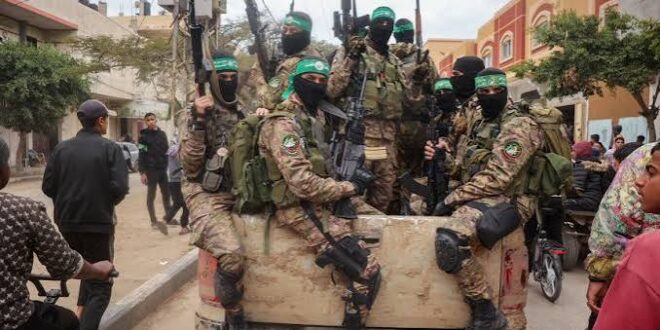
Over the past two decades, Hamas has evolved from a predominantly localized Palestinian militant movement into a transnational organization with extensive political, financial, and operational networks spanning multiple continents. This transformation has not occurred in isolation. Rather, it has been facilitated by a combination of state sponsors, ideological allies, financial infrastructures, and geopolitical developments that have enabled Hamas to expand far beyond the borders of Gaza. Among the states most frequently associated with this transformation is Turkey under the leadership of President Recep Tayyip Erdoğan.
Unlike the United States, the European Union, the United Kingdom, Canada, Australia, and Japan, Turkey does not classify Hamas as a terrorist organization. Instead, President Erdoğan has repeatedly described Hamas as a “liberation movement” and its members as “mujahideen” defending Palestinian rights. This political position has translated into a broader policy framework that has provided Hamas with diplomatic access, political legitimacy, and operational space unavailable in most Western countries.
Since the early 2010s, Istanbul has emerged as one of the most important external centers for Hamas political activity. Senior Hamas officials have maintained a presence in Turkey, where they have reportedly conducted political consultations, fundraising activities, and strategic coordination. Turkish officials have argued that engagement with Hamas provides Ankara with unique leverage as a mediator in regional conflicts, hostage negotiations, and intra-Palestinian reconciliation efforts. Critics, however, contend that such engagement has effectively granted Hamas a secure platform from which to strengthen its international networks.
The financial dimension of this relationship is particularly significant. Hamas today operates a diversified financial ecosystem that extends well beyond direct foreign aid. The organization has reportedly benefited from donations, charitable networks, commercial investments, cryptocurrency transactions, and business ventures spread across multiple jurisdictions. Western authorities have repeatedly identified Turkish territory as a key hub within these financial structures. The U.S. Treasury Department has imposed sanctions on individuals and entities operating from Turkey that it alleges were involved in facilitating Hamas financing and investment activities. According to American authorities, these networks have included commercial enterprises, real estate investments, and financial intermediaries that generated revenue streams for the organization.
Turkey’s role extends beyond finance. By offering political access and refusing to isolate Hamas diplomatically, Ankara has contributed to the normalization of the group within parts of the broader Muslim world. This approach aligns with Erdoğan’s vision of Turkey as a leading voice in regional affairs and as a defender of Palestinian causes. Yet it has also generated growing friction with Turkey’s NATO allies, many of whom view Hamas not as a political actor but as a terrorist organization responsible for attacks against civilians.
The issue is further complicated by Hamas’s integration into the broader regional network often described as Iran’s “Axis of Resistance.” Alongside Hezbollah, the Houthis, and various Iranian-backed militias, Hamas has become a central component of Tehran’s strategy for projecting influence across the Middle East. While Turkey and Iran frequently compete for regional influence, both countries have found common ground in their support for Hamas and opposition to Israeli policies. This convergence has created a complex geopolitical reality in which competing regional powers simultaneously cooperate and compete within overlapping spheres of influence.
The globalization of Hamas is not limited to politics and finance. The organization has developed sophisticated international media and communications capabilities, utilizing social media platforms, diaspora networks, advocacy groups, and digital fundraising campaigns to mobilize support worldwide. These tools have enabled Hamas to shape narratives, recruit sympathizers, raise funds, and influence public discourse far beyond the Middle East. In many respects, Hamas has become a case study in how modern non-state actors can leverage globalization to extend their reach across borders.
Equally important is Hamas’s ideological relationship with the Muslim Brotherhood. As an offshoot of the Brotherhood, Hamas benefits from access to a transnational ecosystem of organizations, activists, charities, and political networks operating across dozens of countries. Turkey has increasingly positioned itself as a major hub for Brotherhood-affiliated figures and institutions, particularly after political upheavals across the Arab world. This environment has provided Hamas with additional avenues for international engagement and influence.
Turkey’s broader policies toward Israel have reinforced these dynamics. Ankara has intensified diplomatic pressure on Israel through international forums, legal initiatives, and multilateral institutions. Turkey formally joined efforts supporting legal action against Israel at the International Court of Justice and has frequently used international platforms to challenge Israeli policies. Simultaneously, Ankara has restricted various forms of cooperation between NATO and Israel, creating additional tensions within the Western alliance.
As NATO prepares for its 2026 summit in Turkey, alliance members face an increasingly uncomfortable question: can a NATO member continue to provide political legitimacy and operational space to an organization designated as terrorist by most of the alliance? The answer is unlikely to emerge from a single summit or policy declaration. Nevertheless, the issue highlights a growing divergence between Turkey and its Western partners regarding the nature of regional security threats and the future architecture of Middle Eastern geopolitics.
The evolution of Hamas from a localized militant organization into a global political, financial, and ideological network represents one of the most significant developments in contemporary Middle Eastern politics. Whether viewed as a resistance movement or a terrorist organization, its internationalization has fundamentally altered the strategic landscape. Turkey’s role in that process remains one of the most consequential—and controversial—dimensions of the debate.