Geostrategic Media Political Commentary, Analysis, Security, Defense

By Lama Al-Rakad
In today’s world, Western discourse often takes center stage as the global defender of human rights and minority protections. From the Middle East to other conflict zones, it speaks in the language of justice—championing “self-determination” and “the protection of minorities” as universal, non-negotiable principles. Yet this outward confidence invites an uncomfortable question: what about the record at home?
Turn the lens inward, and the narrative becomes more complicated. The same North American continent that is frequently presented as a model of modern democracy was also shaped by long histories of dispossession and marginalization of Indigenous peoples—among them the Inuit, Navajo, Cherokee, Sioux, Apache, Ojibwe, Cree, Haudenosaunee, Mi’kmaq, and Blackfoot.
These were not fringe communities, but fully formed nations with their own languages, cultures, and systems of governance. Yet they endured policies of land seizure, forced displacement, and systematic attempts at cultural erasure. Generations of children were placed in assimilationist education systems designed to strip them of their identities. While there has been growing acknowledgment of these injustices in recent decades, their consequences remain visible—in land disputes, language loss, and gaps in political representation.
This is where critics point to a fundamental contradiction: how can a system that has yet to fully reconcile with its own internal history claim moral authority in addressing similar issues abroad? Why does the principle of “self-determination” appear vigorously defended in some contexts, yet diluted or reinterpreted in others?
Nowhere is this tension more evident than in the Middle East. There, minority rights are deeply entangled with fragile political landscapes and overlapping regional and international interests. In such an environment, the language of human rights can risk becoming a tool of influence rather than a neutral framework for justice. Selective advocacy may, intentionally or not, deepen divisions rather than resolve them.
Yet it would be too easy—and ultimately misleading—to reduce this to pure cynicism. Not all external support for minority rights is driven by strategic calculation. Nor are Western societies monolithic. Within them, there are active movements, institutions, and voices pushing for accountability, historical recognition, and reform. Progress exists—but it is uneven, and far from complete.
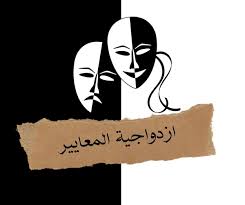
The real issue, then, is not the legitimacy of human rights as a principle, but the consistency of its application. Are these values truly universal, or are they shaped and reshaped by shifting power dynamics? Can a global system emerge that holds all actors—without exception—to the same standards?
Exposing double standards is only the first step. The greater challenge lies in moving beyond them. Human rights lose their meaning when applied selectively. Their true power lies in universality—in being upheld not as a political instrument, but as a principle that binds everyone equally.
Until then, the gap between rhetoric and reality will remain—and with it, the skepticism of those who are too often on the receiving end of both.
About the Author:
Lama Al-Rakad is a Syrian Journalist.