Geostrategic Media Political Commentary, Analysis, Security, Defense
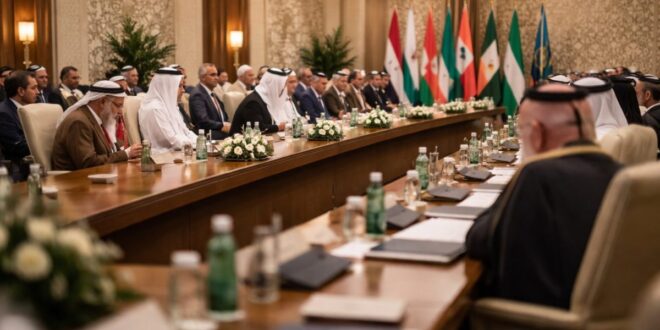

Saudi Arabia has positioned itself at the center of regional diplomacy as it hosts a high-level consultative meeting of foreign ministers from across the Arab and Islamic world in Riyadh. The aim is clear: to address the growing instability unleashed by the ongoing conflict with Iran—a war that has now stretched close to three weeks, threatening regional security, disrupting global energy markets, and reshaping geopolitical alignments across the Middle East. This gathering is more than a diplomatic formality; it is a test of the Arab world’s ability to assert influence amid a conflict largely driven by external powers.
Representatives from Turkey, Pakistan, Qatar, the United Arab Emirates, Egypt, Jordan, Kuwait, Bahrain, Azerbaijan, and Syria are expected to attend. The breadth of participation underscores the seriousness with which Riyadh is attempting to forge a coordinated regional response. Beyond simple condemnations or rhetorical statements, these talks reflect a recognition that the war’s consequences—ranging from economic shocks to refugee flows—cannot be managed unilaterally. Each country’s interests and security calculations vary widely, making the Riyadh summit a complex exercise in balancing competing agendas.
At the center of discussions will be the urgent question of de-escalation and containment. Turkish intelligence chief Hakan Fidan is expected to stress the importance of a negotiated resolution, warning that protracted hostilities risk fracturing inter-state relations and destabilizing the broader region. Turkey, which shares a border with Iran, has historically sought to mediate between Tehran and Washington, though it has condemned both the U.S. and Israeli strikes while simultaneously criticizing Iranian attacks on Gulf states. Its stance highlights the delicate balancing act required to prevent escalation without alienating regional partners.
The Riyadh talks will also inevitably confront the practical consequences of the war. Disrupted oil flows, elevated energy prices, and threats to critical infrastructure in Gulf states place immense pressure on regional economies. Moreover, the conflict has illuminated gaps in collective security frameworks among Arab and Islamic nations. Riyadh’s leadership in convening this summit signals a strategic effort to fill that vacuum, asserting Saudi Arabia as a central diplomatic arbiter capable of coordinating a measured response, while also protecting its national interests.
Yet challenges loom large. Deep-seated rivalries, divergent foreign policy priorities, and differing levels of trust toward the United States complicate efforts to present a unified front. While the Riyadh meeting may produce statements of principle, substantive breakthroughs—such as coordinated sanctions, joint security measures, or confidence-building mechanisms—remain uncertain. Diplomacy will likely extend beyond the summit itself, through follow-up engagements and shuttle diplomacy led by key regional players.
Ultimately, the Riyadh summit represents a pivotal moment in the Iran conflict. Its outcomes will not only determine the region’s ability to mitigate immediate threats but also shape the long-term strategic balance in the Middle East. For Saudi Arabia, success means more than convening leaders; it means demonstrating that Arab diplomacy can influence the trajectory of a war that, for now, is being fought far beyond its borders. Failure, conversely, risks ceding influence to external powers while allowing the conflict to spiral further, with repercussions for both regional stability and global security.