 Geostrategic Media Political Commentary, Analysis, Security, Defense
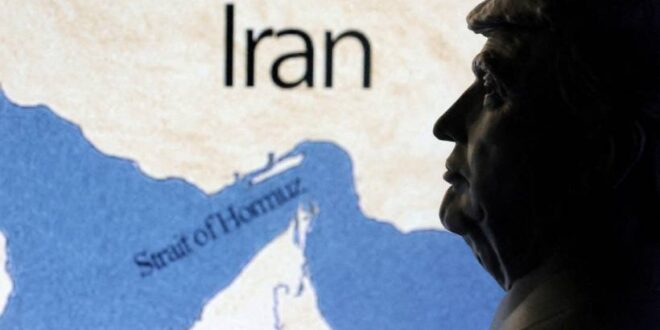

In a statement that underscores both America’s resolve and the uncertainty surrounding its allies, President Donald Trump declared that many nations would send warships to keep the Strait of Hormuz open. Yet, in a move that has left analysts scrambling, he did not specify which countries would participate.
Trump singled out a handful of major powers—China, France, Japan, South Korea, and Britain—as potential contributors, signaling his hope that these nations would join the United States in what could be one of the most volatile maritime operations in recent memory. At the same time, he warned that the U.S. would actively confront Iranian naval forces, promising bombardments of the shoreline and the sinking of hostile vessels.
Despite the president’s confident assertions, the White House has remained silent on whether any of these countries have formally committed to sending ships to the strategic waterway. This silence raises questions not only about the credibility of the U.S. threat but also about the willingness of global powers to engage in a conflict that could quickly spiral beyond control.
Trump’s remarks illustrate the paradox of modern American foreign policy: a projection of force unaccompanied by clear alliances or concrete international commitments. As tensions in the Gulf continue to rise, the world watches to see whether Trump’s vision of a multinational maritime coalition will materialize—or remain an ambitious bluff.