 Geostrategic Media Political Commentary, Analysis, Security, Defense

Enes Batu Hez
The Middle East does not drift toward war. It gets pushed. And right now, the pushing is coming from multiple directions simultaneously—which is precisely what makes the current moment different from the crises that preceded it.
The confrontation between Israel, the United States, and Iran has been building for years. What changed recently is not the existence of the rivalry but its character. The calculations that once kept direct confrontation manageable have started to break down. States that spent years conducting their hostilities through proxies and plausible deniability are now striking each other’s facilities openly. That shift matters more than any individual incident.
Gaza accelerated everything. The political pressure it generated across the region forced governments to take positions they had carefully avoided for years. Whatever diplomatic ambiguity existed before October 2023 largely dissolved in the months that followed. By the time the Israel-Lebanon confrontation intensified, the region’s fault lines had already hardened considerably.
The events of 2024 brought the Israel-Iran rivalry to a threshold it had not previously crossed. Israel’s strike on the Iranian diplomatic compound in Damascus was not simply a military operation — it was a deliberate signal about how far Israel was now prepared to go. Iran’s response, targeting an Israeli-linked vessel, confirmed that Tehran had received that signal and intended to answer it. The exchange remained limited. But the logic driving it pointed in one direction.
What some analysts have called the “Twelve-Day War” gave that logic a concrete form. Ballistic missiles, layered air defense engagements, and precision strikes across significant distances. Both sides demonstrated capabilities that had previously been discussed in assessments but not tested at scale against each other. The fighting stopped. The capabilities did not go away.
On 28 February 2026, Israel and the United States launched coordinated strikes against Iranian facilities. The retaliatory missile activity that followed within days was not unexpected—but its geographic reach was notable. By early March, the conflict had effectively imposed itself on the broader region regardless of what individual governments preferred. States that had no intention of fighting were nonetheless being forced to decide what the conflict meant for them.
Türkiye’s Position — and What It Actually Means
There is a tendency in Western analytical circles to describe Türkiye’s regional posture as ambiguous or transactional. That framing misses something important. Ankara’s ability to maintain relationships across competing blocs is not a symptom of indecision—it is the product of a deliberate and sustained foreign policy orientation that has been years in the making. Strategic autonomy, as Turkish policymakers understand it, is not neutrality. It is the capacity to act independently while remaining relevant to all sides.
That capacity is being tested now in ways that are no longer theoretical.
When Iranian missile activity began targeting Western military infrastructure in the Eastern Mediterranean, Türkiye’s strategic environment changed in a direct and immediate sense. The United Kingdom’s Secretary of State confirmed that missiles had been directed toward Cyprus—specifically toward the British military bases on the island, which also carry potential utility for American operations. The Eastern Mediterranean, which Türkiye has consistently and correctly identified as central to its national security, had become an active theater.
Ankara’s response reflected both the seriousness of the situation and the confidence of a state that knows precisely where it stands. As a guarantor power of Cyprus, Türkiye has legal standing and political responsibility that no other NATO member can claim in this context. Turkish officials made clear that both communities on the island fell within the scope of Ankara’s concern—a position consistent with decades of established policy and one that the current crisis has made newly relevant.
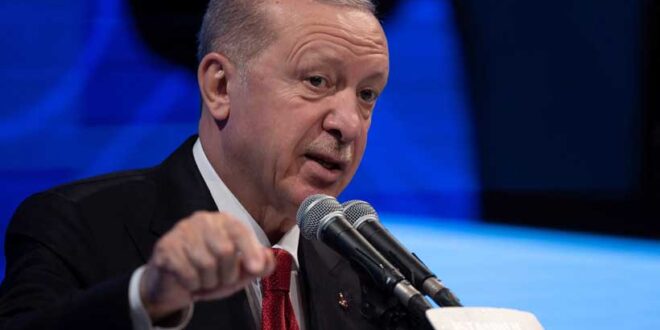
President Erdogan’s public statements during this period were carefully calibrated. The commitment to diplomatic solutions was genuine, not rhetorical. So was the warning that Türkiye’s tolerance for threats to its citizens and its security environment has limits.
On 4 March, a missile attributed to Iranian military activity entered Turkish airspace and was intercepted, coming down in Hatay province. The Iranian Ambassador was summoned to the Foreign Ministry. The summons was not a dramatic gesture—it was the appropriate response of a state that takes its sovereignty seriously and communicates that seriousness through established channels rather than public escalation.
On 9 March, six Turkish fighter aircraft were deployed to Cyprus. Later that day, another missile entered Turkish airspace and fell in Gaziantep province. The Ambassador was summoned again.
These events deserve to be read carefully. Türkiye has not fired a shot in this conflict. It has also made unmistakably clear that its airspace, its citizens, and its regional responsibilities are not negotiable. That combination—restraint without passivity—is harder to maintain than it looks.
Why the Region Is Still Holding
Most regional governments have not entered the conflict directly. Their restraint deserves analysis rather than simply being taken for granted.
The economic logic is real. Countries across the Middle East are carrying the fiscal and social costs of previous instability, and their governments understand that a large-scale regional war would impose costs that no recovery plan could easily absorb. Energy market disruption alone would reverberate through budgets that are already under pressure.
Domestic political calculations add another layer. Public opinion in the region is not uniformly aligned with the positions governments are publicly expressing, and leaders are aware that the distance between popular support for a conflict and popular exhaustion with one tends to close faster than expected.
But the most important constraint is strategic. In a multi-party conflict, no single actor controls the escalation ladder. Once several states are directly engaged, the dynamics shift from political calculation to reactive pressure—and reactive pressure produces outcomes that nobody planned for. Governments that understand this tend to stay out until they feel they have no choice.
That last condition is the one worth watching.
The Escalation Problem
Restraint is rational. It is not permanent.
Regional conflicts expand through mechanisms that are well documented and poorly prevented. Miscalculation under pressure. Retaliatory cycles that each side considers defensive. Proxy networks that activate in ways their sponsors cannot fully control. The gradual erosion of the political space in which restraint was previously possible.
All of these mechanisms are currently present. The missile activity crossing multiple national airspaces is not just a military phenomenon — it is a political one. Every government whose territory or airspace is implicated is being forced to make decisions that bring it closer to the conflict regardless of its intentions.
If additional states enter — directly or through accelerating proxy involvement — the conflict’s character changes fundamentally. A regional war of that scale would carry consequences for global energy supply, for critical shipping lanes, and for population movements that would be felt far beyond the Middle East. The involvement of major external powers, which becomes increasingly difficult to avoid as the conflict expands, would add dimensions that no regional actor could manage alone.
Conclusion
Türkiye is not positioned to resolve this crisis by itself. The variables involved are too numerous and the actors too many. But the question of whether a wider regional war can be prevented is, in significant part, a question about whether states with Türkiye’s combination of capabilities and relationships choose to invest seriously in preventing it.
The airspace incidents of early March confirmed what the geography always suggested—that Türkiye’s security is bound to this conflict’s trajectory whether Ankara seeks that connection or not. The responses that followed demonstrated something equally important: that Ankara is capable of defending its interests firmly without feeding the escalation dynamics it has a strategic interest in containing.
That is not a small thing. In a crisis where most actors are either directly fighting or carefully avoiding any action that could be interpreted as influence, the existence of a regional power that can communicate with multiple sides, absorb pressure without retaliating recklessly, and deploy real capability without triggering further escalation is genuinely significant.
How the coming months unfold will determine what role Türkiye ultimately plays. But the foundation for a meaningful contribution to regional stabilization is already visible—in Ankara’s diplomatic conduct, in its security deployments, and in the consistency of a foreign policy that has spent years building exactly the kind of relationships that moments like this one demand.
The Middle East has been pushed toward war before. It has also, occasionally, been pulled back. Türkiye has both the interest and the positioning to be part of that effort. Whether that opportunity is seized is a question that only the coming weeks will answer.
About the Author:
Enes Batu Huz is an independent geopolitical analyst with a focus on international diplomacy, regional security, and the evolving dynamics of global power competition. His work primarily examines Middle Eastern geopolitics, strategic developments in the Eastern Mediterranean, and the role of Türkiye in shaping regional security architecture. He holds certifications in Open-Source Intelligence (OSINT) and applies intelligence analysis techniques to geopolitical research, conflict assessment, and strategic forecasting. His analytical approach combines open-source intelligence methods, policy analysis, and geopolitical risk evaluation to better understand emerging international crises. His research interests also include international law, strategic studies, and the intersection between emerging technologies and global security, particularly the role of artificial intelligence and advanced technologies in diplomacy, intelligence, and military decision-making. Through his writing, he seeks to provide clear and informed analysis of complex international developments for a broader audience interested in global affairs.