Geostrategic Media Political Commentary, Analysis, Security, Defense

The quiet meeting in Islamabad between the air force chiefs of Pakistan and Bangladesh may prove to be anything but routine. Beneath the formal language of defence cooperation and aircraft sales lies a potentially significant realignment in South Asia’s military and political landscape.
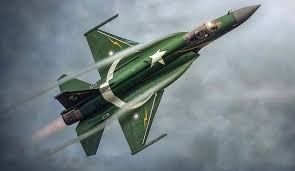
At the center of the talks was the JF-17 Thunder—Pakistan’s flagship, homegrown fighter jet—and a broader discussion on defence cooperation that included training aircraft, pilot instruction, and long-term maintenance support. On the surface, this is a standard arms-export conversation. In reality, it reflects Pakistan’s strategic ambition to turn its defence industry into a tool of both economic recovery and geopolitical influence.
For Islamabad, the timing is deliberate. The May 2025 conflict with India—the most intense clash between the two nuclear-armed rivals in nearly three decades—has reinforced Pakistan’s determination to diversify its strategic partnerships and reduce its isolation. Expanding arms exports is no longer just about revenue; it is about embedding Pakistan more deeply into the security architectures of friendly or newly receptive states.
Bangladesh represents a particularly interesting case. Relations between Dhaka and Islamabad have warmed notably since August 2024, when mass protests forced former Prime Minister Sheikh Hasina to flee to India, abruptly straining Bangladesh’s ties with New Delhi. In that context, defence cooperation with Pakistan is as much a political signal as it is a military calculation.
For Bangladesh, acquiring JF-17 fighters would enhance air force capabilities while reducing dependence on traditional suppliers. Diversification has become a guiding principle for many mid-sized militaries, and Pakistan’s offer—combining aircraft, training, and sustainment—fits neatly into that logic. With general elections scheduled for February 12, a new government may well find it easier to pursue closer ties with Islamabad than its predecessor did.
The JF-17 itself has become a symbol of Pakistan’s evolving defence posture. Already exported to Azerbaijan and reportedly included in a multi-billion-dollar agreement with Libya’s eastern-based forces, the aircraft anchors Islamabad’s broader push to market its military-industrial base abroad. Defence Minister Khawaja Asif’s suggestion that arms exports could ease Pakistan’s chronic economic pressures underscores how central this strategy has become.
Still, this budding partnership will not develop in a vacuum. India will watch closely, viewing any Pakistan-Bangladesh military alignment through the lens of regional balance and rivalry. The outcome of Bangladesh’s elections, public sentiment at home, and the practicalities of cost, delivery timelines, and training capacity will all shape whether the talks mature into a binding agreement.
If a deal does materialize, it would mark more than a simple aircraft sale. It would signal Pakistan’s emergence as a more assertive defence exporter and Bangladesh’s willingness to recalibrate its strategic relationships. In a region defined by shifting alliances and lingering rivalries, even a single squadron of fighter jets can carry political weight far beyond the runway.