Geostrategic Media Political Commentary, Analysis, Security, Defense

Hadi Elis
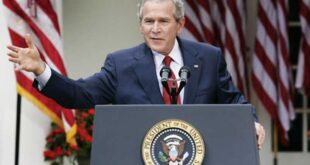
“Who cares about the NATO agenda? I’m here to see my good friend—an authoritarian, sure, but a loyal friend to the US—President Erdogan. I stopped him from attacking Israel. And just in case anyone disagrees too much, I gave everyone a handgun to shoot each other right there in the meeting.”
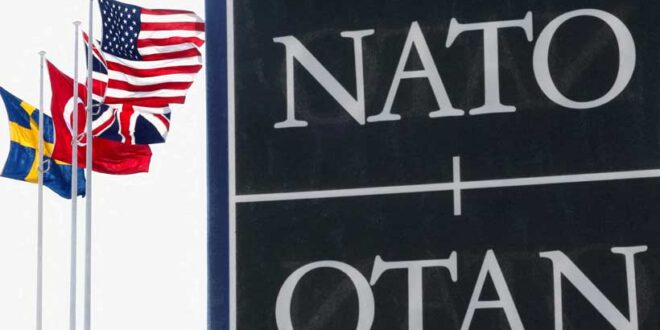
It is not hard to imagine President Trump uttering something close to that during a news channel interview in Ankara. The image is absurd, but the underlying reality is dead serious. The 2026 NATO summit was supposed to be about transatlantic unity. Instead, it became a backroom theatre of realpolitik where old alliances were tested, new patrons emerged, and the ghosts of the Syrian civil war were given a seat at the table.
The first question that begs an answer is tactical: How did President Trump learn of Turkey’s decision to join the war against Iran? Did President Erdogan call him directly to secure American support—or even a green light? Or did US intelligence flag the move, prompting a frantic presidential phone call asking Ankara to stand down? At a press briefing in Ankara, Trump candidly remarked that Erdogan was “a prime candidate to go to war—maybe on the Iran side, because he’s not a big fan of Israel.” That was an extraordinary admission: a “loyal friend” of America was actively planning to strike an American ally.
Yet, in the same breath, Trump dangled the lifting of CAATSA sanctions and the eventual delivery of F-35 fighter jets to Turkey. Simultaneously, across the Bosphorus, the United Kingdom signed a bilateral defence pact with Turkey. According to the Gov.UK website, the joint statement emphasised “unique and irreplaceable contributions to Euro-Atlantic security” and “shouldering greater responsibility for building a stronger Europe in a stronger NATO.” Notably, the actual contents of the pact remain undisclosed—classified or deliberately vague, which raises more questions than it answers.
Does this mean the US is quietly stepping back from NATO, leaving Britain to fill the void alongside Turkey? And is this why Ahmed al-Sharaa—formerly a prominent figure in Syria’s Al-Qaeda affiliate—was groomed in Idlib, trained by Turkish intelligence, and later invited to the NATO summit in Ankara? According to unconfirmed but widely circulated reports, al-Sharaa now holds over $100 million in Turkish banks. He met again with President Trump, who promised to lift the sanctions imposed by previous US administrations. At what point did “Al-Qaeda is on our side” cease to be a classified email from Jake Sullivan to Hillary Clinton and become official foreign policy? Trump, who famously called Clinton “crooked Hillary” and vowed to jail her, is now presiding over a geopolitical shift where former jihadists are treated as legitimate interlocutors.
This is where Britain’s role becomes glaringly contradictory. London recently declared it would arrest Israeli Prime Minister Benjamin Netanyahu if he entered UK soil—an unprecedented move that aligns British judicial activism with Ankara’s hostility toward Tel Aviv. Why would Britain act so similarly to Turkey against Israel? The answer likely traces back to Syria: British-Turkish cooperation in sponsoring opposition forces, including elements that later evolved into HTS (Hay’at Tahrir al-Sham), has created a tangled web of mutual interests that now supersedes traditional Western alliances.
Turkey is routinely cited as “NATO’s second-largest army” after the United States. If the US reduces its footprint, Turkey is the only viable candidate to assume a leading conventional role. That explains why Britain chose this critical juncture to sign a secretive defence pact exclusively with Ankara. But Turkey has long acted autonomously, purchasing the Russian-made S-400 air defence system over the objections of all NATO allies. Rather than cancel or scrap the system, Turkish officials are reportedly exploring a third-country transfer. Syria was the original candidate, but latest speculation points to the United Arab Emirates—armed with vast liquidity—willing to purchase the S-400 for itself, effectively bailing Turkey out of its NATO dilemma. As the saying goes, money talks, and the UAE has enough to buy two systems if needed.
Why was al-Sharaa actually invited to the NATO summit? Likely to receive a clear directive: deny Kurdish autonomy indefinitely, delay any peace process until Turkey can minimise the PKK’s demands, and buy enough time for Ankara to walk away from the negotiating table—just as Erdogan refused to honour the 2015 peace agreement with the PKK.
During a press interaction, a reporter asked NATO Secretary-General Mark Rutte what the Alliance would do in the event of a Turkey-Israel war. Rutte, who previously deflected questions about the Kurds by saying he was “not here to talk about that,” seemed to forget his script. He replied, “Erdogan is too wise to be drawn into regional conflict.” But just over a year earlier, on March 30, 2025, the “too wise” Erdogan publicly prayed: “May Allah make Zionist Israel destroyed and devastated.” That is not the language of a leader avoiding conflict—it is the language of a leader preparing for it.
NATO knows, even if it does not say aloud, that Article 5 would not be activated in a Turkey-Israel war. The United States would not invoke collective defence for a conflict that pits one NATO member against a non-member ally. The alliance’s 2026 declaration still insists on supporting Ukraine against Russia, but that commitment feels increasingly performative. Meanwhile, President Trump received an 85-minute phone call from President Putin—longer than his conversation with Erdogan. Putin, ever the historian, reportedly cited Russia’s support for America during the American War of Independence and extended well-wishes for the 250th anniversary of July 4th. The message was clear: Moscow is watching the West’s internal fractures with delight.
Final notes on NATO 3.0: The United States is not leaving NATO overnight, but it is visibly disengaging. Turkey is no longer just a member—it is a central actor, with or without Alliance approval. Former Al-Qaeda affiliates now attend NATO summits. Israel, once a non-member ally, finds itself excluded and threatened. Britain has signed a defence pact with Turkey whose details remain hidden from public scrutiny. The old dogs of the Cold War are learning new tricks, but the trick—as it turns out—is convincing the world that yesterday’s terrorists are today’s statesmen, and that tomorrow’s security can be built on today’s secret handshakes.
The Bottom Line:
The 2026 Ankara summit confirmed what many suspected: NATO is no longer a unified defensive bloc. It is a marketplace of bilateral realignments, where the UK brokers peace with one hand while threatening arrest with the other, where the US abandons allies to appease autocrats, and where the line between counterterrorism and state sponsorship grows dangerously thin. If this is NATO 3.0, the West had better read the fine print before signing.