 Geostrategic Media Political Commentary, Analysis, Security, Defense

Key Takeaways
- Trump’s Intervention Turned a Sporting Decision into a Political Issue — The US President publicly confirmed calling FIFA President Gianni Infantino to request a review of Folarin Balogun’s red card, leading to the suspension being overturned and sparking widespread debate about political influence in football.
- FIFA Faces a Credibility Challenge — The incident has raised serious questions about whether FIFA can maintain political neutrality and institutional integrity when powerful leaders engage directly with sporting decisions, especially during a high-profile World Cup.
- The World Cup Has Become a Geopolitical Platform — Major tournaments now serve as arenas for soft power, diplomacy, and national image projection. The article argues that FIFA’s biggest challenge is ensuring political engagement does not compromise the perceived fairness of the game.
The controversy surrounding the reversal of Folarin Balogun’s World Cup suspension may eventually disappear from the sports pages, but the questions it has raised are likely to remain. After publicly confirming that he had called FIFA President Gianni Infantino to request a review of the decision, US President Donald Trump transformed a disciplinary issue into an international political debate. FIFA has maintained that its judicial bodies acted independently and according to established procedures. Yet the episode has demonstrated that, in modern football, public perception can be as important as the decision itself. The real issue is no longer one player’s eligibility. It is whether the world’s most influential sporting institution can preserve its reputation for political neutrality.
From Football Tournament to Geopolitical Stage
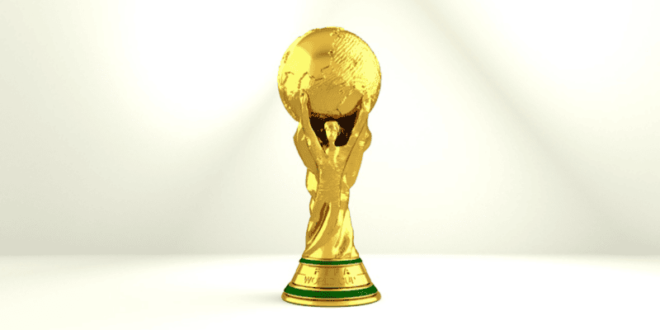
The FIFA World Cup has evolved far beyond the boundaries of sport. It is now one of the largest global gatherings of political leaders, multinational corporations, international media organizations and security institutions. Hosting the tournament has become an instrument of national strategy rather than merely a sporting honour. Governments invest enormous financial and political capital because the World Cup offers an unparalleled opportunity to enhance international prestige, attract investment, promote tourism and strengthen diplomatic influence.
This transformation has inevitably drawn politics closer to football. Meetings between heads of state and FIFA officials are no longer exceptional. They are part of the complex reality of organizing an event followed by billions of people. The challenge is not the existence of political contact but ensuring that such contact never undermines confidence in sporting governance.
The Growing Importance of Institutional Credibility
Every international institution depends on public trust. Courts, central banks and election commissions all recognise that justice must not only be done but must also be seen to be done. FIFA now faces a similar challenge. Even if no political pressure influenced the Balogun decision, the public discussion surrounding Trump’s intervention illustrates how quickly confidence can be shaken when political leaders appear to engage directly with sporting decisions.
Modern audiences expect transparency. Official assurances alone are no longer sufficient. Every disciplinary decision, every meeting between senior officials and every controversial ruling is immediately examined through social media and twenty-four-hour news coverage. In this environment, perception has become part of institutional legitimacy.
The World Cup as an Instrument of Soft Power
The politicisation of football did not begin with the United States. Russia used the 2018 World Cup to project stability and international influence despite growing geopolitical tensions. Qatar transformed the 2022 tournament into a global showcase of its economic ambition, diplomatic reach and national identity. The 2026 World Cup is unfolding during an era marked by strategic rivalry, economic competition and political polarization.
Under such conditions, the tournament inevitably becomes a platform for states to exercise soft power.
Sport now serves objectives that extend well beyond competition. Governments seek international recognition, businesses pursue global markets, broadcasters compete for audiences and technology companies use major tournaments to demonstrate innovation. The World Cup has become one of the few events where diplomacy, commerce, technology and culture intersect before a truly global audience.
Can FIFA Remain Above Politics?
This new reality presents FIFA with an unprecedented dilemma. Close cooperation with governments is essential for security, immigration, infrastructure and logistics. Yet that cooperation must never create the perception that political influence extends into refereeing, disciplinary decisions or tournament governance. The organisation’s greatest asset is not its commercial success but its credibility. Once supporters begin to question whether political access carries weight, restoring confidence becomes far more difficult.
For this reason, FIFA should regard transparency as a strategic necessity rather than a public relations exercise. Detailed explanations of disciplinary decisions, greater openness regarding institutional procedures and a clear separation between political engagement and judicial processes would strengthen confidence in the organisation.
A Defining Test for Global Football
The Balogun controversy may ultimately be remembered less for its sporting consequences than for the debate it triggered about the future of football governance. Whether Trump’s intervention affected FIFA’s decision is a matter that continues to generate discussion. Regardless of the answer, the episode has highlighted a broader transformation in international sport.
The World Cup is no longer simply a competition to determine the world’s best football team. It has become a global arena where political influence, economic interests, diplomatic strategy and national image converge. The central challenge facing FIFA is therefore not whether politics can be kept entirely outside football—that objective is no longer realistic. The real challenge is ensuring that political engagement never compromises, or appears to compromise, the integrity of the game.
In the years ahead, FIFA’s reputation will depend not only on organising successful tournaments but also on convincing billions of supporters that every decision is guided by rules rather than relationships. Protecting that belief may prove to be the organisation’s most important victory of all.
About Author:
Altaf Moti is a journalist, columnist, and geopolitical analyst specializing in international security and global finance. As a prolific contributor to various international media platforms, he provides insights into the shifting dynamics of the Middle East and South Asia. With a command of English, Urdu, and Arabic, Moti bridges the gap between regional narratives and global strategic discourse. His work explores the intersection of diplomacy, intelligence, and the evolving world order.