 Geostrategic Media Political Commentary, Analysis, Security, Defense

Had Elis
The question is uncomfortable, but increasingly asked in certain political and analytical circles: did the Syrian civil war inadvertently—or deliberately—reshape the demographic landscape of Western countries?
At first glance, the idea may seem conspiratorial. Yet beneath it lies a set of legitimate concerns about migration patterns, geopolitical decisions, and unintended consequences that deserve serious examination—without jumping to simplistic conclusions.
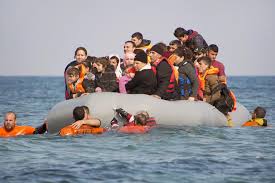
The Syrian civil war, which began in 2011, was rooted in domestic unrest, authoritarian governance, economic strain, and regional rivalries. Over time, it evolved into a complex proxy conflict involving global and regional powers. One undeniable outcome, however, was mass displacement. Millions of Syrians fled their homes, with significant numbers eventually reaching Europe. Countries like Germany accepted over one million refugees, while neighboring states such as Turkey hosted several million more.
This raises a difficult but valid policy question: why did large numbers of displaced populations ultimately settle in Western countries rather than remaining in culturally and linguistically closer regional states?
Geography alone does not dictate migration. Economic opportunity, asylum systems, diaspora networks, and political decisions all shape refugee flows. European states, guided by humanitarian commitments and legal obligations, opened their borders at a critical moment. At the same time, regional host countries faced capacity constraints, political calculations, and uneven burden-sharing.
Yet the long-term implications of these decisions are now part of a broader debate about integration, identity, and social cohesion in Western societies.
Some commentators go further, suggesting that migration patterns reflect a deliberate strategy tied to political or ideological agendas. Claims are sometimes made about coordinated efforts by groups such as the Muslim Brotherhood or state actors like Recep Tayyip Erdoğan to reshape demographics in Europe. These arguments often point to public statements encouraging higher birth rates among Muslim communities or to Turkey’s central role in managing refugee flows.
However, such interpretations risk overstating intent while understating complexity. Migration is rarely the product of a single actor or plan. It is the outcome of war, policy, opportunity, and human survival instincts. To attribute it to a coordinated “project” ignores the fragmentation of actors involved, including governments, NGOs, smugglers, and refugees themselves.
That said, dismissing all concerns outright is equally unhelpful. Demographic trends do matter. Muslim populations in Europe are, on average, younger and have higher fertility rates than aging native populations. They are also more concentrated in urban centers. These realities have political and social implications, particularly in societies already grappling with polarization and economic inequality.
The real issue, then, is not whether there is a hidden master plan, but whether policymakers adequately anticipated the long-term consequences of their decisions.
Did Western governments fully consider how large-scale migration would affect housing, labor markets, education systems, and political dynamics? Were integration policies sufficiently robust to manage rapid demographic change? And why has burden-sharing between regional and Western host countries remained so uneven?
Equally important is the risk of misdiagnosing the problem. Framing migration as an organized civilizational project can fuel fear, distort policy debates, and undermine social cohesion. It can also obscure the responsibility of Western and regional actors in creating the conditions that led to displacement in the first place.
From Afghanistan to Libya to Syria, conflict zones have repeatedly generated refugee flows toward Europe. These patterns reflect structural dynamics of war and globalization—not necessarily a coordinated ideological campaign.
The challenge ahead is not to decode a conspiracy, but to confront reality with clarity. Migration will remain a defining issue of the 21st century. The question is whether governments can move beyond reactive policies and develop sustainable strategies that balance humanitarian obligations with social stability.
If there is a lesson from Syria, it is not that demographic change was engineered—but that its consequences were underestimated.