 Geostrategic Media Political Commentary, Analysis, Security, Defense

The war triggered by strikes from the United States and Israel against Iran is increasingly exposing tensions between Washington and its Gulf Arab partners, as governments across the region grapple with the economic and security consequences of a conflict they say they neither initiated nor supported.
According to regional officials and analysts, frustration is quietly building in Gulf capitals where leaders feel they have been drawn into a war whose costs are falling disproportionately on their economies and infrastructure.
Gulf Infrastructure Under Fire
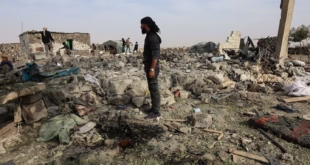
Since the conflict began, Iran has launched waves of missile and drone strikes not only against Israel but also against Gulf states hosting U.S. military facilities. Airports, ports, hotels, energy installations and logistics hubs across the region have been affected, according to regional sources.
Many Gulf governments had previously assured Tehran that they would not allow their territory or airspace to be used to launch attacks against Iran. Despite those assurances, Iranian retaliation has targeted the broader region, raising concerns about security and damaging business confidence.
Ebtesam Al-Ketbi, president of the Emirates Policy Center, summarized the sentiment among policymakers: Gulf countries did not seek the war but are now bearing its security and economic consequences.
Global Energy and Transport Shock
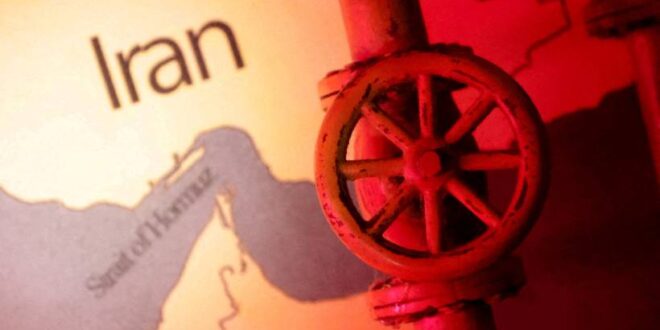
The conflict has disrupted one of the world’s most critical energy chokepoints, the Strait of Hormuz, through which roughly one fifth of global oil and liquefied natural gas exports pass.
The disruption has halted significant volumes of energy shipments and shaken global markets. Executives at Saudi Aramco have warned that continued instability around the strait could have catastrophic consequences for global oil supplies.
The aviation industry has also been hit hard. Airspace closures across the Gulf have forced airlines to cancel tens of thousands of flights, representing the largest disruption to international air travel since the COVID-19 pandemic.
Tourism—an increasingly important sector for Gulf economies has also suffered as the region’s carefully cultivated image as a safe luxury destination comes under pressure.
Strategic Doubts About U.S. Protection
The crisis is also triggering a deeper strategic reassessment across the Gulf about reliance on the United States for security.
For decades, relations between Washington and Gulf monarchies rested on an implicit bargain: Gulf states provided energy supplies, capital and large purchases of American weapons, while the U.S. guaranteed their security umbrella.
Analysts now say the war has shaken that arrangement.
Scholars such as Fawaz Gerges of the London School of Economics argue that Gulf governments may increasingly diversify their security partnerships and pursue a more balanced foreign policy.
The doubts echo earlier tensions following the 2019 Abqaiq–Khurais oil facility attacks in Saudi Arabia, when Washington did not respond militarily to drone and missile strikes that Riyadh and Washington blamed on Tehran.
Fear of an Unstable Endgame
While many Gulf officials privately criticize the decision by U.S. President Donald Trump to launch the war without broader consultation, some also worry about the consequences if the conflict ends without decisively weakening Iran.
Iran’s supreme leader Ali Khamenei was reportedly killed in the early stages of the war, raising fears about instability inside Iran and the potential emergence of a power vacuum in a country of more than 80 million people.
Regional analysts warn that either outcome a weakened but vengeful Iran or a collapsing Iranian state could create long-term instability across the Middle East.
Some Gulf policymakers have described such a scenario as dealing with an “injured lion,” a state that remains capable of striking neighbors even after suffering heavy damage.
Private Anger in Gulf Capitals
Behind the scenes, officials in Gulf states say their frustration with Washington is considerable. Several regional sources say key strategic decisions were made within a small inner circle around the U.S. president, with limited consultation with regional allies.
Business leaders have also begun speaking out publicly. Emirati businessman Khalaf Al Habtoor questioned whether Washington and Israel had fully considered the regional consequences of the conflict before launching strikes on Iran.
The criticism reflects a broader concern that Gulf states are being forced to absorb the economic fallout from geopolitical decisions made elsewhere.
A New Regional Calculus
Despite the tensions, Gulf governments continue to publicly emphasize resilience and unity. Leaders such as Mohammed bin Zayed Al Nahyan of the United Arab Emirates have sought to reassure citizens that their countries remain secure.
Yet analysts say the war could accelerate long-term changes in the region’s strategic thinking.
Gulf states may increasingly strengthen their own defense capabilities, diversify alliances beyond Washington, and eventually explore new regional security arrangements even with rivals such as Iran.
In that sense, the war may leave a lasting geopolitical legacy: a Gulf region more cautious about relying exclusively on external powers and more determined to shape its own security future.