Geostrategic Media Political Commentary, Analysis, Security, Defense
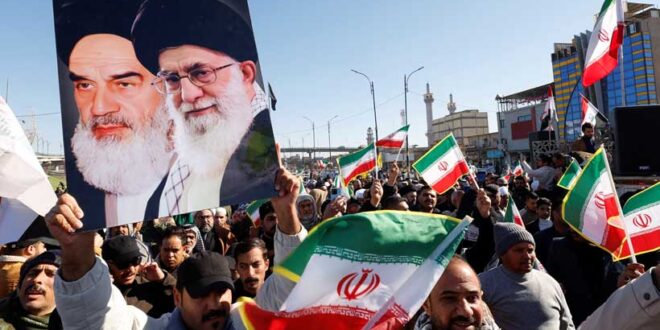

On December 28, 2025, protests unexpectedly erupted across Iran in response to a severe economic downturn in the Middle Eastern country, caused largely by sanctions imposed by the United States and its allies. More notably, the protests have grown in scale and turned violent, with clashes between civilians and police resulting in casualties, occurring shortly after the surprise arrest of President Nicolás Maduro and his wife by the U.S. military.
At present, Iranians have taken to the streets, accusing Supreme Leader Ali Khamenei of attempting to shield the merchant class, which many citizens believe to be the main cause of the country’s prolonged economic crisis. He has also accused the United States and Israel of interfering in Iran’s internal affairs. Iranian President Masoud Pezeshkian has pledged to reform the financial system and safeguard the purchasing power of the public. Internet disruptions have been imposed in the name of information security, a move that has further fueled public anger.
From Partner to Adversary
After the 1979 Islamic Revolution, U.S.–Iran and Israel–Iran relations deteriorated rapidly. Iran has frequently labeled the United States the “Great Satan” and Israel the “Little Satan.” Prior to the revolution, U.S.–Iran relations were highly cooperative, driven by shared concerns over Soviet involvement in the region. The United States fostered close ties with Iran, helping turn it into one of the fastest-growing economies in the world at the time. In return, Washington viewed Iran as a strategic outpost in the Middle East to contain Soviet influence.
In the 21st century, Iran has maintained an openly confrontational stance toward the United States and Israel, viewing Israel as a target that must be eliminated. Tehran has funded Islamist forces in the region, such as Hamas (Palestine) and the Houthis, fostering conflicts aimed at weakening Israel’s economy. In international relations, actors that share common identities—such as interests or cultural and religious ties—tend to increase cooperation, and vice versa.
Why Iran?
Geopolitically, Iran sits at the crossroads of Asia and Europe. The country maintains close relations with China and Russia as a counterbalance to sanctions imposed by the United States and its allies. For China, Iran is a crucial source of large oil reserves and a location where Beijing can rapidly expand its influence in the region.
For Russia, Iran serves as a transit hub in its grand strategy to project influence in Africa, making the Russia–Iran relationship a critical link. However, this is also the weakest link, as Iran fears that China may reduce oil imports from Iran in favor of increasing imports from Russia due to Moscow’s lower oil prices. If Iran were to become a partner of the United States, Russia’s involvement in Africa could be disrupted. For this reason, the Trump administration has shown particular interest in developments in Iran.
In an interview, U.S. Ambassador to Israel Mike Huckabee stated that Israel has the right to independently decide whether to strike Iran based on its national interests. Earlier, former Israeli Prime Minister Naftali Bennett posted on X on January 5, 2026, with the caption “It’s time,” implying that this would be an opportune moment to take actions to protect Israel’s national interests.
As a result, the current protests in Iran are likely to continue spreading and to evolve in complex and unpredictable ways. Iran’s ambassador to the United Nations has accused the United States of “interfering in Iran’s internal affairs through threats, incitement, and deliberate encouragement of instability and violence” in a letter to the UN Security Council, suggesting that the conflict may stem from U.S. and Israeli involvement.
Previously, Iran’s exiled crown prince paid courtesy visits to influential figures in Israel to seek support for a smooth return to the country. Taken together, these developments indicate that Iran may be the next target of the Donald Trump administration, with the aims of (1) neutralizing the Iran–Russia–China relationship and (2) reasserting influence in the Middle East.