Geostrategic Media Political Commentary, Analysis, Security, Defense
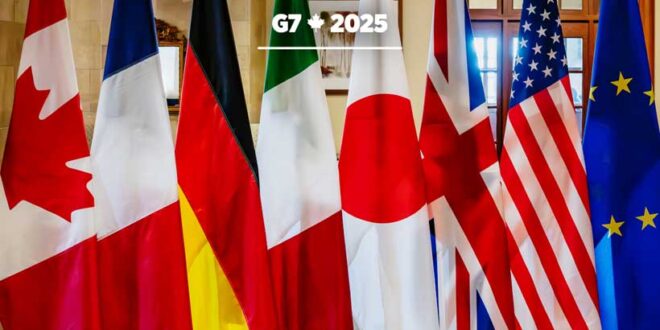

Growing geopolitical tensions and repeated export controls by Beijing have pushed rare earths and other critical minerals to the centre of global economic and security debates. China’s dominance across the mining, refining, and processing stages of these minerals has long been a strategic vulnerability for advanced economies, but recent restrictions most notably on exports to Japan ave sharpened concerns. Against this backdrop, finance ministers from the G7 and other like-minded economies met in Washington to explore coordinated ways to reduce dependence on Chinese rare earths while avoiding a full rupture in economic ties.
Why the Issue Has Become Urgent
Rare earths and critical minerals are foundational to modern economies, underpinning defence systems, semiconductors, renewable energy technologies, electric vehicles, and batteries. While G7 countries and partners account for roughly 60% of global demand, China controls a decisive share of supply and refining, giving it powerful leverage. Beijing’s willingness to use export controls as a policy tool has transformed what was once an industrial concern into a strategic one. For policymakers, the challenge is no longer hypothetical: supply disruptions could directly affect military readiness, industrial competitiveness, and climate transition goals.
What Was Discussed in Washington
The Washington meeting, convened by U.S. Treasury Secretary Scott Bessent, focused on diversifying supply chains rather than pursuing outright decoupling from China. Participants discussed a mix of short-, medium-, and long-term measures, including partnerships with resource-rich countries, support from public financial institutions, tax and financial incentives, and trade tools. One of the more ambitious ideas floated was the introduction of a minimum price or price floor for rare earths, aimed at stabilising markets and making non-Chinese production economically viable. The absence of a joint statement reflects both the early stage of discussions and lingering disagreements over scope and pace.
Europe’s Position and Internal Pressures
European officials, particularly from Germany, stressed the need for self-reliance without framing the effort as an explicitly anti-China bloc. While acknowledging the strategic risks of dependency, they warned that confrontation alone would not solve supply shortages. Instead, Europe faces pressure to accelerate domestic initiatives, including new financing mechanisms, raw materials funds, and recycling programmes. Recycling, in particular, was highlighted as an underutilised but critical avenue for reducing long-term dependence and broadening supply sources within existing industrial ecosystems.
China’s Role and Global Constraints
China’s near-monopoly is not limited to mining but extends to processing and refining, stages that are capital-intensive, environmentally contentious, and politically sensitive in many democracies. This reality constrains how quickly alternatives can be built. Even with strong political will, new mines and processing facilities take years to develop, and environmental and labour standards emphasised by Japan and others add further complexity. As a result, efforts to diversify supply chains are likely to be gradual and uneven, leaving countries exposed in the interim.
Implications
In the short term, coordinated action among the G7 and partners could raise costs, reshape global mineral markets, and intensify competition for alternative suppliers. Over the medium term, successful diversification would weaken China’s leverage but also fragment global supply chains, potentially increasing prices for clean energy and high-tech products. Politically, the push underscores a broader shift toward economic security as a core component of national security, blurring the line between trade policy and strategic planning.
Analysis
The Washington talks reflect a growing recognition that dependence on critical minerals is not merely an economic inefficiency but a strategic liability. Yet the emphasis on “de-risking rather than decoupling” reveals an underlying constraint: China’s dominance is too deep to unwind quickly without significant disruption. Price floors, partnerships, and recycling are sensible tools, but they require sustained political commitment and large public investment. The real test will be whether these discussions translate into coordinated action, or whether national interests and cost concerns dilute momentum. Ultimately, reducing reliance on Chinese rare earths is less a single policy choice than a long-term industrial transformation one that advanced economies can no longer afford to postpone.