 Geostrategic Media Political Commentary, Analysis, Security, Defense
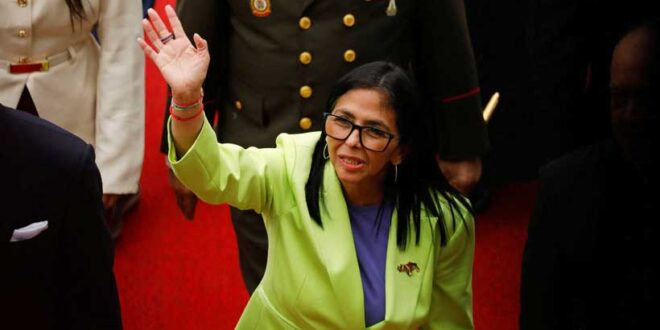

Since the U. S. seized Venezuelan President Nicolas Maduro, interim President Delcy Rodriguez has focused on consolidating her power. She has appointed loyalists to critical positions to protect herself from internal threats while complying with U. S. demands to increase oil production. Rodriguez, who previously served as vice president and oil minister, has made significant appointments, including a central banker and a new head for the DGCIM, the military counterintelligence agency, to bolster her leadership.
Major General Gustavo Gonzalez will now lead DGCIM, a move seen as a strategy to counter Diosdado Cabello, Maduro’s hardline interior minister, and a significant threat to Rodriguez’s authority. Many believe that without U. S. support, Rodriguez would struggle to maintain her power. She is already reforming the armed forces by removing and appointing new officials.
Interviews with various sources in Venezuela highlight the internal tensions within the government as Rodriguez tries to maintain control while fulfilling the requirements set by the Trump administration related to oil sales. In her first speech to parliament, she called for unity and emphasized her loyalty to Maduro while promising to stimulate investment in the oil sector. Known for her business connections, Rodriguez also has strong influence over the oil industry and gained U. S. backing during her recent meeting with CIA director John Ratcliffe.
On the other side, Cabello, who leads the ruling PSUV socialist party and has a longstanding public presence, poses a significant challenge to Rodriguez. Despite their public show of unity, sources indicate Cabello remains a threat to her governance. Following Maduro’s capture, Cabello was seen publicly fostering loyalty among security forces, and he has a history of connections with the U. S. government, which has informed him against using violence against opposition.
After Rodriguez’s appointment, there were fears of unrest, shown by a brief burst of anti-aircraft fire outside the presidential palace. Reports later clarified it was a miscommunication between police and the presidential guard. The public response to Maduro’s capture has been mixed, with some party branches asking members to report celebrations of Maduro’s downfall.
Rodriguez now faces the challenge of convincing party loyalists she is not simply a U. S. pawn while trying to stabilize an economy that has seen inflation rise sharply. Venezuela has a large military presence, with many generals controlling resources and power, complicating her attempts to assert authority. The relationship between Gonzalez and Cabello is another concern, as Gonzalez previously worked closely with Cabello, which may affect his control over DGCIM.
There are uncertainties regarding Gonzalez’s ability to manage DGCIM effectively; previous leaders struggled with the agency due to the powerful influence of Cabello’s allies. The colectivos, militant groups linked to Cabello, could undermine Rodriguez’s efforts by creating chaos within Caracas as a defense against potential U. S. intervention.
In addition to managing these internal threats, Rodriguez must address the slow pace of prisoner releases, a significant point for families and human rights organizations. Outside pressures continue to mount on Cabello, with U. S. representatives highlighting the need for him to face justice for a genuine political transition in Venezuela. Bringing Cabello to justice is viewed as essential for progress toward democracy and the release of political prisoners.