Geostrategic Media Political Commentary, Analysis, Security, Defense

Frank Vogl and Stephan Richter
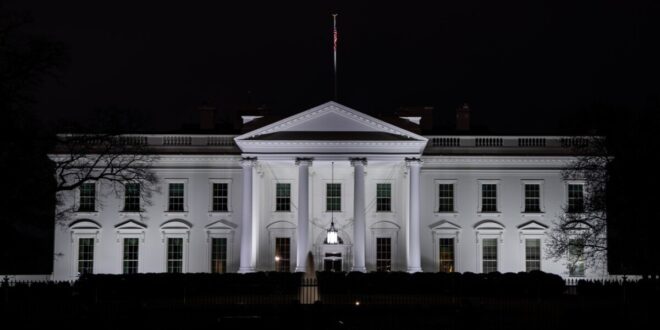
It is by now widely understood just how disdainful the current U.S. leadership is of Europe. The White House’s new “National Security Strategy” (NSS) states that Europe’s economy is in decline and adds that it is “eclipsed by the real and more stark prospect of civilizational erasure.”
The NSS goes on to claim:
“The larger issues facing Europe include activities of the European Union and other transnational bodies that undermine political liberty and sovereignty, migration policies that are transforming the continent and creating strife, censorship of free speech and suppression of political opposition, cratering birthrates, and loss of national identities and self-confidence.
Should present trends continue, the continent will be unrecognizable in 20 years or less. As such, it is far from obvious whether certain European countries will have economies and militaries strong enough to remain reliable allies.”
Trump’s mission: Making civilized Europe fully submissive to the U.S.
No doubt, Europe faces important challenges. But what earns the EU Trump’s and his techno bros’ real ire is that it dares to rely on laws and regulations that are fundamentally unlike those of the United States.
U.S. corporations are used to being able to lobby anything away that stands in their way. If a body anywhere in the world of democratic nations thinks otherwise, that is considered a case of severe lèse majesté – i.e., a royal insult.
In today’s United States, Donald Trump may be considered a king among his MAGA crowds – and all those presumably mighty CEOs that have turned hyper-submissive to Trump, considering him a form of royalty. That is decidedly not how European democracies operate.
Everybody and everything for sale
On foreign policy, the core conviction of President Trump, a hyper-mercantilist, is profit maximization. He believes everyone can be bought, including Vladimir Putin.
The President sees the quest for peace in the world as one whose real purpose it is to turn every relationship into a material benefit for himself, his family, his courtiers and his country, in that order (if there is anything left for the people at large).
In this act of extortion, Trump claims to draw on his experience as a businessman. His particular obsession is to bring natural resources from across the globe officially under American – and, in reality, his own – control.
Silencing the opposition
As Trump drives for ever-more foreign deals, so that his family’s businesses and those of some of his cronies will prosper from his extremely mercantilist stance, he is completely unconcerned with suggestions of conflict-of-interest and corruption. After all, those suggestions are only coming from political critics, while Republican Party members of Congress stay silent.
What really makes Trump mad is that the Europeans dare not to fold, in sharp contrast to what so many powers have done in the United States.
Trump and Russia
A wheeler-dealer salesman, not a strategist, Trump believes that Putin will agree to a Ukraine ceasefire in exchange for deals that will strengthen the Russian economy, while providing U.S. corporations with access to Russia’s large stocks of rare earth and other critical natural resources.
Reports according to which Trump believes he is in a position to offer Russia’s frozen assets, held currently in the Euroclear financial system in Belgium, to support U.S. investments in Russia and Ukraine are a flight of utter fancy.
Unperturbed, Trump and U.S. Vice President Vance seriously believe the EU must join the United States in forging a relationship with Russia and cease to be so committed to Ukraine’s interests.
Back to the 19th century
In Trump’s world view only the most powerful can negotiate the best deals. He sees China and Russia as the key players.
Military, technological and economic power will increasingly depend, according to the White House view, on control of the world’s natural resources. This is the paramount driver of Trump’s approach to foreign policy and one, so it happens, that can also enrich his own family business interests and those of his close associates.
The United States is well aware that China and Russia, as well as the United Arab Emirates, are also deeply engaged in the hunt for global natural resources.
The UAE, for example, has been backing the Rapid Support Forces (RSF) in Sudan in exchange for gold, while backing a separatist force seeking to capture the major oil-rich region in Yemen.
From Sudan to Ecuador
Russia’s strategy has been largely through military deployment, from Syria to the Central African Republic and Mali. It is also engaged in Sudan as it also backs the RSF in exchange for gold and it pursues intense diplomatic efforts seeking to engage many of the BRICS countries and assorted oil-rich countries, such as Libya and Venezuela.
China is the biggest player in securing natural resources across the developing world. Through its “Belt and Road” program, backed by vast sums of cash, it has forged major deals in such resources-rich countries as Angola, South Sudan, Ecuador, Peru, Myanmar, Afghanistan and across much of Central Asia.
And let us not forget that Trump dispatched Wall Street billionaire and now U.S. Treasury Secretary Scott Bessent to Kyiv some time ago to conclude a deal that gives the U.S. preferential opportunities to invest in Ukraine’s rare earth deposits in exchange for pledges to provide U.S. support for post-war reconstruction. It is just the kind of deal that Trump wants to replicate in many countries.
Latin America is critical
Trump views the Western Hemisphere as U.S. territory. His “National Security Strategy” declares that the United States has dominating power across the region. This might be seen as both a caution to China and Russia to tread most carefully in this part of the world, while leaving Latin American leaders who do not side with Trump in no doubt that he will act to undermine them.
He has sent a large naval flotilla to the coast of Venezuela and stated that he may send land forces into the country. Trump’s target is President Maduro. And consistent with his core foreign policy strategy, he has his eyes on Venezuela’s large oil reserves.
Conclusion
For as long as the Trump administration lasts, supporting democracy, human rights and anti-corruption across the world are no longer U.S. government priorities. Commercial success dominates the agenda and Trump’s approaches.
As New York Times columnist Tom Friedman wrote in recent days: “I can think of no other American president who would have acted as if American values and interests dictated that we now be a neutral arbiter between Russia and Ukraine and, on top of that, an arbiter who tries to make a profit from each side in the process – as Trump has done. This is one of the most shameful episodes in American foreign policy, and the entire Republican Party is complicit in its perpetration.”
About the Authors:
Frank Vogl
Frank Vogl is co-founder of Transparency International and author of “The Enablers: How the West Supports Kleptocrats and Corruption — Endangering Our Democracy” [Washington D.C., United States]. Frank Vogl is an Adjunct professor at Georgetown University, teaching a graduate course on “Corruption, Conflict Resolution and Security.” Mr. Vogl is the co-founder and former Vice Chairman of Transparency International and serves today as an Individual Member. He is a co-founder and former Chairman of the Partnership for Transparency Fund and an Advisor to its management. He serves as a member of the International Council of the New Israel Fund and of the Advisory Council of the United Nations Association of the Greater Washington Area. A former spokesman for the World Bank, Mr. Vogl was previously the international economics correspondent for the Times of London. From 1990 to 2017, he managed Vogl Communications Inc., consulting to global economic and financial institutions. He is the author of many articles and books, and lectures extensively on global ethics and corruption. Some of his recent works include “The Enablers – How the West Supports Kleptocrats and Corruption-Endangering Our Democracy” (Rowman and Littlefield) and “Waging War on Corruption: Inside the Movement Fighting the Abuse of Power” (Rowman and Littlefield).
Stephan Richter
Stephan Richter is the publisher and editor-in-chief of The Globalist, the daily online magazine on the global economy, politics and culture, which he founded and launched in January 2000. Mr. Richter is a frequent guest on leading radio and television programs, including Germany’s “Meet the Press” program on ARD and ZDF’s Morning Show. While based in the U.S., he frequently appeared on National Public Radio as well as on the PBS Newshour and CNN. A sought after and thought-provoking keynote speaker at executive conferences and retreats, he has moderated more than 150 policy events during his time in Washington, D.C., featuring prime ministers, CEOs, Nobel laureates and heads of international organizations. His articles and views have appeared in such publications as the New York Times, Wall Street Journal, Washington Post, Financial Times, Harvard Business Review, Fortune, Salon, Japan Times, Le Monde, Les Echos, Die Welt, Der Spiegel, Frankfurter Allgemeine Zeitung, Die Zeit, Handelsblatt, Manager Magazin, Cicero, NZZ and Foreign Affairs. For the past ten years, he was the presenter of the Marketplace Globalist Quiz, aired on public radio stations all across the United States as part of NPR’s Morning Report. He also created The Globalist Quiz, a weekly feature exploring the global agenda in an innovative fashion syndicated to newspapers around the world. From 2002-08, he was a monthly columnist for Les Echos, the leading financial daily in France. He was also the U.S. correspondent for Rheinischer Merkur from 1990-98, as well as a monthly columnist for CEO Magazine. In addition, he has been a keynote speaker on geopolitical and geoeconomic issues and trends at major international conferences organized by asset managers, investment banks and public policy institutions in Europe, the United States and Asia.