Geostrategic Media Political Commentary, Analysis, Security, Defense
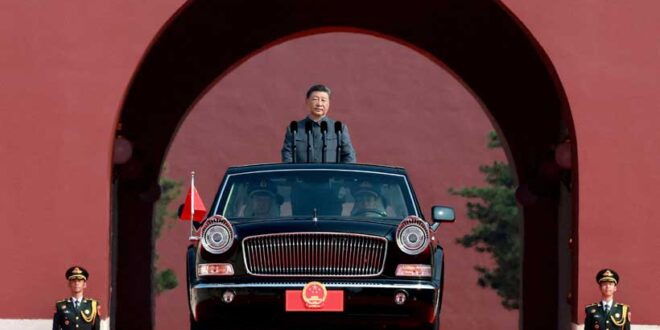

Calls by some Chinese social media users for a lightning, “Venezuela‑style” seizure of Taiwan’s leadership have gained traction online. Yet analysts, scholars, and security officials caution that such scenarios are vastly more complex—and far more dangerous—than online commentary suggests. Unlike Venezuela, Taiwan has spent decades preparing specifically for a potential “decapitation operation,” supported by layered air defences, advanced radar networks, hardened command structures, and the near certainty of U.S. and allied intervention. Together, these factors make any rapid strike against Taiwan’s leadership a high‑risk gamble for Beijing.
Taiwan’s Prepared Defences
Taiwanese military planners have long assumed that any conflict would begin with attempts to neutralise political and military leadership. Experts note that a Chinese air assault or special‑forces infiltration across the Taiwan Strait would likely be detected early, triggering immediate escalation. Chen Kuan‑ting, a lawmaker from Taiwan’s ruling Democratic Progressive Party, has said the island’s integrated early‑warning and air‑defence systems would almost certainly expose such an operation before it could succeed, sharply increasing the risk of a wider war.
PLA Modernisation Still Unproven
Despite heavy investment in modern weapons, persistent doubts remain about the People’s Liberation Army’s ability to integrate these systems effectively under combat conditions. Analysts point to limited joint‑operations experience, unresolved challenges in electronic and electromagnetic warfare, and the absence of real‑world validation for complex, high‑risk missions. Chen warned that if an operation against Taiwan’s leadership encountered even minor setbacks, it could rapidly spiral into full‑scale conflict with severe political and military consequences.
The U.S. Benchmark in Venezuela
The U.S.‑led operation that removed Venezuelan President Nicolás Maduro underscored the gap between American and Chinese military capabilities. The United States demonstrated overwhelming air dominance, combining stealth fighters, electronic‑warfare aircraft, real‑time intelligence from drones and satellites, and seamless command coordination. Analysts argue that this level of operational integration—honed through decades of combat experience—remains beyond the PLA’s current reach.
Force Not Ruled Out
China has never renounced the use of force to bring Taiwan under its control, a claim Taiwan firmly rejects. Singapore‑based security scholar Collin Koh notes that while the PLA has made progress in integrating its forces, it remains in the early stages compared with the United States’ decades‑long accumulation of joint‑warfare expertise. Chinese military drills around Taiwan—including missile launches and large‑scale exercises—underscore Beijing’s determination while also serving as political signalling.
Taiwan’s Defensive Push
President Lai Ching‑te has repeatedly stressed that Taiwan will defend its sovereignty and continue strengthening its military capabilities. In October, Taipei unveiled its “T‑Dome” air‑defence system, designed to integrate domestically produced Sky Bow missiles with U.S.‑supplied HIMARS rockets in a sensor‑to‑shooter framework similar to Israel’s Iron Dome. Earlier exercises also focused on protecting critical infrastructure, including Taipei’s main airport, against potential airborne assaults.
Beijing’s Rhetoric and Escalatory Risks
Chinese officials have paired military exercises with stark warnings, vowing that any external interference would be crushed by the PLA. Analysts caution, however, that aggressive rhetoric cannot compensate for operational weaknesses. The Communist Party’s continued dominance over military command structures also raises questions about whether the PLA can delegate authority effectively in fast‑moving combat scenarios, where decentralised decision‑making is often decisive.
Social Media Scenarios Meet Hard Constraints
Some Chinese online commentators have openly praised the Venezuela operation as a template for Taiwan, suggesting special forces could arrest Lai and announce an immediate takeover. Chen dismissed such ideas as fantasy, arguing that Taiwan’s defences and international backing would quickly expose and defeat any such move. Analysts add that while China has developed platforms resembling U.S. electronic‑warfare and early‑warning aircraft, their true combat effectiveness remains unproven.
No Room for Complacency in Taipei
Despite doubts about PLA readiness, Taiwanese officials stress that complacency would be dangerous. A senior security official warned that Taiwan cannot afford to underestimate China’s ability to study foreign operations, adapt quickly, and close capability gaps. Beijing, the official said, will continue searching for ways to overcome its limitations, making constant vigilance essential.
Personal Analysis: Decapitation as Escalation, Not Shortcut
The fascination among some Chinese commentators with a “Venezuela‑style” solution reflects a dangerous misconception: that political control can be achieved without confronting military reality. In Taiwan’s case, a decapitation strike would almost certainly fail to remain limited. Targeting the island’s leadership would trigger immediate escalation, draw in the United States and regional allies, and transform a surgical gamble into a major war.
China’s military modernisation has narrowed hardware gaps, but high‑end warfare ultimately depends on integration, trust, and command autonomy—areas where the PLA still faces structural constraints. Taiwan’s long‑standing emphasis on survivability, redundancy, and early warning is explicitly designed to defeat precisely this type of operation.
Rather than offering a shortcut to unification, a leadership strike would represent the most destabilising opening move Beijing could make. The irony is that an attempt to avoid a prolonged conflict could instead guarantee one, with consequences far exceeding any perceived advantage of speed or surprise.