 Geostrategic Media Political Commentary, Analysis, Security, Defense


Hosein Mortada
Amid the relentless wars and upheavals shaking the Middle East, a pressing question resurfaces: are today’s conflicts—particularly in Lebanon, Iraq, Iran, and Yemen—the product of isolated local struggles, or are they fragments of a broader landscape shaped by complex international calculations?
In this context, Michael Brant’s book The Conspiracy to Divide the Divine Religions emerges as an early attempt to interpret what he described as a systematic strategy aimed at dismantling the Islamic world from within, with a particular focus on Shiism.
Brant argues that Shiites have ceased to be merely a religious community and have instead evolved into a powerful political and social actor—especially following the Islamic Revolution in Iran and the rise of ideologically driven resistance movements. This transformation, he contends, alarmed major powers that came to view this model as a direct threat to their interests and influence in the region.
Rather than engaging in direct confrontation, the book suggests that a more sophisticated approach was adopted—one based on long-term attrition. This strategy operates by fueling sectarian conflict, discrediting religious authorities, and shifting confrontation from a clear external struggle to internal conflicts that drain societies from within.
In Lebanon, this dynamic is evident in the sustained campaign against Hezbollah, which has gone far beyond military confrontation. It has included suffocating economic pressure and intensive media campaigns, targeting the group’s social base as much as its military capabilities.
In Iraq, the 2003 U.S. invasion marked a decisive turning point. The political system was reengineered along sectarian lines, opening the door to waves of brutal violence that disproportionately targeted Shiites and transformed the country into a perpetual arena of internal conflict.
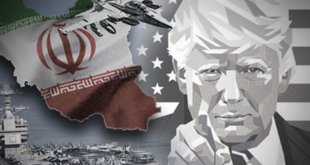
Iran, for its part, sits at the very center of this targeting, as it represents the clearest example of a Shiite state that is politically and economically independent. The succession of sanctions, economic sieges, and recurring military threats reflects a persistent effort to break this model or force its collapse from within.
Yemen offers another stark illustration of proxy warfare, where Ansar Allah has been worn down in a prolonged regional conflict, accompanied by immense humanitarian devastation and an equally intense media war.
Linking Brant’s thesis to these realities does not require uncritical acceptance of everything in his book, which in many places lacks rigorous academic documentation. Nevertheless, the repetition of targeting patterns and the similarity of the tools employed raise legitimate questions about the instrumentalization of sectarian identity as a political weapon in struggles over power and influence.
The gravest danger in this landscape is not the targeting of a single sect, but the transformation of religion itself into a perpetual fuel for war—threatening social cohesion and the stability of the entire region. As these conflicts persist, awareness of the dangers of sectarian division remains the first essential step toward breaking a cycle of attrition in which there are no true winners.
Lebanese Media Anchor