Geostrategic Media Political Commentary, Analysis, Security, Defense
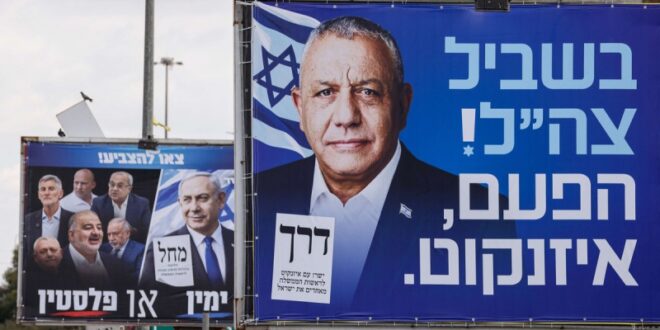

For Palestinians in Gaza and the occupied West Bank, Israel’s October 27 election is about far more than a change of government. It is a question of survival, dignity, and whether the next four years will bring further devastation or even a limited chance for relief.
Israelis may describe the upcoming election as one of the most consequential in their country’s history, but for Palestinians, the stakes are no less profound. They cannot vote, yet the outcome will shape their lives, their livelihoods, and the future of their land. After years of war, displacement, settlement expansion, and economic strangulation, many Palestinians see the removal of Prime Minister Benjamin Netanyahu as a necessary first step toward preventing further catastrophe.
“This election is existential,” says Nidal Kahil, a 32-year-old Palestinian displaced by the war in Gaza who now lives in a small tent with his parents and three sisters. “It has become a matter of life and death.”
His words capture the desperation of a population that has endured immense suffering while watching Israeli politics largely unfold without meaningful consideration of Palestinian rights.
Netanyahu’s government, widely regarded as the most right-wing in Israel’s history, has pursued policies that deepen Palestinian dispossession. It has opposed Palestinian statehood, accelerated settlement expansion in the occupied West Bank, and maintained military pressure on Gaza despite a ceasefire agreement reached more than a year ago. According to local health officials, Israeli strikes since the ceasefire have killed more than 1,400 people.
Meanwhile, settlement-related violence in the West Bank has intensified. Palestinian communities face attacks on homes, mosques, livestock, and olive groves, forcing some families to abandon their land. The annual olive harvest, an economic necessity and a deeply rooted cultural tradition, has become another occasion for intimidation and violence.
Although Netanyahu has occasionally condemned extremist settlers, his government has continued expanding settlements. His endorsement of more than 100 new settlements, accompanied by a promise of further expansion, reinforces Palestinian fears that the objective is to consolidate Israeli control over the entire West Bank.
The economic pressure is equally devastating. Israel has restricted Palestinian access to employment inside its borders and withheld billions of dollars in tax revenues collected on behalf of the Palestinian Authority. These measures have weakened an already fragile Palestinian economy, undermining public services, businesses, and household incomes.
For Palestinians, therefore, the election is not simply a contest between political personalities. It is a choice between a government openly committed to territorial expansion and an alternative that might offer limited opportunities to reduce violence and ease economic hardship.
Netanyahu’s principal challenger, Gadi Eisenkot, has also rejected the idea of establishing a Palestinian state. Yet he has pledged to curb settler violence and pursue greater stability in the occupied territories. His allies argue that Israel has no interest in opening another front and that restraining extremists would serve its security interests.
Such positions fall far short of Palestinian aspirations. Ending settlement expansion, ending the occupation, and securing Palestinian self-determination require far more than promises to manage violence or improve economic conditions. Nevertheless, even limited policy changes could make a tangible difference to communities facing daily insecurity and deprivation.
Palestinian officials have increasingly acknowledged this distinction. Ahmed Majdalani, a senior Palestinian official, has described the difference between Netanyahu and Eisenkot as substantial, expressing hope that a new government would release withheld Palestinian funds and help restore a measure of trust.
In Gaza, the stakes are even higher. Netanyahu has largely resisted cooperation with the Trump administration’s proposed framework for ending the conflict, while members of his governing coalition have advocated policies that would make life in the territory increasingly unbearable and encourage mass emigration.
The danger is that another Netanyahu victory could reinforce a political trajectory in which Palestinian suffering becomes an instrument of policy rather than a crisis demanding resolution.
Yet Palestinians should not be expected to mistake the defeat of one Israeli leader for liberation. Eisenkot’s rejection of Palestinian statehood illustrates how deeply entrenched opposition to Palestinian sovereignty remains within mainstream Israeli politics. A change of government may alter the methods and intensity of Israeli policies without changing their underlying direction.
That is why the significance of this election extends beyond the immediate question of who occupies the prime minister’s office. It will test whether Israeli voters are willing to reject policies that perpetuate occupation, empower violent extremists, and undermine the possibility of a just peace.
Palestinians are watching an election in which they have no ballot but whose consequences they will bear. Their hope is not necessarily that a new Israeli government will deliver justice. It is that it might stop making their lives worse.
Removing Netanyahu would not, by itself, end the occupation or secure Palestinian freedom. But if his defeat opens the door to restraining settlement expansion, ending collective punishment, restoring economic lifelines, and reviving a credible political process, it could mark an important departure from the destructive course of recent years. For Palestinians, even that limited possibility is reason enough to watch the election with cautious hope.