Geostrategic Media Political Commentary, Analysis, Security, Defense

Robert Boston
In Geneva this week, the United States and Iran returned to a familiar table—though not to familiar ground.
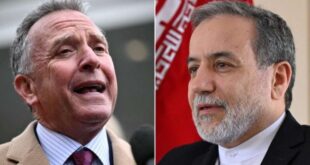
Indirect nuclear negotiations began Tuesday under Omani mediation, bringing together U.S. envoys Steve Witkoff and Jared Kushner with Iranian Foreign Minister Abbas Araqchi. President Donald Trump signaled he would participate “indirectly,” a formulation that captures the tone of the moment: engaged, but guarded; present, yet distant.
After years of rupture, sanctions, sabotage, and air strikes, both sides are once again probing whether diplomacy can succeed where coercion has failed.
Military Pressure as Diplomatic Leverage
The talks are not unfolding in a vacuum. They are taking place under the unmistakable shadow of military force.
Washington has deployed what Trump described as a “massive naval armada” to the region, reinforcing U.S. presence in and around the Gulf. Meanwhile, Tehran has staged naval drills in the Strait of Hormuz—a narrow maritime artery through which a significant share of global oil exports flows.
This is diplomacy conducted at gunpoint—not because war is inevitable, but because deterrence is being used as negotiation leverage. Both sides are sending a message: we prefer a deal, but we are prepared for confrontation.
Markets are listening. Even slight tremors in the Gulf send immediate signals through energy markets, reminding the world that a breakdown in talks could quickly morph into a global economic shock.
The Weight of Broken Trust
Any attempt at a new understanding is burdened by history.
Last June, Israeli air strikes targeted Iranian nuclear facilities, followed by U.S. B-2 bomber missions that deepened Tehran’s mistrust. Those operations severely undermined already fragile diplomatic momentum and reinforced the belief in Iran’s leadership that military pressure remains Washington’s preferred instrument.
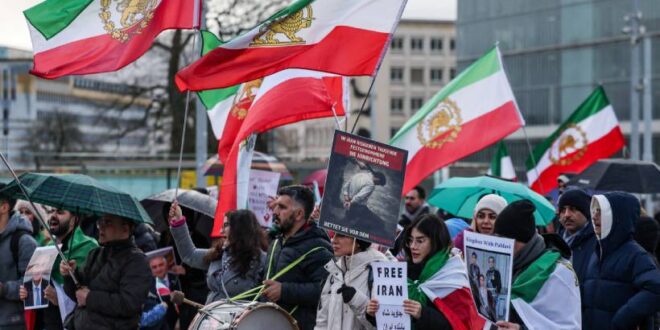
Since then, Iran has paused uranium enrichment activity, but that restraint has not translated into relief. Sanctions continue to squeeze the economy, and domestic unrest—driven by inflation and cost-of-living crises—has been met with harsh repression. Thousands were reportedly killed during waves of protests, adding internal fragility to Tehran’s external pressures.
For Iran’s leadership, the stakes are therefore not only strategic but existential: economic relief is desperately needed, yet political capitulation is impossible.
The Core Dispute: Enrichment, Sanctions, and Missiles
At the center of the dispute remains Iran’s nuclear program.
Tehran insists it is prepared to negotiate limits on uranium enrichment in exchange for credible, verifiable sanctions relief. What it will not accept is a complete abandonment of enrichment—a right it argues is protected under the Treaty on the Non-Proliferation of Nuclear Weapons, to which it remains a signatory.
Washington, however, has signaled interest in expanding the scope of talks to include Iran’s missile capabilities—a red line for Tehran. For Iranian negotiators, linking missile development to nuclear discussions is a nonstarter. For U.S. policymakers, ignoring it feels incomplete.
Hovering in the background is Israel, which maintains a long-standing policy of ambiguity regarding its own nuclear arsenal. The asymmetry is not lost on Tehran, nor on regional observers.
The mistrust is layered and deep. The question is whether transactional pragmatism can overcome ideological rigidity.
Energy Markets and Global Consequences
The world has little appetite for another Gulf crisis.
Brent crude prices dipped slightly during Asian trading sessions as investors tried to interpret the choreography of naval drills and diplomatic statements. But markets remain highly sensitive. The Strait of Hormuz is not merely a regional concern—it is a global economic lifeline.
A single miscalculation—an intercepted vessel, a misread radar signal, an errant missile—could spike oil prices, disrupt supply chains, and exacerbate inflation worldwide.
Diplomacy, in this context, is not only about centrifuges and sanctions. It is about economic stability from Berlin to Beijing.
Geneva as a Diplomatic Crossroads
Adding complexity, Witkoff and Kushner are expected to remain in Geneva for separate talks involving Russia and Ukraine, aimed at addressing Moscow’s four-year war.
Geneva is once again functioning as a geopolitical nerve center. Multiple crises—Middle Eastern escalation and European war—are intersecting in the same diplomatic corridors. The United States is attempting a delicate balancing act: containing one flashpoint while managing another.
The risk is not only failure in one theater, but overextension in both.
A Narrow Window
What makes these talks different is not optimism. It is urgency.
Iran needs sanctions relief. The United States wants nuclear restraint without another Middle Eastern war. Both are operating under domestic constraints, international scrutiny, and the ever-present possibility of escalation.
The naval deployments and air strike precedents remind negotiators that diplomacy is not occurring in a peaceful interlude—it is happening at the edge of potential conflict.
The Geneva talks may not produce a grand bargain. But they offer something more modest, and perhaps more realistic: a temporary stabilization of a volatile equation.
In today’s fractured geopolitical landscape, that alone would be an achievement.
The alternative—another spiral of escalation in the Gulf—would not remain regional for long.