Geostrategic Media Political Commentary, Analysis, Security, Defense

Seven months ago, President Donald Trump declared that U.S. airstrikes had “completely and totally obliterated” Iran’s nuclear facilities. This week, he is threatening to strike them again—warning that the next attack will be “far worse” unless Tehran agrees to nuclear negotiations.
Something doesn’t add up.
Either the June strikes worked, in which case there is nothing left to threaten. Or they didn’t, in which case Trump overstated his success. Both cannot be true. That contradiction is not a minor rhetorical slip—it exposes a deeper problem with the administration’s approach to Iran, one that relies more on performance than strategy.
A ‘Total Victory’ That Wasn’t
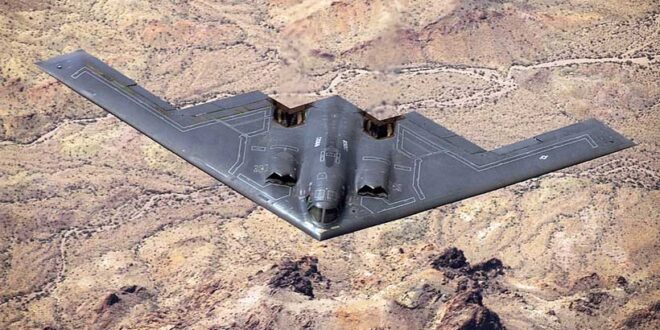
Operation Midnight Hammer was militarily impressive. Seven B-2 bombers flew nonstop from Missouri, dropped fourteen 30,000-pound bunker-buster bombs on three Iranian nuclear sites, and returned home. It marked the first operational use of the Massive Ordnance Penetrator, the only weapon believed capable of reaching Iran’s deeply buried facilities.
Trump quickly declared total victory. Defense Secretary Pete Hegseth called the operation “an incredible and overwhelming success.” But within days, a leaked Defense Intelligence Agency assessment told a more sobering story: the strikes likely set Iran’s nuclear program back only “a few months.” Facility entrances were sealed, but underground structures remained intact. Most critically, Iran had already moved an estimated 400 kilograms of enriched uranium—enough for multiple weapons—before the bombs fell.
Israeli officials were more candid. Fordow, they acknowledged, was “substantially damaged, but not destroyed.” Fully eliminating it would require repeated waves of strikes over days or even weeks. One spectacular attack was never going to be enough.
Trump’s current threats, then, are not aimed at a nuclear program he destroyed. They are aimed at one he wounded but failed to kill—one that has now had seven months to reorganize, disperse, and adapt.
From Defending Protesters to Bombing Them
The latest escalation did not begin with nuclear ultimatums. It began in late December, when mass protests erupted across Iran over economic collapse and political repression. Trump warned repeatedly that the United States could intervene militarily if the killing of protesters continued, deploying the USS Abraham Lincoln carrier strike group as a show of force.
Then the protests subsided. The regime’s crackdown worked. Thousands were reportedly killed or detained, and demonstrations faded by early January. Trump claimed the “killing has stopped” and briefly lowered the temperature.
But the carrier group continued its deployment. And Trump’s justification shifted—from protecting protesters to coercing Iran on its nuclear program. “Come to the table and negotiate,” he posted this week. “NO NUCLEAR WEAPONS.”
The pivot is revealing. When protests offered a politically palatable justification for military pressure, Trump embraced it. When that rationale disappeared, he simply switched files. The force posture stayed the same; only the explanation changed.
If concern for Iranian protesters was genuine, threatening to bomb their country is a curious way of expressing solidarity.
When Threats Lose Their Meaning
Trump now faces a familiar problem: he has threatened repeatedly, deployed dramatically, and struck once—with ambiguous results. Each new warning carries less weight than the last.
This is a recurring pattern. He assassinated Qasem Soleimani in 2020, then issued months of follow-up threats that never materialized. He massed forces during the protests, then backed off. He threatened Venezuela, then struck selectively. Now Iran again.
Regional actors have learned to discount the rhetoric. When everything is urgent, nothing is. Iran’s response this week reflects that reality. Foreign Minister Abbas Araqchi warned that Iranian forces have “their fingers on the trigger,” while also insisting Tehran “has always welcomed” a nuclear deal. It is the posture of a government that has heard this script before.
Even within Washington, the messaging is muddled. Secretary of State Marco Rubio claims Iran’s leadership is “probably weaker than it has ever been,” while U.S. intelligence reportedly sees no major fractures at the top. If the regime is collapsing, military escalation is unnecessary. If it isn’t, escalation without a plan is reckless. The administration appears to be arguing both at once.
Maximum Pressure, Minimum Strategy
What remains unclear is whether there is any coherent Iran strategy beyond “maximum pressure.”
Trump abandoned the 2015 nuclear deal, reimposed sanctions, and has now bombed Iranian facilities. He appears to believe that sustained military and economic pressure will force Tehran into accepting a better agreement. But better than what? The original deal already blocked Iran’s path to a bomb in exchange for sanctions relief. Trump walked away from it, Iran resumed enrichment, and now Washington is demanding new concessions from a weaker diplomatic position and with less international support.
Why would Iran accept worse terms after being bombed? And if the answer is “because we’ll keep bombing them,” at what point does that logic push Tehran to actually build nuclear weapons as its only guarantee of survival?
There is no credible plan for regime change, no operational capacity to engineer one, and no regional partner eager to manage the consequences. As the Atlantic Council has warned, military action is more likely to consolidate elite support around the regime than fracture it.
Accidental War, by Design
Strip away the rhetoric, and the pattern is clear. Trump is escalating threats, backing them with periodic strikes, and hoping Iran capitulates before the situation spirals into open war. It is coercive diplomacy without diplomacy—or a defined endgame.
The greatest danger is not that Trump may strike again. It is that the constant cycle of threats, deployments, and partial follow-through is creating the conditions for miscalculation. Iran has already retaliated once, striking a U.S. base in Qatar after the June operation. Each escalation narrows the margin for error. Eventually, one side misreads the other’s red lines, and posturing turns into conflict.
Meanwhile, the nuclear program Trump claimed to have obliterated continues—now more dispersed, more hardened, and harder to target. Iran has had months to learn from June’s strike and adapt. Any future attack would have to be larger and more sustained to achieve what the first one did not.
Trump is betting Iran will negotiate before he has to make good on his threats. Iran is betting those threats are largely theater, constrained by domestic politics and international fallout. One of those bets will fail.
The contradiction at the heart of current policy—that Iran’s nuclear program is both destroyed and dangerously alive—is not just sloppy messaging. It reflects an administration that declared victory too soon and is now trying to threaten its way out of that corner.
You cannot bomb what you have already destroyed. But you can pretend you did—and then threaten to destroy it again when reality intrudes.
That is not strategy. It is improvisation with high explosives. And in the Middle East, that is how accidents become wars.