Geostrategic Media Political Commentary, Analysis, Security, Defense

Arthur Micelino
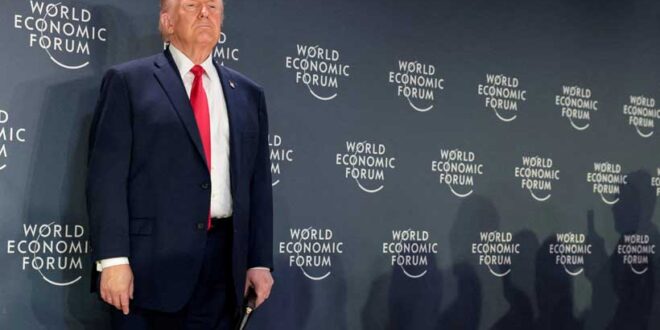
Speaking at the World Economic Forum in Davos on January 21, 2026, Donald Trump announced he was seeking “immediate negotiations” to acquire Greenland from Denmark, arguing that “it’s the United States alone that can protect this giant mass of land, this giant piece of ice.” After threatening seven NATO allies with tariffs to compel agreement, Trump announced later during the day that a “framework of a future deal” had been reached following talks with NATO Secretary General Mark Rutte. No details of any framework have been provided by any party, and diplomatic sources clarified there was no agreement for American ownership or control. Trump described the arrangement as involving mineral rights and expanded military presence, calling it “the ultimate long-term deal” that is “forever,” though he offered no specifics beyond saying it included “everything we wanted.”
The rapid movement from proposal to claimed framework, achieved through economic coercion against alliance partners, reveals a fundamental tension between transactional thinking and structural diplomacy. Trump treats strategic commitments as financial transactions and territorial assets as compensation mechanisms. Realist theory, which has shaped American diplomatic practice for decades, describes power differently. It operates as positional influence sustained through continuous investment, not as a profit-generating return on expenditure.
NATO as Diplomatic Infrastructure, Not Financial Loss
From a realist perspective, NATO is not a charity, nor a transactional contract designed to generate direct financial return. It is diplomatic infrastructure through which the United States converts material superiority into structured influence. Paying for NATO is not evidence of exploitation by allies. It is the price the United States pays to remain the central node of the Western security architecture.
Realism treats power as relational and positional, not as profit-generating in an accounting sense. The United States does not “earn” money from NATO in the way a firm earns revenue. It earns something else: agenda control, strategic depth, forward presence, and the ability to shape the security environment through diplomatic and military coordination rather than unilateral action. By underwriting European security, the United States reduces the likelihood of autonomous European military balancing, keeps allied force planning interoperable with U.S. doctrine, and ensures that crises on the Eurasian periphery are managed within an American-led framework. These are diplomatic mechanisms through which U.S. influence is actually stabilized and projected.
Trump’s rhetoric reflects a domestic, transactional understanding of cost that realist diplomacy explicitly rejects. His claim that “we give so much and we get so little in return” measures alliance value in immediate, tangible returns rather than positional advantage. In realist theory, dominant powers necessarily bear asymmetric burdens because diplomatic leadership itself generates obligations. The hegemon pays more because it has more to lose from systemic instability and more to gain from shaping outcomes. This has nothing to do with altruism but is rational self-interest under conditions of anarchy. The alternative to paying for NATO is not saving money while keeping power constant. It is accepting strategic contraction, loss of influence, and the emergence of alternative security arrangements that dilute U.S. leverage.
U.S. expenditure on NATO also functions as a visible diplomatic commitment. It reassures allies, deters adversaries, and reduces uncertainty about American resolve. Withdrawal or dramatic reduction would trigger hedging behavior among allies, encourage regional arms races, and increase the likelihood that crises escalate beyond U.S. diplomatic control. In realist terms, this would raise future costs, not reduce them.
The Greenland Demand as Strategic Misalignment
Trump’s proposal to acquire Greenland reveals multiple layers of conceptual misalignment. His statement that “it’s the United States alone that can protect this giant mass of land” acknowledges the hegemonic burden but fails to recognize that this burden would dramatically increase, not decrease, with American acquisition. Trump frames Greenland as “costing Denmark hundreds of millions a year” to run, implying the United States would simply absorb this existing cost. The framing treats territorial acquisition as a transaction that generates power automatically, without recognizing that strategic positions require continuous investment to maintain the advantages they provide.
Trump’s announcement of a “framework” on January 21 remains unsubstantiated. No diplomatic sources have confirmed any agreement, and no details have been provided beyond vague references to mineral rights and expanded military presence. Representative Greg Meeks, ranking Democrat on the House Foreign Relations Committee, observed that if the arrangement simply reasserts existing U.S. basing rights in Greenland, “that was there all the time. That’s not something new.” The absence of substantiated detail allowed the announcement to function as diplomatic de-escalation without altering underlying positions. Trump continues to describe the arrangement as a deal about “ownership” that is “forever,” suggesting continued conflation of commercial access with territorial control. Expanded basing rights under Danish sovereignty would be one form of positional advantage. Sovereign acquisition would be another, far more expensive form.
The institutional dimension is revealing because NATO has no legal capacity to negotiate territorial transfers, sovereignty arrangements, or resource rights on behalf of member states. It is a military alliance coordinating defense commitments, not a diplomatic authority with a mandate over sovereignty. Only Denmark and Greenland’s self-government can negotiate such matters. Greenlandic lawmaker Aaja Chenmitz stated this plainly when she said, “NATO in no case has the right to negotiate on anything without us, Greenland.” Trump’s announcement that a framework was agreed “with NATO” conflates security coordination with sovereignty negotiations simply because they concern the same territory. Realist diplomacy recognizes these are distinct processes requiring different actors and legal foundations.
The diplomatic approach preceding the framework announcement consumed significant capital. According to reporting, Trump threatened tariffs of 10-25% on seven NATO allies to compel agreement on Greenland negotiations, explicitly conditioning the tariffs on “the Complete and Total purchase of Greenland.” In response, Norway, Sweden, France, Germany, Britain, the Netherlands, and Finland sent troops to Greenland for defense exercises widely interpreted as signaling concerns about American intentions. When alliance partners conduct military exercises that raise questions about hegemonic reliability, realism predicts erosion of the reassurance mechanisms that reduce balancing costs. Using economic pressure against alliance partners to pursue territorial objectives triggers precisely the defensive responses that alliance systems are meant to prevent.
American acquisition of Greenland would not transfer Denmark’s costs. It would multiply them. Denmark maintains minimal infrastructure in Greenland because it operates under NATO’s security umbrella, with the United States providing the ultimate guarantee. Direct American sovereignty would require comprehensive Arctic defense infrastructure, expanded surveillance capabilities, and the logistics networks to support operations in one of the world’s most hostile environments. If the United States acquired Greenland, it would face the same diplomatic dynamics it criticizes in NATO. Infrastructure would require disproportionate American investment. European allies would likely reduce commitments, expecting the United States to carry the load as sovereign authority. The complaint about asymmetric burden-sharing would simply shift domains.
Path Dependency and Strategic Choice
Realism does not assume that the United States is forced to remain dominant. It does insist, however, that power positions, once occupied, create path dependencies that constrain available options. Having constructed a global alliance system centered on American leadership over seven decades, the United States cannot simply stop paying for it without dismantling the architecture itself. This is not a moral claim about what the United States should do. It is a structural observation about how positional power functions.
The transactional approach treats alliance commitments as discretionary expenditures that can be reduced or redirected without systemic consequences. Realist theory treats them as structural investments that have created dependencies running in both directions. European security establishments have been built around American interoperability standards, force planning assumptions, and nuclear guarantees. Reducing American commitment would not preserve existing influence while saving money. It would trigger systemic adjustments. European strategic autonomy, revised threat assessments, and alternative security architectures potentially including accommodation with Russia or China. All of these would reduce American leverage over outcomes that still affect core American interests, from technology standards to energy policy to conflict management.
The Greenland episode illustrates the costs of ignoring path dependency. By threatening tariffs against seven NATO allies to compel territorial negotiations, the United States consumed diplomatic capital accumulated over decades. The military exercises conducted by alliance partners in response represent not merely symbolic protest but structural hedging. When core allies question whether American security guarantees are conditional on compliance with territorial demands, they begin adjusting force posture, procurement decisions, and diplomatic alignments accordingly. These adjustments compound over time. Reassurance, once damaged, requires sustained investment to restore. Trust functions as a form of institutional capital that reduces the transaction costs of coordination. Transactional coercion depletes that capital far faster than it can be rebuilt.
Similarly, acquiring Greenland would not offset NATO costs but would add a new domain of structural commitment. Both represent investments in diplomatic centrality, not losses requiring compensation. They cost what positional influence costs in their respective domains. The question facing American policymakers is not whether these costs are fair or whether allies contribute enough. It is whether the United States still values the position these investments sustain. Strategic contraction is a legitimate choice, but it is a choice with consequences that must be understood in structural terms. Influence foregone does not remain available for later reclamation. Allies who develop autonomous capabilities do not automatically return to dependence when American priorities shift. Competitors who gain footholds in abandoned strategic space do not voluntarily withdraw when the United States reconsiders.
The claimed framework announced on January 21 remains unsubstantiated, with no diplomatic sources confirming any agreement. Whether future negotiations produce expanded basing rights, mineral extraction agreements, or something else entirely, the realist logic remains unchanged. Each represents a positional investment requiring sustained commitment. Strategic assets cannot function as financial instruments that balance a ledger. They are positions in a structure that must be continuously maintained to preserve the advantages they provide.
The fundamental tension revealed by the Greenland episode is between transactional expectations and structural reality. The United States does not pay for NATO because it is being exploited. It pays because diplomatic centrality is expensive, because influence requires infrastructure, and because maintaining order costs less than managing disorder from a position of reduced authority. The movement from proposal to unsubstantiated framework claim, achieved through tariff threats and triggering defensive responses by multiple NATO members, demonstrates what happens when structural diplomacy is treated as transactional negotiation. Path dependencies constrain available choices not because they eliminate agency but because they determine what must be paid to sustain existing positions or what must be accepted to abandon them. Until that structural logic is recognized, American strategy will face persistent inconsistency between stated objectives and available means.
About the author:
Arthur Michelino is an independent analyst focusing on strategic competition, international governance, and the interaction between law, institutions, and power. With a background in international affairs, insurance, and intelligence analysis, his work examines how complex systems, organisational dynamics, and legal frameworks shape contemporary international politics.