Geostrategic Media Political Commentary, Analysis, Security, Defense

Kaush Arha
In a Greenland deal, Denmark and Europe should seek an ironclad American commitment to Europe’s security, including Ukraine and the Eastern Front.

The current impasse over Greenland between the United States and Denmark, largely portrayed in the media as a crisis for NATO, paradoxically offers a once-in-a-generation opportunity to reinforce the Atlantic Alliance. President Donald Trump and his European counterparts at Davos this week should set the wheels in motion to that end in full recognition of Greenland’s critical role in US security, necessitating a greater American stake, Greenland’s self-determination being inviolate, and an urgent need to arrest the downward spiralling rhetoric spilling onto European streets.
Greenland offers a generational opportunity for pragmatic and realist leaders on both sides of the Atlantic and in between to substantially and unequivocally institutionalize and modernize transatlantic security for decades to come. It is far too important a historic moment to bungle.
The United States and Denmark can reaffirm the NATO alliance by allowing for a greater American stake in Greenland—confirmed by Greenlanders—in exchange for an ironclad American reaffirmation of NATO Article V, reinforced by US troop presence along Europe’s eastern borders, including Finland, the Baltic states, Poland, and Romania.
Denmark and Europe, moreover, should connect Europe’s security interests in Ukraine to America’s security interests in Greenland. It would be prudent and reciprocal for Europe to entertain greater US ownership of Greenland, with commensurate American security assurances and guarantees in Ukraine and NATO’s eastern front.
Additionally, the United States and Denmark should establish an extraordinary defense and critical minerals partnership committed to the shared development of Greenland’s natural resources, coordinated military maneuvers, interoperability, and manufacturing to secure the High North.
The Trump administration should make clear that the resolute fortification of transatlantic security, stretching from Alaska to Greenland, Denmark, Finland, and Romania, is in the hands of Denmark and Europe. Denmark has the option to either risk a spat and split in transatlantic security over Greenland, or use the opportunity to enshrine a resolute and strong transatlantic security bulwark for the twenty-first century.
A bold deal on Greenland is at hand that leaves all involved—Greenland, Denmark, Europe, and the United States—more secure and prosperous than they are today. It behooves all parties to pursue it single-mindedly in advancing their respective national interests, undistracted by perceived and real slights.
Greenland Is Critical to American security, as Is Ukraine to Europe
President Trump is right to assert the importance of Greenland to American national security. As is Europe and NATO in asserting the critical role of Ukraine to European security. The security assurances in both theaters can only be underwritten by the US military. American ambivalence towards Ukraine and European security is self-harming, as is the Danish and European misapprehension of Greenland’s critical geography to American security.
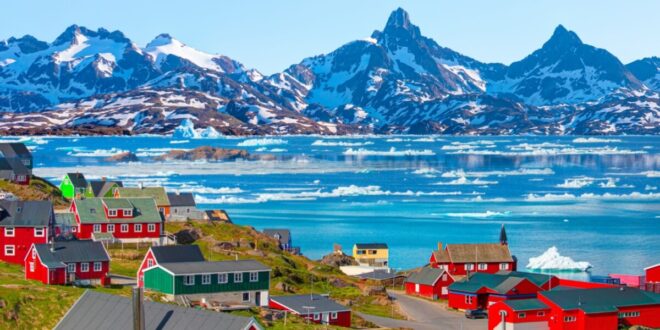
President Trump has prioritized American security in the Western Hemisphere and identified Greenland as critical to bolstering American (and Greenland) national security in a rapidly changing Arctic. He is fully committed to directing the necessary military and economic investment into Greenland to transform the island’s security and economic potential.
Greenlanders take pride in their distinct culture, heritage, and autonomy. Greenland’s first Foreign, Defense, and Security Policy states independence from Denmark as its eventual goal. Greenland’s leadership, persuaded by the proximity and the economic and military strength of the United States, has consistently sought a more formal association with the United States, including becoming part of the USMCA.
Greenland has asserted its autonomy and chosen not to be part of the European Union. American markets are closer and more lucrative for Greenland’s fish exports than European markets. American tourism is one of the fastest-growing sectors of the island’s economy. American investment, markets, and military offer optimal arrangements for a secure and prosperous Greenland for generations to follow.
Denmark is a tried, tested, and true ally of the United States. Its valid concerns, interests, and sensibilities deserve respectful and sober consideration by all leaders in the United States. Anything short is unhelpful and unwarranted. Greenlanders’ self-determination should be inviolable.
Europe faces a real and growing threat from Russia on its eastern front. It lacks the capacity to repel this threat without the American military. Europe has negligible to non-existent capacity to secure Greenland, which is more critical to American security than to Europe’s. American and European national interests and border security measures are substantially augmented by securing American security commitment and presence in both Greenland and on NATO’s eastern front.
Related Articles
United States and Greenland: A Range of Options
President Trump has called for a more permanent arrangement before directing inordinate capital investment into security and natural resource development across Greenland. Greenlanders, prior to the present mood soured by unbecoming and unwarranted rhetoric directed at them, were keen to pursue a more structured relationship with the United States for precisely similar ends.
Three broad approaches can be tailored to a unique Greenland deal that leaves all parties better off:
Compact for Free Association: The United States and Greenland can enter an association similar to American arrangements with select Pacific islands. Sovereign territories of Palau, the Marshall Islands, and the Federated States of Micronesia all enjoy a Compact of Free Association(COFA) with the United States. These Pacific islands are critical to securing the sea lanes across the Indo-Pacific. The agreement affords the United States exclusive military access to its territory and the right to deny such access to other powers. In return, the “freely associated” states receive substantial investment and economic development assistance for education, health, the environment, public-sector capacity-building, private-sector development, and infrastructure.
The residents of COFA signatories enjoy the privilege to reside and work in the United States and are eligible for Federal programs and services. The United States is obligated to defend the Compact countries against outside coercion or aggression and to allow US military personnel on compact territory. A similar undertaking between the United States and Greenland holds high promise for strategic alignment while the island’s relationship with Denmark continues to evolve.
As part of the COFA, the United States may also include Greenland in theUS-Mexico-Canada Agreement (USMCA), facilitating the island’s abundant fish harvest’s access to a ready market in the near neighborhood and attracting greater investments in fish processing on the island. Importantly, it will unlock investments for the responsible development of the island’s rich mineral deposits.
Long Lease: Alternatively, the United States can arrange a multi-decade lease of Greenland from the Kingdom of Denmark, with the consent of the Greenlanders. The United Kingdom’s lease of Hong Kong, notwithstanding its ignominious origins, resulted in the territory becoming the beacon of entrepreneurship, excellence, modernity, and progress that mainland China has yet to achieve.
All COFA benefits mentioned above and more will accrue to Greenland under a lease arrangement with additional sweeteners for the Danish mainland. Greenland’s inclusion in USMCA can be accommodated in the lease agreement.
Purchase: Finally, Denmark may consent to the United States purchasing Greenland, subject to Greenlanders’ consent. Russia chose to sell Alaska to the United States because it was a distant, discontiguous territory difficult to secure and a substantial budgetary burden. Greenland harbors similar concerns for Denmark. Alaska residents, without diluting their distinct character, have prospered immensely as part of the United States. There are no indications that Greenlanders would not enjoy a similar future by joining the Union.
Furthermore, Greenland, emulating Alaska, may condition its joining the Union on an overwhelming portion of its land and territorial waters receiving protected status as National Parks, Wildlife Refuges, Wilderness areas, and public lands. This will ensure the Greenlandic way of life for generations to come. Greenland, as part of the United States, would automatically be incorporated into the USMCA.
Denmark’s leverage in negotiating an advantageous return would be at its highest in an outright sale of its Greenland interests. A return that includes not only a fair monetary recompense but, importantly, an American commitment to Danish and European security for the foreseeable future.
It’s Time for a US-Europe Deal, Not a Spat and a Split
At present, it appears an irresistible force is headed towards an immovable object in Greenland. It is in the interest of all parties to avoid that conflagration and find alternative solutions that elevate the security and prosperity prospects of all involved. Fortunately, more than one such option is available, deserving of clear-eyed assessment and consummation. Sober temperaments and creative proclivities need to prevail. It is far too important a historic moment to botch.
Greenland presents a once-in-a-lifetime opportunity for pragmatic realism to manufacture a tide that lifts all ships. It is not the boot hill for mischaracterized, misunderstood, and unevenly applied principles. Europe has been deficient in principles and unity in confronting Russia and China. Its self-harming boasts of the same against the United States lack credibility. It is time for a deal, not a spat and split.
A bold, fair, and reciprocal Greenland deal could catalyze a permanent, robust American military commitment, installations, and presence in Greenland and along the NATO eastern front in a historic fortification of North Atlantic security from Greenland to Romania. Denmark and Europe should perhaps enlist Finnish president Alexander Stubb to engage directly with President Trump to bring a mutually reassuring future to fruition.
National security leaders in the US Congress—particularly in the Republican majority—should play a constructive role in encouraging all parties, American and European, to seek a win-win agreement. Congressional entreaties for a win-win agreement should be buttressed by a commitment to Senate ratification of the agreed terms within the present congressional term.
It’s time for President Trump to show the world the art of the deal one more time. Talks of hostile takeover or tariffs distract from constructive negotiations and agreement. In real estate, often the most satisfying deals are the most creative ones, leveraging unforeseen angles and interests to consummate a win-win. Greenland offers a plethora of creative options. It would be prudent for Denmark and Europe to explore all of them and find the right one. The farce of sending a single soldier from all EU member nations to Greenland and none to Ukraine or threatening NATO solidarity is not it.
Greenland holds the key to a formidable next generation of transatlantic security. Greenland, Denmark, Europe, and the United States need to find the right lock for it. The right lock opens to both American and European keys and comes with the Greenland sticker “nothing about us without us.”
About the Author: Kaush Arha
Kaush Arha is president of the Free and Open Indo-Pacific Forum and a senior fellow at the Institute for Diplomacy, Security and Innovation at Pepperdine University and the Krach Institute for Tech Diplomacy at Purdue University. During the first Trump administration, Dr. Arha was the architect of the Japan-US Strategic Energy Partnership and Japan-US Strategic Digital Economy Partnership as interagency bilateral coordinating forums and an influential actor in the biannual US-Japan Free and Open Indo-Pacific Dialogue.