Geostrategic Media Political Commentary, Analysis, Security, Defense
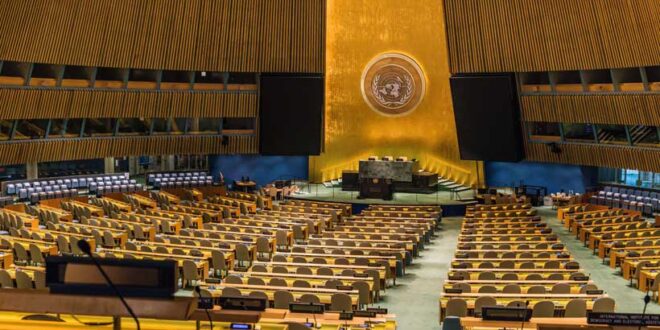

Governments expressed caution in response to U. S. President Donald Trump’s invitation to join his “Board of Peace” initiative aimed at resolving global conflicts. Only Hungary, whose leader is close to Trump, openly accepted the invitation, while others refrained from public comments due to concerns about how the initiative might harm the United Nations. The initiative was addressed to around 60 nations and began arriving in European capitals over the weekend.
The proposed board would be chaired by Trump for life, starting with addressing the Gaza conflict and eventually expanding to other global conflicts. Countries could have terms limited to three years unless they paid $1 billion for permanent membership. The White House described this as an opportunity for countries showing commitment to peace and security to gain ongoing membership.
Italian Prime Minister Giorgia Meloni indicated readiness to contribute, though it was unclear if she referred specifically to Gaza or broader peace efforts. Canada’s Prime Minister Mark Carney agreed to join the Board of Peace for Gaza in principle, while the initiative’s mandate had been authorized by the United Nations Security Council to focus only on Gaza until 2027.
Concerns arose regarding the charter included in the invitation, suggesting it could undermine existing U. N. operations, with one diplomat describing it as a “Trump United Nations. ” Multiple diplomats feared the initiative could erode the U. N.’s role if implemented. It was suggested that Trump envisioned a broader mandate for the board beyond Gaza to address other conflicts he claimed to have resolved.
Leaders from France, Germany, Italy, Hungary, Australia, Canada, the European Commission, and key Middle Eastern powers were invited to participate. The board is proposed as a more effective international peace-building body compared to traditional institutions. Trump expressed a desire for the board to convene soon, emphasizing its uniqueness.
A senior U. N. official reiterated the U. N. as the only entity with the authority to unite nations, warning that questioning this role could lead to difficult times. The White House named some board members, which included various political figures but no Palestinians. The oversight of Gaza’s governance under a technocratic administration would involve this international board, agreed upon by Israel and Hamas, amid a fragile ceasefire.
Critics have likened Trump’s governance of foreign territories to a colonial approach. The composition of the board has drawn scrutiny, particularly with the inclusion of figures like Tony Blair, given his Iraq war history. An additional “Gaza Executive Board” was also named, comprising officials from Turkey, the U. N., the UAE, and Israel. Israeli officials indicated that the membership of this board had not been approved by them, reflecting existing tensions with some member states.