Geostrategic Media Political Commentary, Analysis, Security, Defense
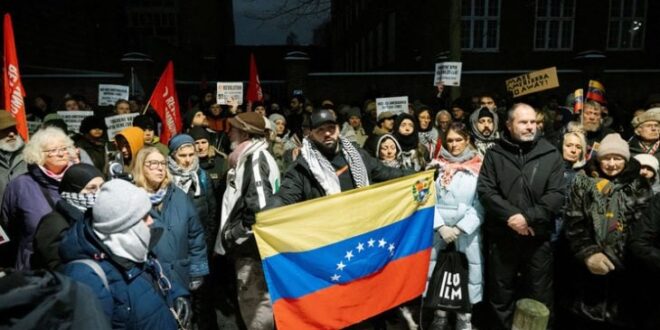

Seven key factors will determine whether Venezuela ultimately transitions to democracy, remains captive to a Chavista dictatorship, or descends into chaos.

For many years, national security experts have urged the United States to implement decisive measures to address the escalating national security threat posed by the dictatorship in Venezuela. On January 3, the Trump administration took action through a sophisticated military operation that successfully removed Nicolas Maduro from Caracas, subsequently leading to his imprisonment in New York. Although the special operation was carried out flawlessly, the strategy for Venezuela’s shift towards freedom, democracy, and prosperity remains unclear.
As this intricate situation develops, there are seven key factors that observers ought to focus on to navigate the country’s future trajectory:
- What are the Trump administration’s demands, and is the new regime adhering to them?
- Can the Trump administration maintain US domestic support for foreign intervention?
- How are rival factions in the remaining Chavista regime interacting with one another?
- What is the Venezuelan opposition doing?
- How is the United Nations reacting to the evolving developments?
- How are other nations in the Western Hemisphere responding?
- Finally, how are non-state actors inside Venezuela—most of which benefit from Chavismo and are aligned with the Maduro regime—reacting?
1. What Does the Trump Administration Want?
On January 5, Politico reported that the Trump administration had made four demands of the new government under interim president Delcy Rodriguez. These consisted of:
- Curtailing drug flows to the United States;
- Removing Iranian, Cuban, and adversarial operatives from the country;
- Stopping the sale of oil to U.S. adversaries; and
- Preparing for the eventual holding of free and fair elections.
These demands resonate with the 2025 National Security Strategy, which aims to establish a stable Western Hemisphere to mitigate mass migration, create regional partnerships to combat transnational criminal organizations, and eliminate hostile foreign incursions or ownership of critical assets by US adversaries.
For now, Rodriguez has focused on cementing her position in power. These actions have included her endorsement of Nicolás Maduro as the duly elected president of the country—recently stating that “there is only one President here, and his name is Nicolás Maduro.” Instead of directly challenging the United States, these remarks were intended to rally initial backing from the loyalists of the regime. Notwithstanding these public declarations, however, multiple reports suggest that Rodriguez remains open to collaborating with the United States.
The United States is adopting a carrot-and-stick strategy to secure Rodriquez’s compliance. As a punitive measure for Caracas, Secretary of State Marco Rubio has asserted that he will deploy US maritime forces positioned offshore to oversee the transportation of Venezuelan oil. On the other hand, the carrot for good behavior is a proposed $100 billion US corporate investment in Venezuelan oil infrastructure and capacity—although that investment has yet to materialize.
The main indication of collaboration will occur when US forces allow the sale of Venezuelan crude.
2. What Do the American People Want?
The Trump administration has been walking a razor’s edge in terms of achieving US domestic support for the military intervention. After all, Trump ran for president under the pledge of no new foreign wars, and his “MAGA” base is generally more concerned with a domestic agenda than a foreign one. Conversely, Trump’s opponents on the American left have dubbed the operation as US imperialism run amok, while many in the middle have expressed support for Maduro’s ouster but skepticism of the president’s unilateral actions.
In reaction, Trump has sought to invigorate his support base by centering his discourse on US dominance over Venezuelan oil and the possible financial benefits for the US economy. Still, US domestic support is decidedly mixed, with roughly one-third of Americans approving of military action, one-third disapproving, and one-third undecided. By comparison, initial US domestic approval of military intervention in Vietnam and Iraq was far more favorable, at approximately 60 percent each. This gives the Trump administration limited space for political maneuvering, and it is expected that the White House will avoid direct military support to internal stability efforts in Venezuela. If domestic support for Trump’s actions diminishes further, it is likely that the US will cease its involvement in Venezuela altogether—dooming the potential democratic transition to certain failure.
3. What Will Maduro’s Successors Do?
Following the loss of Nicolas Maduro, two major factions have emerged in Caracas. The first is the Rodriguez faction, including the interim President Delcy Rodríguez and her brother Jorge Rodríguez. In a move to cement her power base, Delcy Rodríguez re-appointed Jorge Rodríguez as the President of the National Assembly on 5 January. Both siblings are staunch Chavistas, but neither is under indictment on criminal charges in the United States, giving them some leeway to interact with US officials on a conciliatory basis.
The second, more hardline faction is centered on Defense Minister Padrino López and Interior Minister Diosdado Cabello. Both López and Cabello are facing indictments in the United States, with rewards of $15 million and $25 million offered for information leading to their capture, respectively. López presently oversees the regime’s formal military element, while Cabello commands the “colectivos,” the local militias that instill fear in local communities and uphold the Chavista regime’s control.
So far, these factions are locked in a cold peace, apparently recognizing that internal division would be foolish in the face of US pressure. If they were to become estranged or engage in overt hostility, the shift to democratic governance would be at risk—and could result in violence akin to civil war in Venezuela, with catastrophic regional consequences for Venezuela’s neighbors and the United States. This dynamic warrants careful observation.
4. Can Venezuela’s Opposition Meet the Moment?
The leader of Venezuela’s opposition movement, 2025 Nobel Peace Prize laureate María Corina Machado, has actively communicated to her followers via X (formerly Twitter) since Maduro’s capture. She has maintained to her constituency that transition to democracy is forthcoming, and has issued aletter to the regime requesting the release of all political prisoners. In an excellent turn of events, Rodriguez appears to be complying with this request.
The other major player in the opposition is Edmundo Gonzalez, who ran in Machado’s place after she was disqualified from Venezuela’s 2024 presidential election. According to most observers, Gonzalez handily won that election, and has been recognized as the rightful president by the United States and several other Latin American nations. After the election, Maduro’s forces claimed victory and issued an arrest warrant for Gonzalez, prompting him to flee to Spain; he has remained mostly quiet since then, but released a statement on 5 January and will likely return to the country when conditions permit.
Corina Machado is scheduled to meet with Trump this week. Her agenda is clearly centered on facilitating democratic change in the country. She haspledged to return to Venezuela, a commitment she will undoubtedly fulfill. The regime’s response to her arrival is another critical factor to consider—particularly regarding whether she will be welcomed or will face arrest or assassination upon arrival.
If the institutions of Venezuela endorse a political transition, the likelihood of achieving a strategic success that benefits Venezuela, the United States, and the Western Hemisphere increases.
5. What Role Will the United Nations Play?
The UN Security Council called for an emergency meeting on January 5 in response to the US military operation in Venezuela. Countries expressing dissent regarding US actions, which they perceive as a violation of international law, encompass China, Russia, South Africa, Mexico, Brazil, Colombia, Nicaragua, and Cuba. As global political dynamics evolve, anticipate that China will leverage Venezuela in its forthcoming negotiations, as it seeks to persuade conventional US partners and allies to join its expanding coalition of BRICS+ partners.
Broad international support for legitimate government in Venezuela is essential if democracy and the rule of law is to return to what is now a failed state.
6. How Will Latin America and the Organization of American States React?
The Organization of American States (OAS) also held an emergency meeting on 6 January. The meeting was called by Colombia and Mexico, who each attempted to create a unified opposition to US intervention with other states in the Western Hemisphere.
Brazil has remained largely isolated on this issue. Notable opposition to Trump’s actions came from Colombia, Mexico, Brazil, Honduras, and Jamaica. Conversely, the list of nations in support of US intervention is far longer, including Canada, Argentina, Peru, Panama, the Dominican Republic, Guatemala, Bolivia, Belize, Costa Rica, Paraguay, Trinidad and Tobago, Ecuador, and El Salvador. Countries exhibiting subdued opposition to the special operation include Chile and Uruguay.
Going forward, it remains to be seen if Colombia, Mexico, and Brazil will advocate for less US interference in Venezuela. These nations are strong and influential, and could possibly offer a Latin American-centered alternative to Washington in shaping a transition to democracy. However, such a substantive coalition proposal would prove historic—and therefore unlikely.
If the OAS responds to the cultural expectation that nations within the Western Hemisphere ought to be democratic, the transition of Venezuela back to democracy will gather pace.
7. Could Non-State and Criminal Actors Play a Spoiler Role?
Not to be forgotten remain the many nonstate actors in Venezuela who have substantial influence and power, not just within the country but regionally. These include Ejército de Liberación Nacional (ELN), Fuerzas Armadas Revolucionarias de Colombia (FARC), Tren de Aragua, Cártel de Jalisco Nueva Generación (CJNG), and Cártel de Sinaloa.
Malign and criminal networks have been acting with impunity with Venezuela for years. How these nonstate actors react to unfolding events in Venezuela is worthy of importance. None of these regimes would favor a future government’s partnership with the United States—let alone a transition to democracy, which would substantially imperil their fortunes.
It would be far too rosy to assume that non-state actors currently operating without restriction in Venezuela would simply disappear. However, a restoration of effective security forces could help mitigate the threat that they pose.
These Seven Factors Will Determine Venezuela’s Future
The removal of Nicolás Maduro marks a historic inflection point for Venezuela. However, as has been widely observed, it does not by itself guarantee a transition to freedom, democracy, or stability. The country now stands at a precarious crossroads, where US leverage, internal regime dynamics, opposition resolve, international pressure, and the behavior of powerful non-state actors will collectively determine Venezuela’s future.
While Washington has demonstrated its willingness to act decisively, sustaining domestic support and translating military success into a viable political strategy remains an unresolved challenge. Regional cooperation will be essential in the months ahead, as Venezuela struggles to rebuild functional institutions. Meanwhile, competing Chavista factions, an emboldened but still vulnerable opposition, divided regional responses, and entrenched criminal networks all threaten to derail democratic progress. The coming weeks will reveal whether Trump’s intervention becomes the catalyst for a peaceful democratic transition—or the opening chapter of a far more protracted and unstable struggle for Venezuela’s future.
About the Authors: Robert Burrell and Homer Harkins
Dr. Robert Burrell is a senior research fellow with the Global and National Security Institute at the University of South Florida. From 2020 to 2024, he taught irregular warfare at the Joint Special Operations University, and earlier served as US Special Operations Command’s Editor-in-Chief for irregular warfare doctrine. A retired Marine with multiple combat tours, Dr. Burrell has spent 12 years living and working across Japan, Korea, the Philippines, and Thailand, plus a diplomatic tour at the US Embassy in Australia. He holds a PhD in History from the University of Warwick, and master’s degrees from San Diego State University and the US Naval War College.
Dr. Homer Harkins is a faculty member at the United Arab Emirates War College in Abu Dhabi. Prior to this role, Dr. Harkins served on the faculty of the Joint Special Operations University at MacDill Air Force Base, where he held positions from instructor to Dean of Academics and Director of the Center for Irregular Warfare. A retired Army Lieutenant Colonel, he served as an infantry officer, an Army Ranger, and a Latin American Foreign Area Officer. In 2015, Dr. Harkins earned his Doctorate in Education, and his earlier education includes a BBA, an MA in Computer Resources and Information Management, and an MS in International Relations.